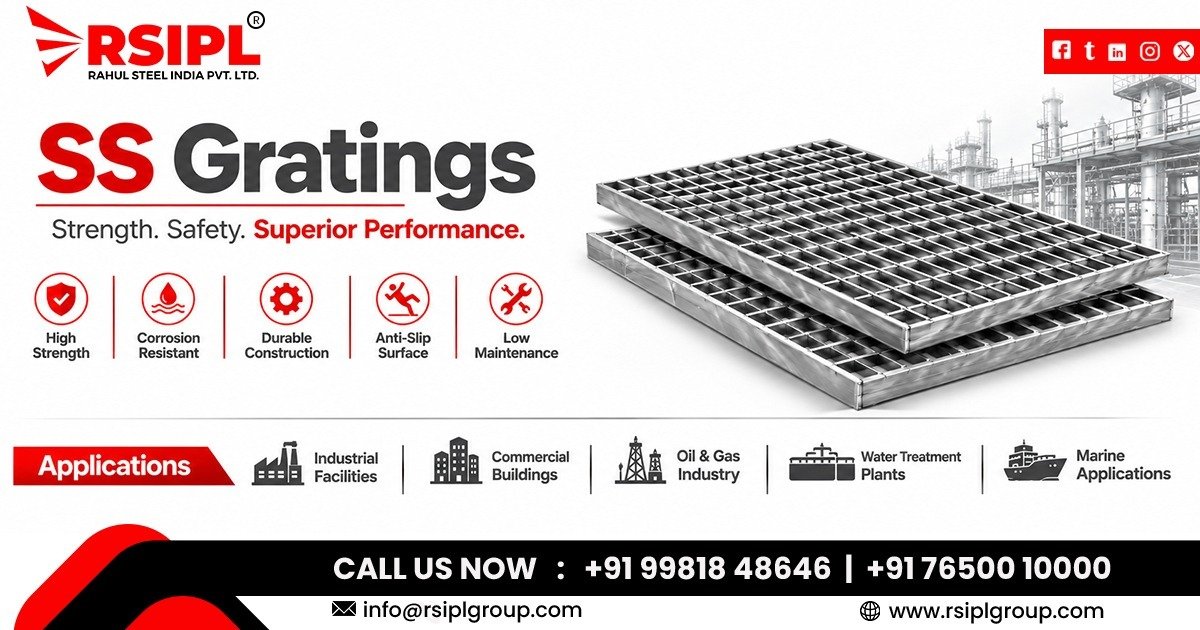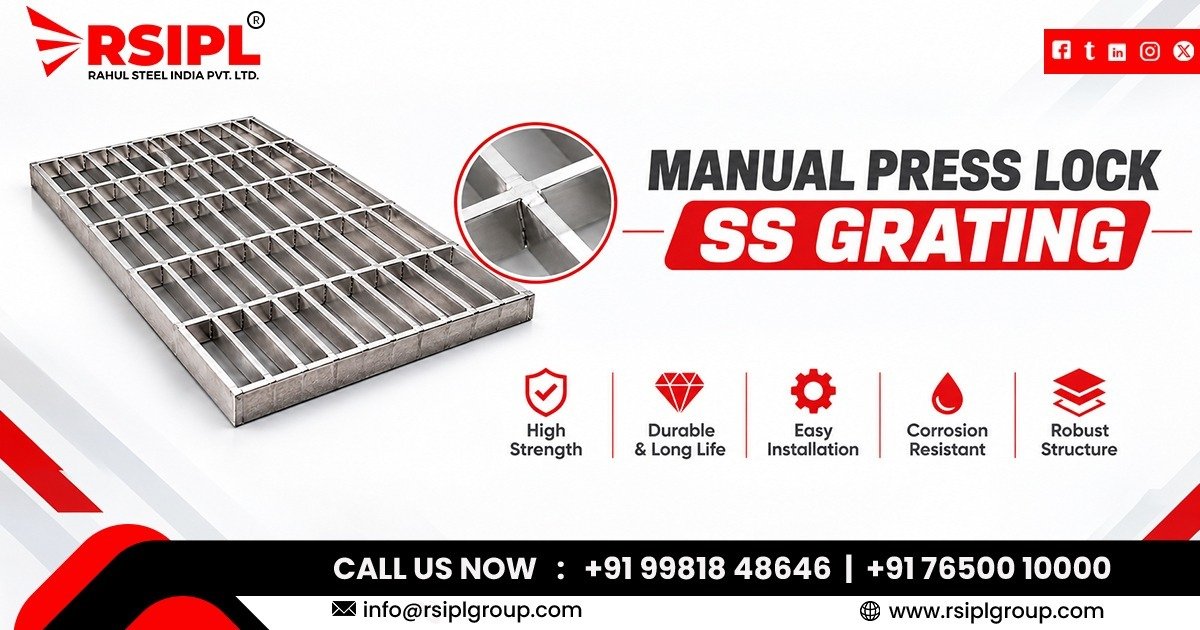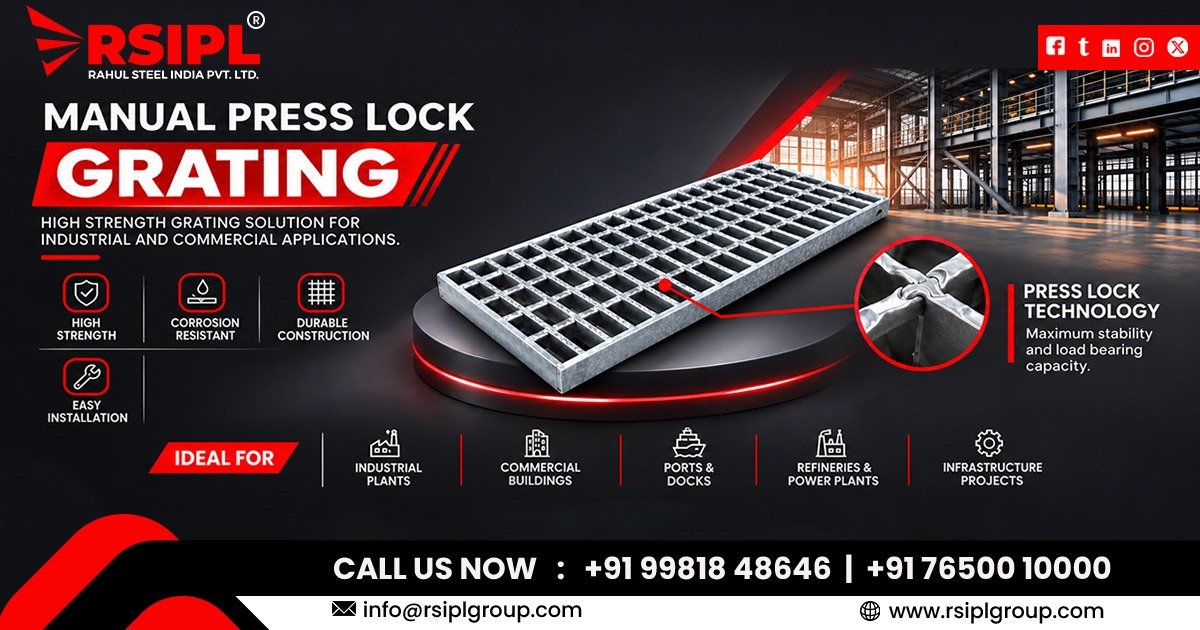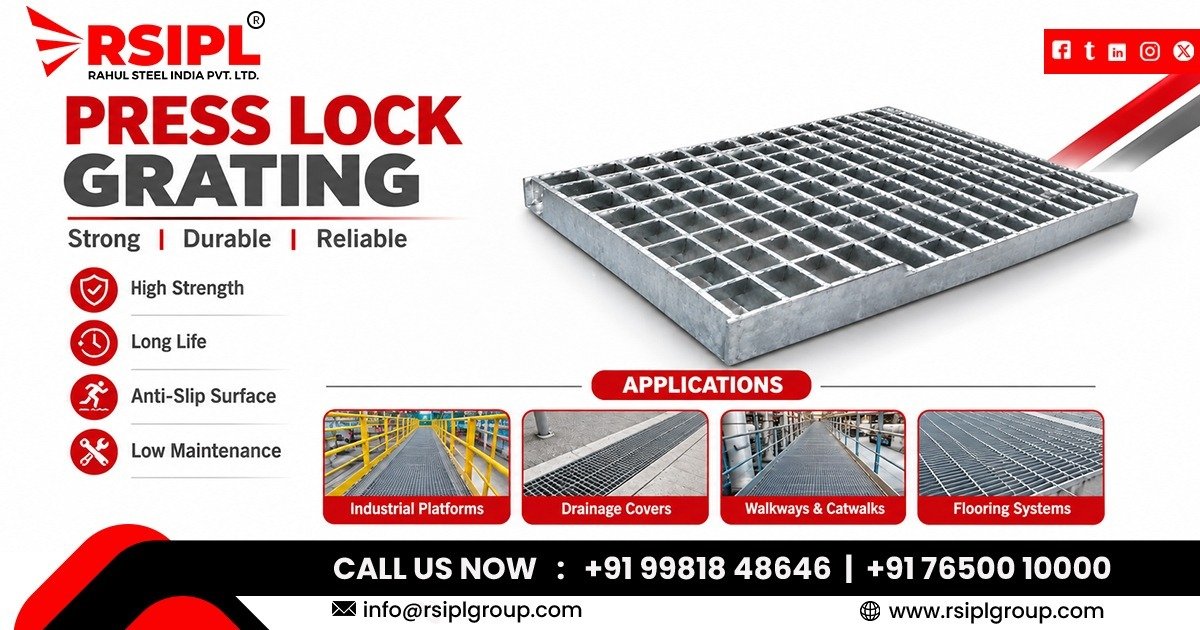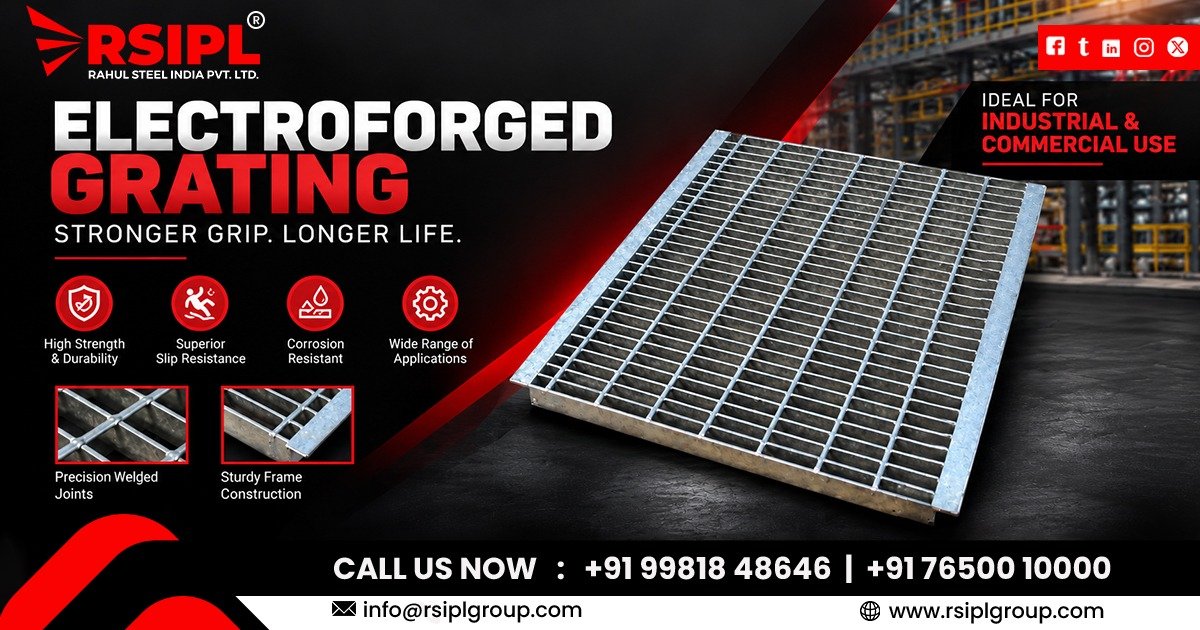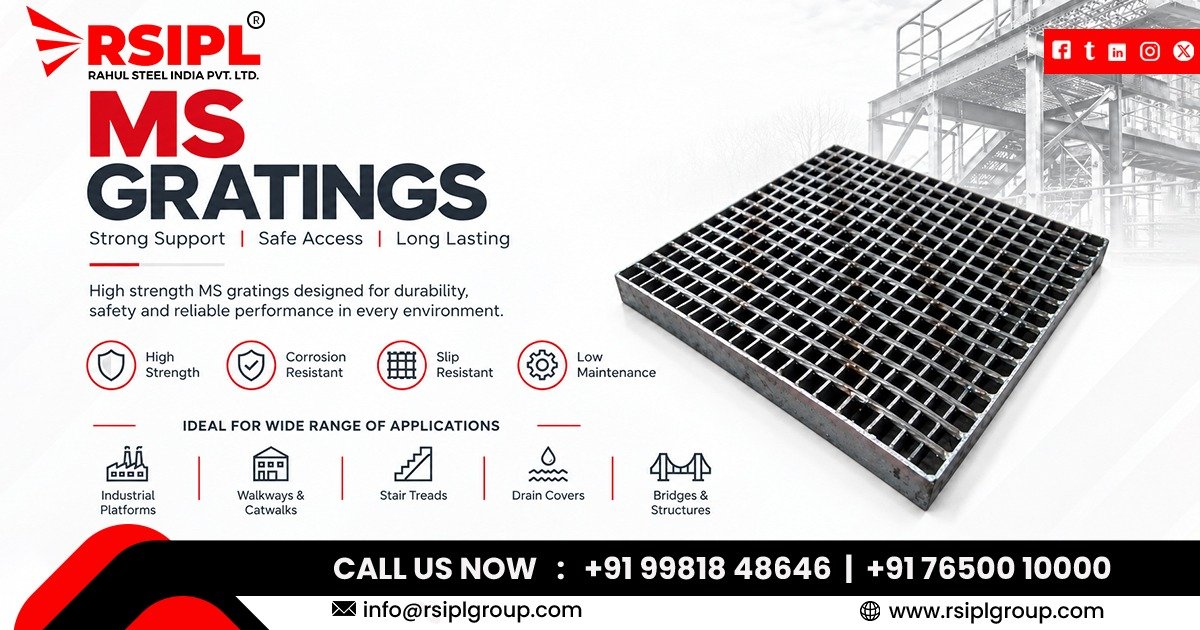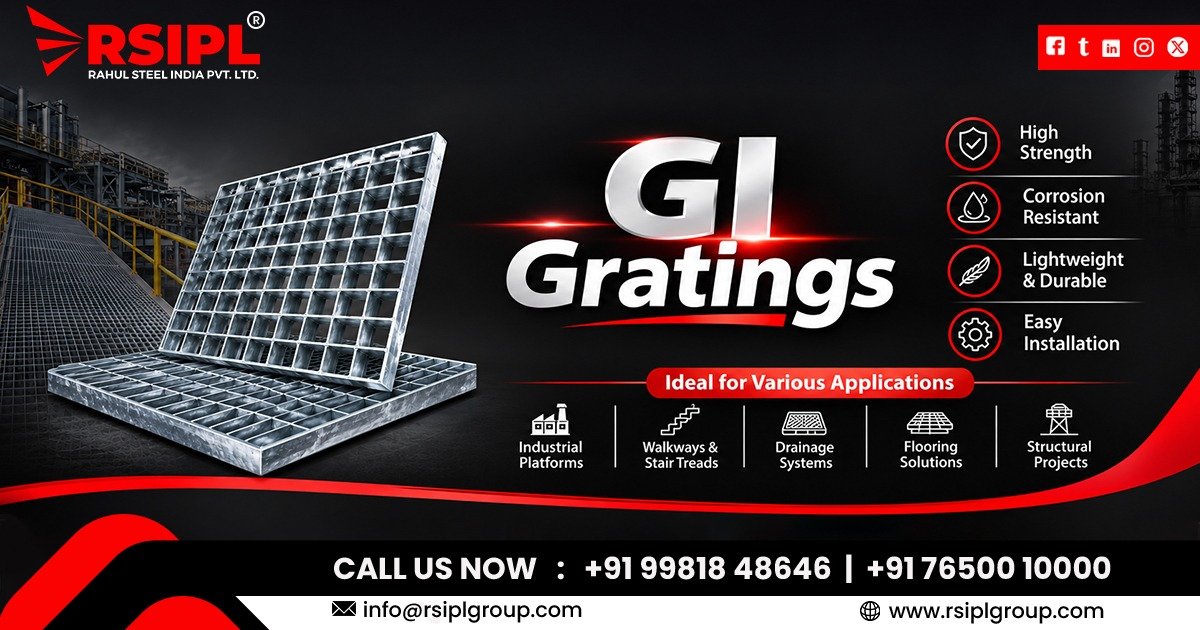
Industrial GI floor gratings provide a practical flooring solution for factories, industrial platforms, access walkways and drainage areas where strength, ventilation and water passage are important. Rahul Steel India Pvt. Ltd. offers manufacturing support from Ahmedabad, Gujarat, India, for industrial steel requirements.
Understanding How GI Floor Gratings Support Industrial Flooring
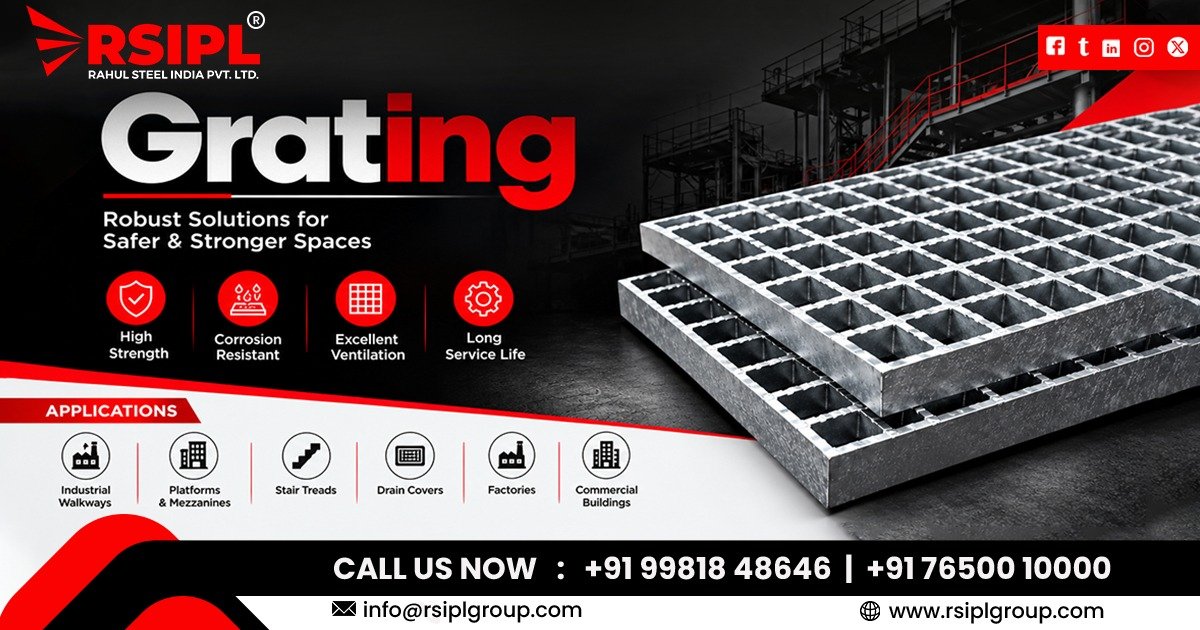
Galvanized Iron (GI) floor gratings are metal grid panels made using steel components with a zinc coating for corrosion protection. Their open-grid construction allows air, water and light to pass through while providing a usable walking or working surface.
In industrial environments, conventional solid flooring can create problems such as water accumulation, poor drainage and difficult access to equipment. Gratings help address these issues by allowing liquids to pass through the openings instead of collecting on the surface.
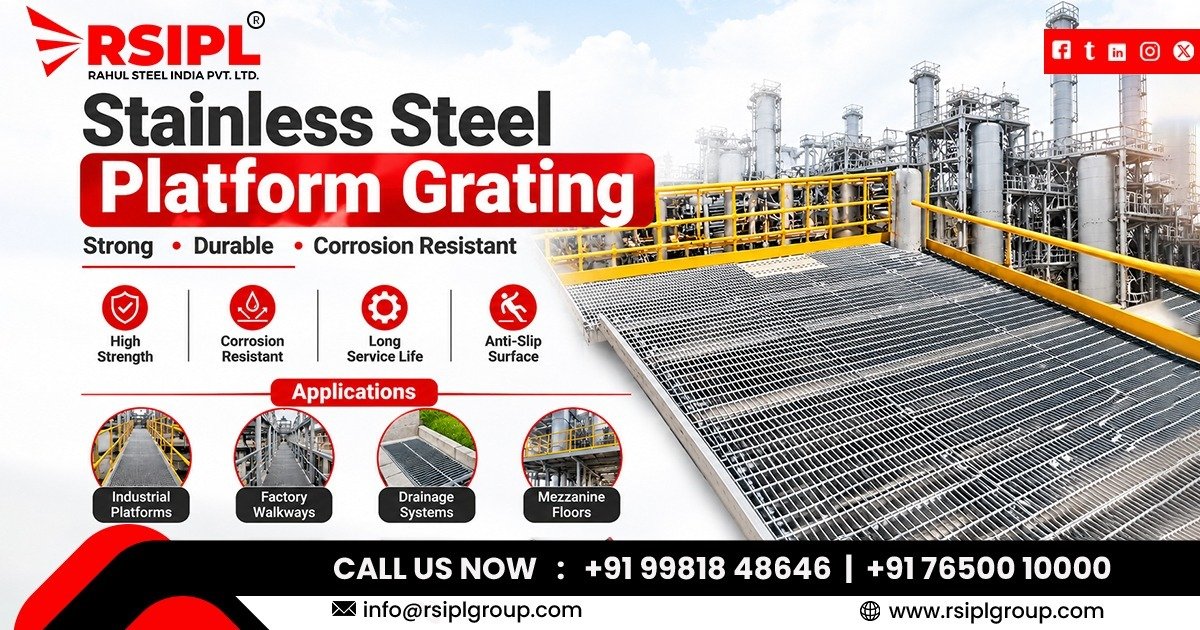
Industrial GI Floor Gratings for Platforms, Walkways and Drainage are commonly considered for:
- Factory platforms: Creating accessible working surfaces around industrial equipment.
- Maintenance walkways: Providing access for inspection and routine maintenance.
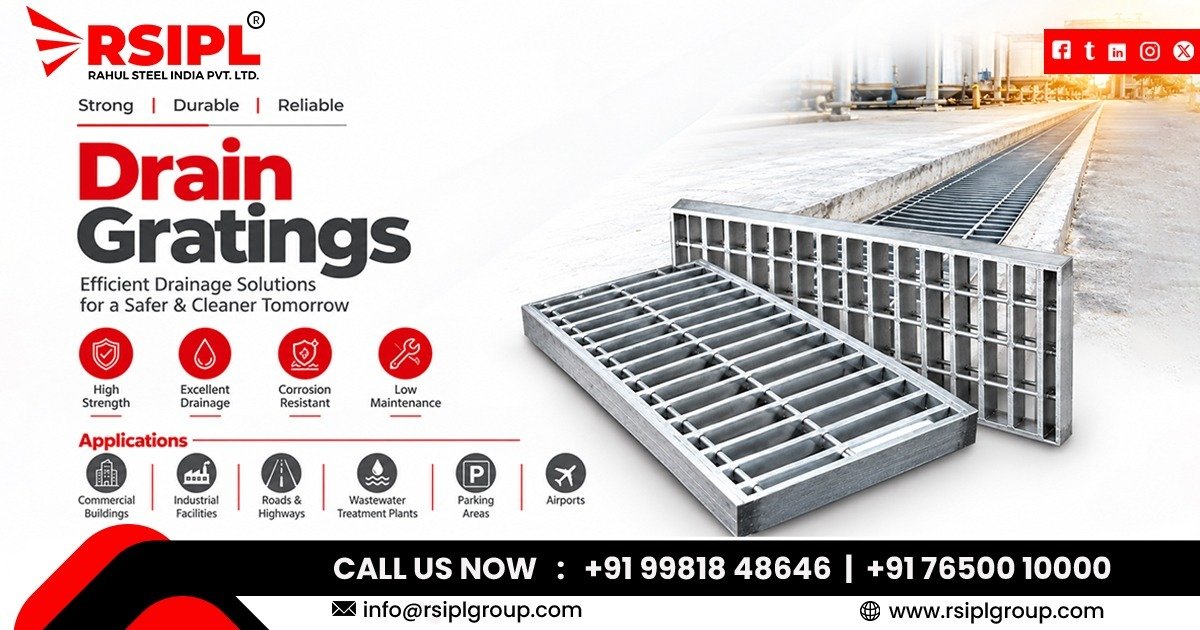
- Drainage channels: Covering open drains while allowing water to flow through.
- Industrial mezzanines: Supporting designated access and working areas.
- Utility sections: Providing flooring around service installations and equipment zones.
The correct grating design depends on the expected load, support arrangement, environmental exposure and intended use.
Choosing a Grating Design That Matches the Site Conditions
Selecting an industrial floor grating requires more than checking panel dimensions.
1. Load-Bearing Requirements
Determine the type of load the grating must support.
- Pedestrian movement in access walkways.
- Maintenance personnel and their equipment.
- Material movement using trolleys.
- Industrial equipment loads, where applicable.
2. Panel Dimensions and Opening Size
Check the required length, width and depth before ordering.
- Match panel dimensions with the supporting frame.
- Select suitable opening sizes for the intended application.
- Consider whether small tools or materials could fall through.
- Avoid unnecessary gaps between adjacent panels.
3. Galvanized Coating and Environmental Exposure
The zinc coating helps protect steel against corrosion. However, the operating environment still matters.
Consider:
- Indoor or outdoor installation.
- Exposure to rainwater and moisture.
- Contact with industrial chemicals.
- Coastal or high-humidity conditions.
- Cleaning chemicals and maintenance practices.
For aggressive chemical environments, verify coating compatibility before selecting galvanized steel.
4. Surface and Walking Safety
The walking surface should suit the working environment.
- Evaluate slip resistance in wet areas.
- Consider footwear and pedestrian movement.
- Check edge finishing and potential sharp projections.
- Assess whether additional surface treatment is required.
5. Installation and Support Arrangement
Before finalizing the order, confirm the supporting beam positions, fixing arrangement, panel orientation and available installation space.
A suitable design should fit the site structure without requiring unnecessary cutting or modification.
How GI Floor Gratings Are Installed and Used
Step 1: Site Measurement
Measure the installation area, drainage channel or platform. Record the required panel dimensions and identify any openings for pipes, machinery or other equipment.
Step 2: Supporting Structure Preparation
Prepare the steel framework or supporting beams. Check alignment, level and bearing positions to ensure that the panels receive proper support.
Step 3: Panel Positioning
Place each grating panel in its designated position. Confirm the bearing bar direction and ensure that the panel sits correctly on the support structure.
Step 4: Fixing and Final Inspection
Secure the panels using suitable fixing arrangements. Inspect joints, edges, alignment and stability before allowing regular access.
Maintenance During Regular Operation
Routine maintenance helps identify problems before they affect site operations.
- Remove accumulated dust, mud and industrial waste.
- Keep drainage openings free from blockages.
- Inspect fixing clips, bolts and supporting structures.
- Check for damaged bars, loose panels or excessive movement.
- Examine the galvanized coating for damage or corrosion.
- Replace damaged sections when their structural condition is unsuitable.
What Buyers Should Inspect Before Purchasing GI Gratings
A grating panel may look suitable during a basic visual inspection, but its actual performance depends on material quality, dimensions and load suitability.
Before confirming an order, industrial buyers should verify the following:
| Inspection point | What to check |
| Base material | Steel quality and consistency |
| Galvanized coating | Coating coverage and visible defects |
| Bearing bars | Dimensions, spacing and condition |
| Cross bars | Proper positioning and joining |
| Panel size | Length, width and depth as per drawings |
| Load suitability | Compatibility with the intended application |
| Edge finishing | Clean edges without dangerous projections |
| Fixing arrangement | Suitable clips, bolts or other specified fasteners |
| Documentation | Material details and agreed product specifications |
Important purchasing checks:
- Request a technical drawing or dimensional confirmation before production.
- Clarify whether the quoted price includes fixing accessories.
- Confirm the required quantity and individual panel sizes.
- Discuss packaging and transportation to prevent handling damage.
- Verify the expected delivery schedule and inspection requirements.
Planning GI Grating Panels Around Industrial Layouts
Different industrial projects require different grating arrangements. A drainage cover may need a different opening size and support arrangement compared with an elevated maintenance platform.
Project planning should account for:
- Platform dimensions: Panel sizes should match the available structural framework.
- Drainage layout: Openings should support the required water flow without creating unnecessary obstructions.
- Equipment access: Removable sections may be worth considering where frequent maintenance access is required.
- Structural support: Bearing points and support spacing should be established before panel selection.
- Safety requirements: Handrails, toe plates, access ladders and edge protection should be evaluated separately where needed.
- Future maintenance: The layout should allow inspection and replacement without unnecessary disruption.
For larger installations, preparing a panel-wise layout drawing can help reduce measurement errors, material wastage and installation delays.
Services
For industrial steel grating requirements, buyers should discuss the following project-related service areas with their supplier:
1. Product Requirement Consultation – Understanding the application, site conditions, loading requirements and project dimensions.
2. Grating Selection Assistance – Evaluating suitable panel arrangements, material requirements and galvanized surface protection.
3. Technical and Dimensional Coordination – Reviewing measurements, drawings, support arrangements and order specifications.
4. Order and Delivery Coordination – Confirming quantities, product details, packaging requirements and dispatch schedules.
Location: Industrial GI Grating Requirements Across Gujarat
Industrial GI grating panels are relevant to manufacturing facilities, engineering units, warehouses, chemical plants and infrastructure projects throughout Gujarat. Businesses looking for suitable flooring and drainage solutions can explore requirements in Ahmedabad, Surat, Vadodara, Rajkot, Gandhinagar, Bharuch, Ankleshwar, Vapi, Valsad, Mehsana, Morbi, Jamnagar, Bhavnagar, Junagadh, Kutch, Mundra, Sanand, Changodar, Vatva, Naroda, Kalol, Halol, Dahej and Savli.
How Rahul Steel India Pvt. Ltd. Supports Industrial Steel Requirements
Choosing the right steel supplier involves understanding the application, confirming technical requirements and coordinating product specifications before placing an order.
Rahul Steel India Pvt. Ltd. can be approached for discussions related to industrial steel requirements, product selection and project coordination.
With manufacturing support from Ahmedabad, Gujarat, India, the company provides a point of contact for buyers evaluating steel products for industrial and infrastructure applications.
Visit https://rsiplgroup.com/ to explore the company’s offerings and discuss your project requirements.
Frequently Asked Questions (FAQs)
Q1. What factors determine the load capacity of GI floor gratings?
A: Load capacity depends on bearing bar dimensions, spacing, panel span, material properties and supporting structure. Always evaluate these factors against the expected working load.
Q2. Are galvanized floor gratings suitable for outdoor installations?
A: Yes, galvanized steel gratings can be considered for outdoor areas because the zinc coating provides corrosion protection. The coating condition and environmental exposure should be evaluated before selection.
Q3. Can GI gratings be used for industrial drainage channels?
A: Yes. Their open-grid construction allows water to pass through while covering drainage channels. Opening size, panel strength and support arrangements should match site requirements.
Q4. What maintenance is required for industrial GI floor gratings?
A: Regular cleaning, drainage inspection, checking panel fixings and examining the galvanized coating are important. Damaged or corroded sections should be assessed and repaired or replaced when necessary.
Conclusion
Industrial GI Floor Gratings for Platforms, Walkways and Drainage provide practical solutions for industrial access and water management. Proper evaluation of load capacity, panel dimensions, coating quality and installation conditions helps buyers make informed decisions. Rahul Steel India Pvt. Ltd. offers manufacturing support from Ahmedabad, Gujarat, India.
Looking for suitable GI floor gratings for your industrial project? Contact Rahul Steel India Pvt. Ltd. through rsiplgroup.com to discuss your product requirements and technical specifications.
Call Us: +91 99818 48646, +91 76500 10000
Email: sales@rsiplgroup.com, info@rsiplgroup.com