Introduction
Will stainless steel gratings withstand the actual conditions of your plant, drainage system, or industrial walkway? Buyers should evaluate load requirements, support spacing, corrosion exposure, and opening dimensions before selecting a grating for projects in Madhya Pradesh.
1. Start With the Installation Conditions, Not Just the Material
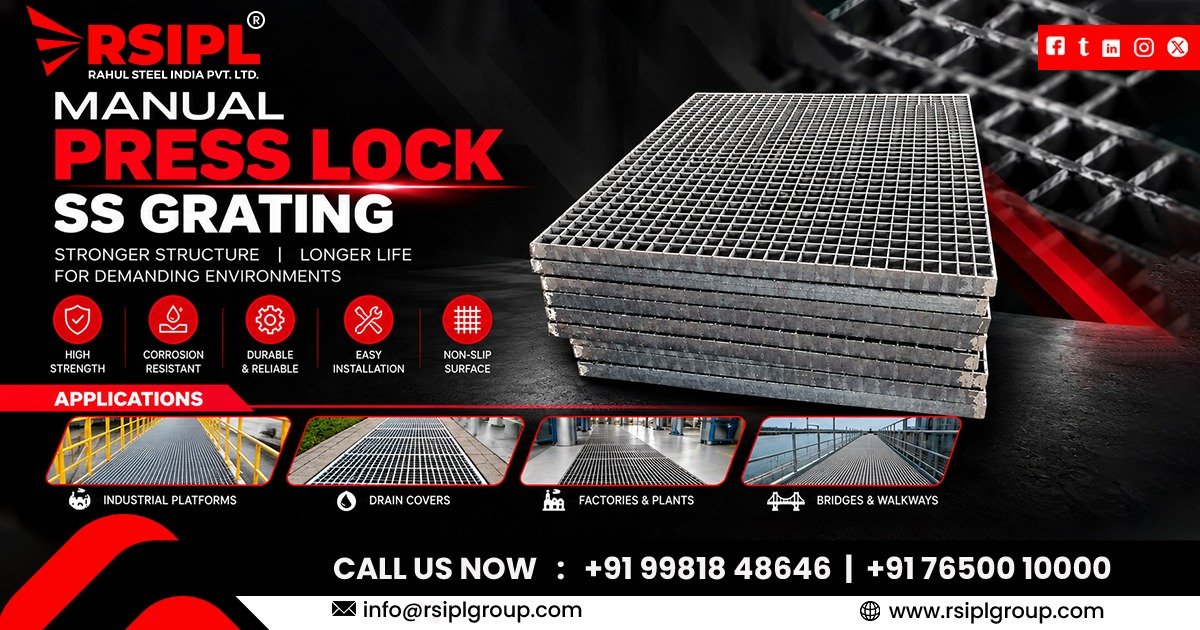
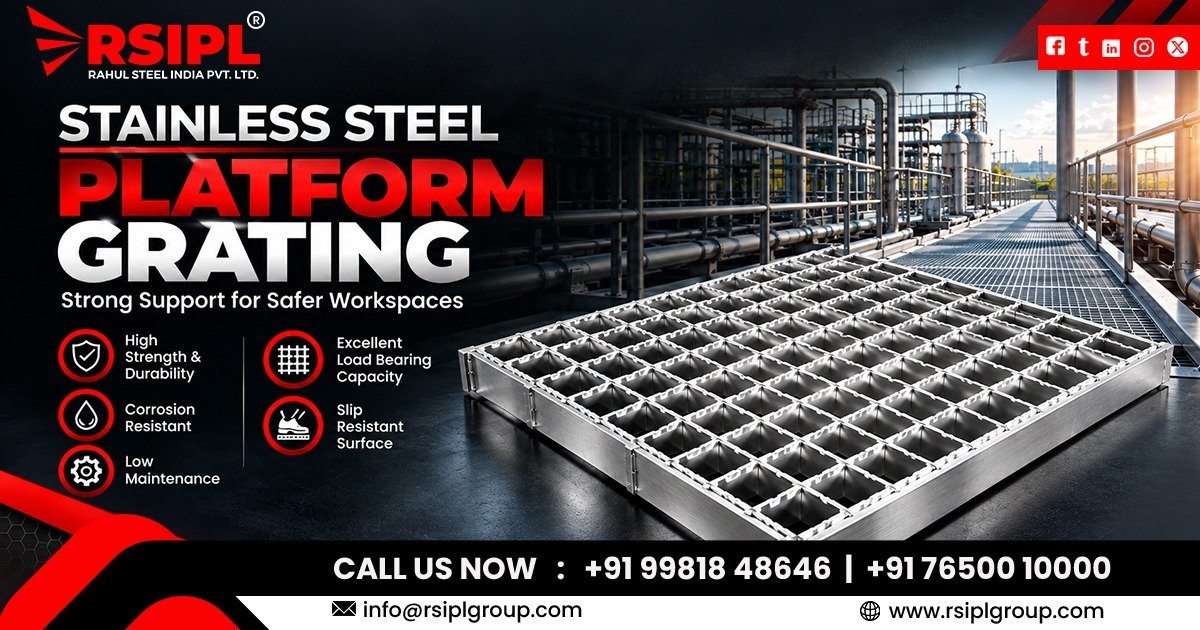
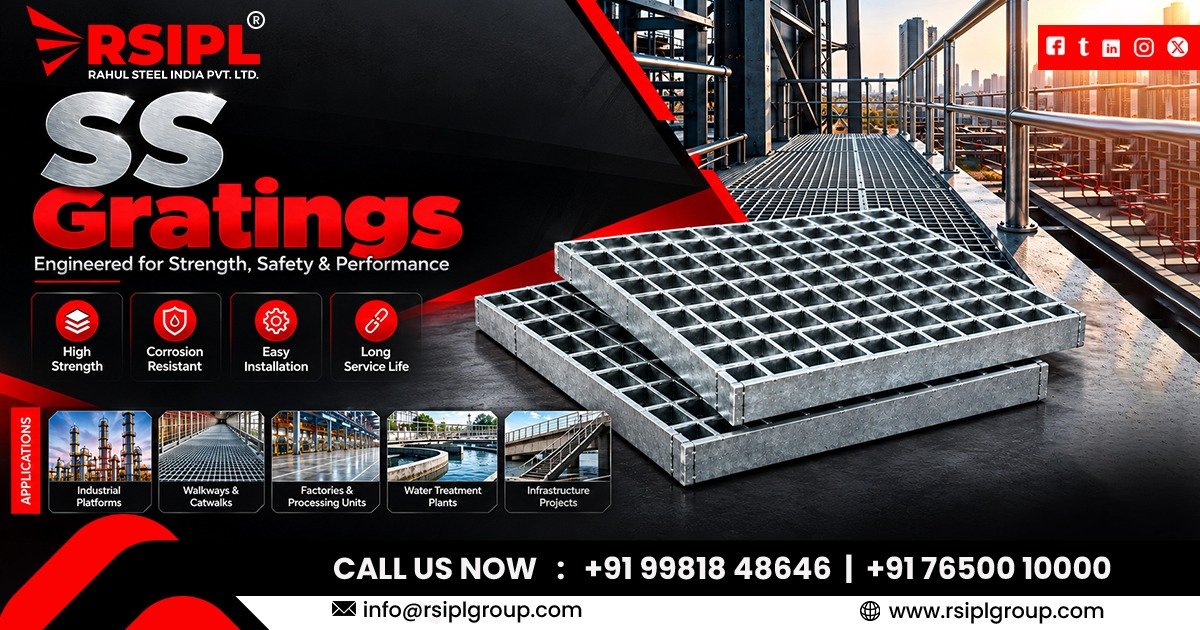
Stainless steel gratings are used in industrial walkways, drainage channels, platforms, and areas requiring open flooring. However, selecting stainless steel alone does not establish whether a grating is suitable for a particular installation.
The required design depends on where the grating will be installed, how it will be supported, and what loads it must carry.
Before approaching a Stainless Steel Gratings Supplier In Madhya Pradesh, identify the intended application and operating environment.
– Industrial walkways: Consider pedestrian traffic, slip resistance, and safe footing.
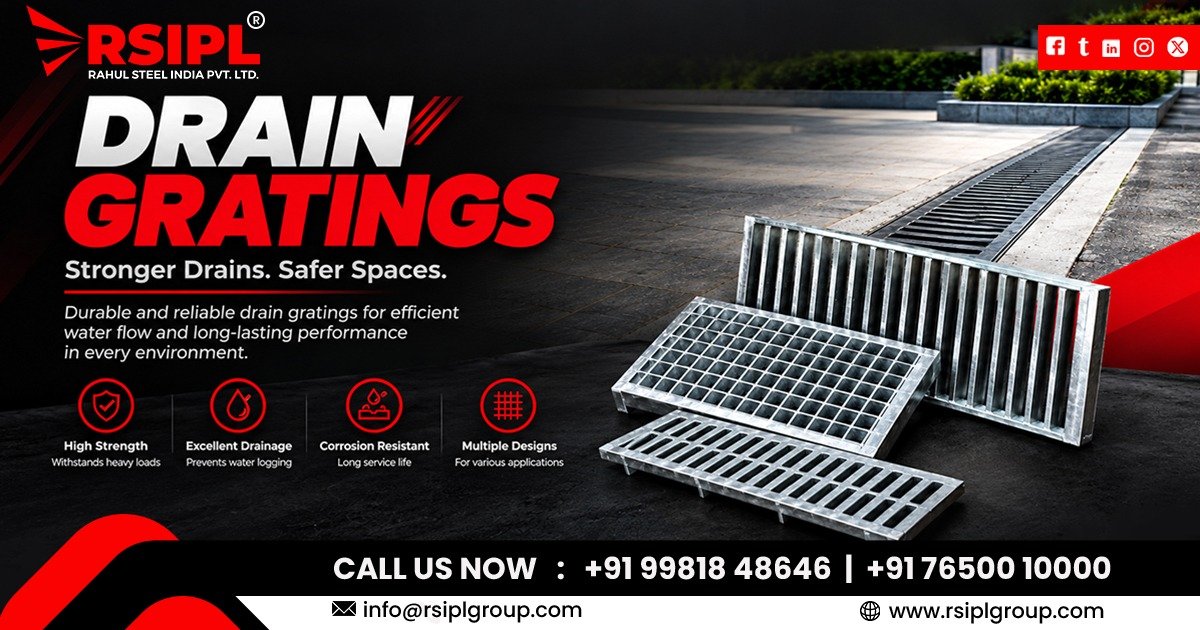
– Drainage channels: Check the opening size, drainage requirements, and ease of cleaning.
– Equipment platforms: Establish the expected load and distance between supporting members.
– Wet processing areas: Evaluate chemical exposure, cleaning agents, and surface conditions.
2. Why Support Span Can Change Your Grating Selection
One important technical detail is the support span—the distance between the structural members supporting the grating.
A grating that works across a short span may not perform adequately across a wider opening. Its load capacity depends on factors such as bearing-bar dimensions, material properties, panel construction, and support arrangement.
Buyers should therefore provide the clear opening dimensions and proposed support spacing when requesting a quotation. The supplier or design engineer should verify the suitability of the proposed configuration for the intended load.
Avoid comparing two quotations solely by panel size or price when their load requirements and support conditions differ.
3. Check Corrosion Exposure Before Finalising the Grade
Stainless steel offers corrosion resistance, but different grades perform differently in different environments. Chemical concentration, temperature, moisture, cleaning methods, and exposure duration can influence material suitability.
For example, a grating installed in a general indoor walkway may face different conditions from one exposed to cleaning chemicals or process liquids.
Ask the supplier to confirm the proposed stainless steel grade and provide relevant material documentation. Where aggressive chemicals are involved, obtain a suitability assessment based on the actual operating conditions rather than relying on the term “stainless steel” alone.
4. Match Opening Dimensions With Safety and Drainage Needs
The gap between grating bars affects drainage, debris passage, footing, and the suitability of the surface for the intended users.
Large openings may be unsuitable in locations where smaller objects could fall through or where specific foot-traffic safety requirements apply. Smaller openings may affect drainage or cleaning requirements, depending on the application.
Share the channel width, panel length, required opening dimensions, and any applicable site safety requirements before approving the final design.
5. Compare Grating Quotations on Equivalent Specifications
A useful supplier comparison should include more than the total quoted amount.
Check whether each quotation clearly identifies:
– Stainless steel grade and material traceability, where required.
– Panel dimensions, bar configuration, and opening size.
– Design load and support-span assumptions.
– Surface finish and slip-resistance requirements.
– Fixing arrangements, edge details, and quantity.
These details help procurement teams identify whether quotations cover equivalent products. A lower price may reflect a different configuration, material grade, or scope of supply, so clarify the differences before making a purchasing decision.
6. A Practical Grating Purchase Scenario
Consider a hypothetical food-processing facility planning to replace damaged grating above a drainage channel. The existing panels fit the channel, but the replacement must also accommodate cleaning chemicals, regular washdowns, and maintenance access.
Ordering panels based only on the old dimensions could overlook changes in loading, material suitability, or fixing arrangements.
A better approach is to document the existing support structure, assess the operating environment, confirm the required stainless steel grade, and approve the replacement dimensions before placing the order.
This process helps reduce avoidable fitment problems and specification mismatches.
7. Buyer Checklist Before Placing an Order
Before finalising a purchase from a Stainless Steel Gratings Supplier In Madhya Pradesh, verify the following:
- Measure the opening: Record channel width, panel length, and support spacing.
- Define the load: Identify pedestrian, equipment, and other expected loads.
- Confirm the material: Specify the stainless steel grade based on exposure conditions.
- Approve the design: Check bar arrangement, openings, finish, and fixing method.
- Review documentation: Request the applicable material details and technical drawings.
- Plan delivery and installation: Confirm quantities, panel identification, site measurements, and delivery requirements.
8. When Should Buyers Request a Custom Grating Configuration?
Standard panel dimensions may not suit every installation. Custom dimensions or edge arrangements may be needed around equipment foundations, drainage channels, irregular openings, and existing steel structures.
For these projects, provide a dimensioned drawing or clear measurements before requesting a quotation. Identify cut-outs, support locations, edge restraints, and any removable panels needed for maintenance.
Customisation should be finalised only after checking structural suitability and installation requirements.
This is particularly relevant when sourcing stainless steel gratings for an existing plant, where small dimensional differences can affect fitment and maintenance access.
9. Industrial Sourcing Considerations Across Madhya Pradesh
Madhya Pradesh has industrial centres serving sectors such as engineering, pharmaceuticals, food processing, textiles, mining, and manufacturing. These different operating environments can create different requirements for flooring, drainage, and access platforms.
For buyers searching for a Stainless Steel Gratings Supplier In Madhya Pradesh, compare technical specifications, freight arrangements, delivery schedules, and the availability of project documentation before selecting a supplier.
Relevant cities and industrial locations include Indore, Bhopal, Pithampur, Dewas, Ujjain, Gwalior, Jabalpur, Ratlam, Sagar, Rewa, Satna, Katni, Singrauli, Neemuch, Khandwa, Khargone, Itarsi, Mandideep, Govindpura Industrial Area, Sanwer Road Industrial Area, Malanpur, Banmore, Nagda, Dhar, and Shivpuri.
10. Four Product-Related Service and Support Points
The following are useful areas to discuss with the supplier and confirm for your project.
– Requirement Assessment: Share the intended application, operating conditions, and expected loads.
– Configuration Coordination: Confirm panel dimensions, bar arrangement, and support spacing.
– Manufacturing and Fabrication: Discuss whether the required dimensions and edge details can be produced.
– Installation Coordination: Clarify fixing arrangements, site measurements, and installation responsibilities before ordering.
11. About Rahul Steel India Pvt. Ltd.
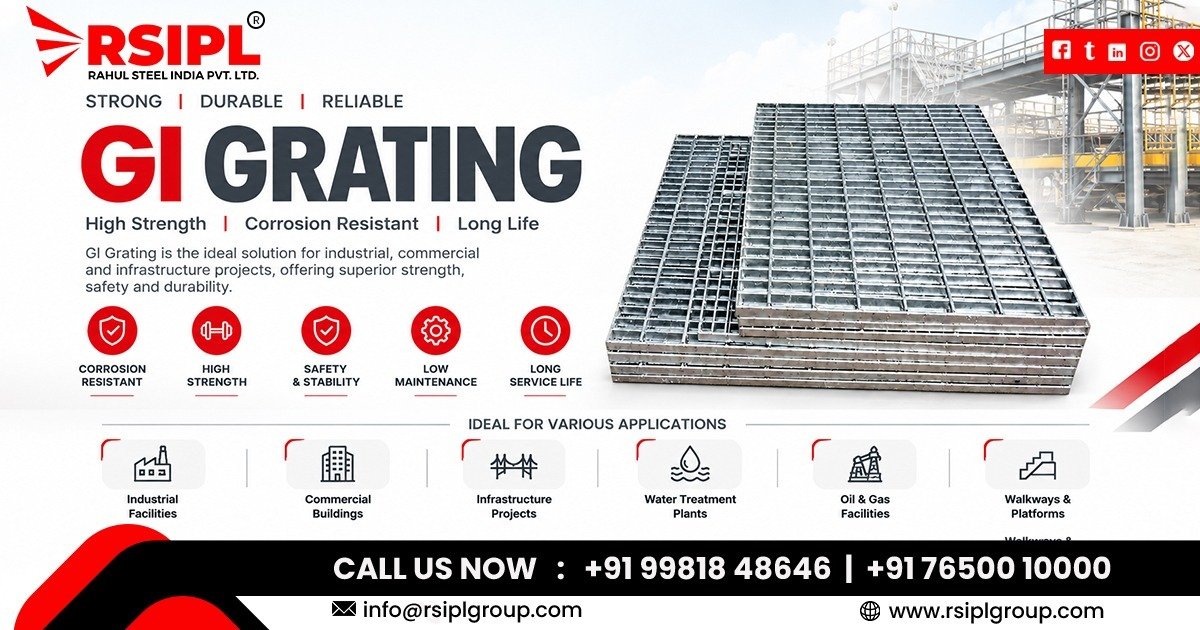
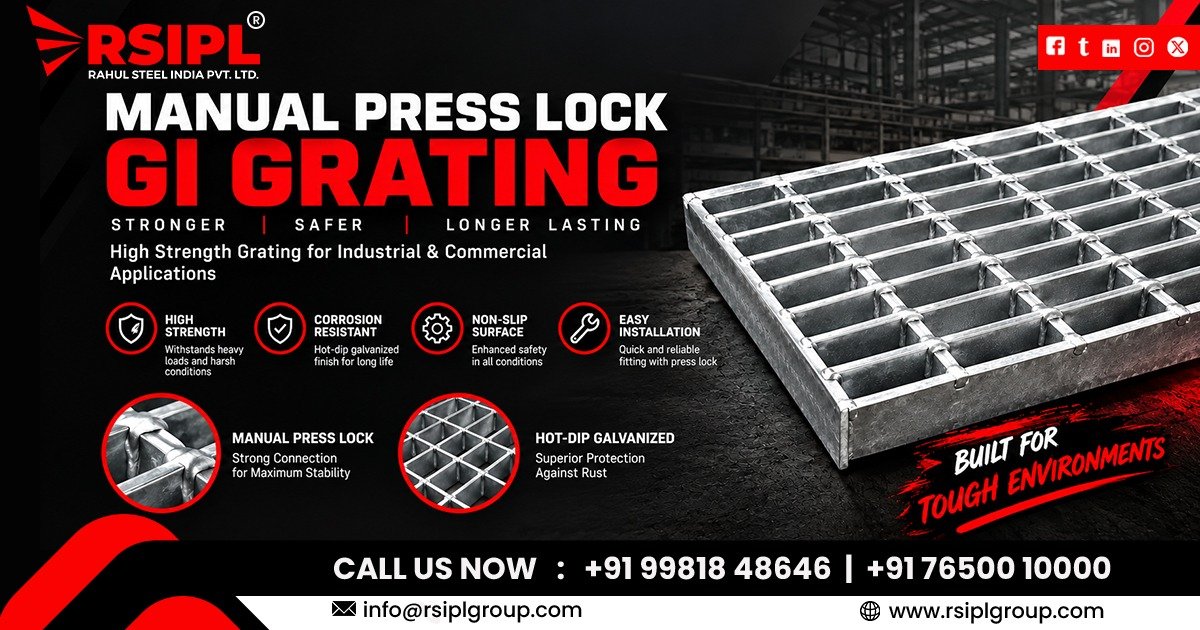
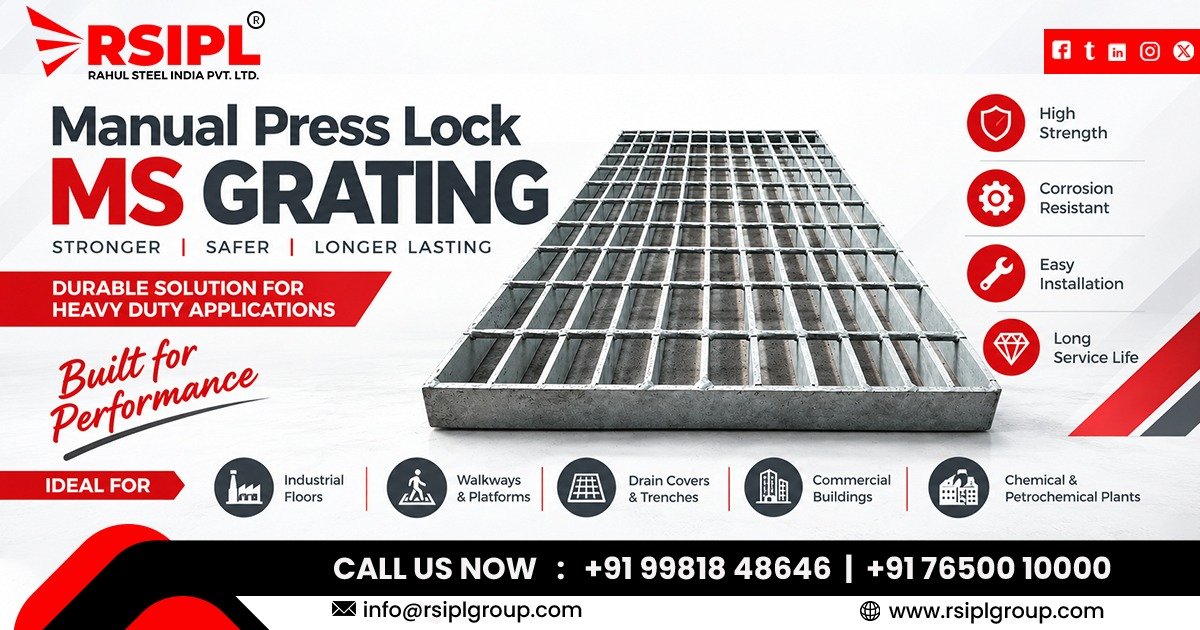
Rahul Steel India Pvt. Ltd. offers grating products, including stainless steel, mild steel, galvanized iron, platform, serrated, drain, and electroforged gratings. Its website also describes structural fabrication and turnkey project activities.
The company lists its registered address in Kathwada, Ahmedabad, Gujarat, and its factory at Tejas Industrial Park, Bhavda, Ahmedabad. Buyers in Madhya Pradesh can contact the company to discuss project requirements, product availability, specifications, and delivery arrangements.
Website: rsiplgroup.com
Product information: Gratings by Rahul Steel India
12. Frequently Asked Questions
1. Which stainless steel grade should I select for industrial gratings?
The appropriate grade depends on moisture, chemicals, temperature, cleaning practices, and exposure conditions. Confirm the grade with the supplier based on the actual application.
2. What information is required for a grating quotation?
Provide the panel dimensions, support span, expected loading, material grade, opening size, surface finish, quantity, and fixing requirements.
3. Can stainless steel gratings be used for drainage channels?
Yes, they can be considered for drainage applications when the opening dimensions, load capacity, corrosion resistance, and cleaning requirements are suitable for the installation.
4. What determines the price of stainless steel gratings?
Pricing depends on the stainless steel grade, panel dimensions, material quantity, construction, surface finish, fabrication requirements, and delivery arrangements. Request a quotation against a clearly defined specification.
13. Conclusion
Selecting the right grating requires more than choosing a corrosion-resistant material. Buyers should evaluate support spacing, load requirements, chemical exposure, opening dimensions, and installation details together. A clearly documented specification helps procurement teams compare suppliers fairly and reduce the risk of ordering unsuitable panels for their facilities.
Contact Rahul Steel India Pvt. Ltd. to discuss your stainless steel grating requirements for projects in Madhya Pradesh. Share your dimensions, application details, and technical specifications to enquire about a suitable product configuration.
Call Us: +91 99818 48646, +91 76500 10000
Email: sales@rsiplgroup.com, info@rsiplgroup.com