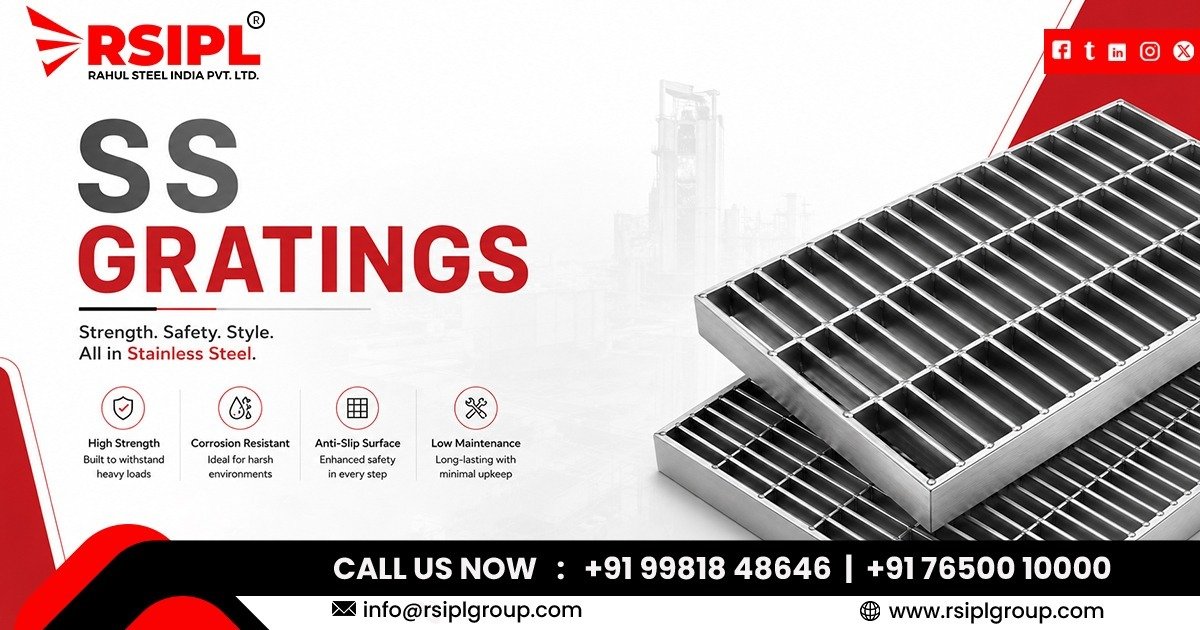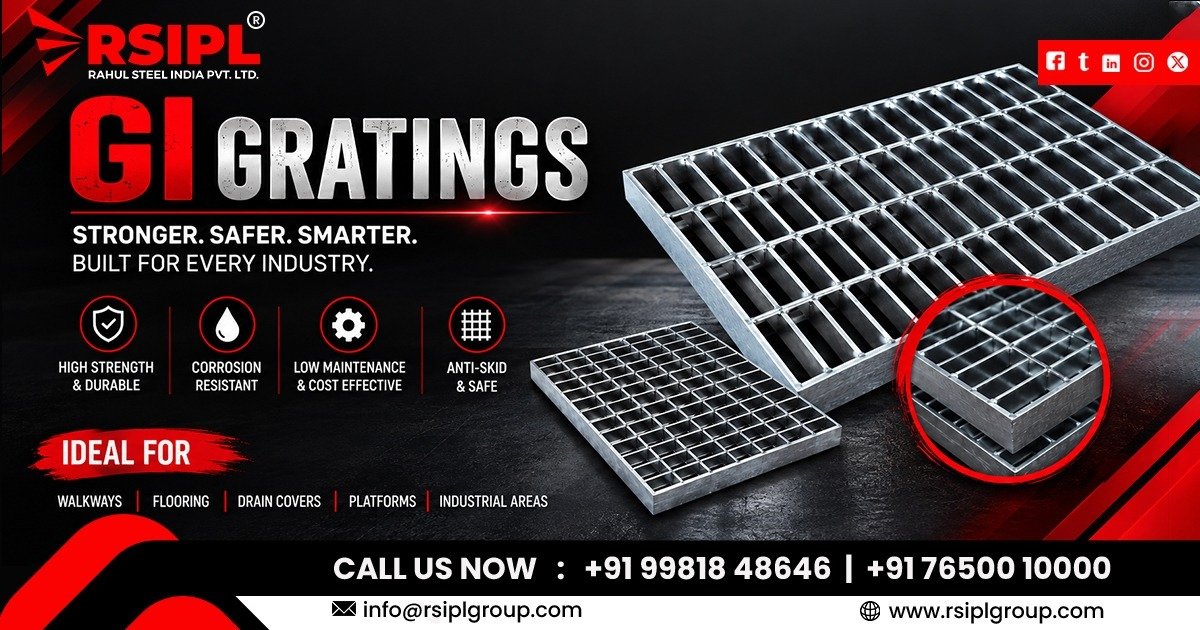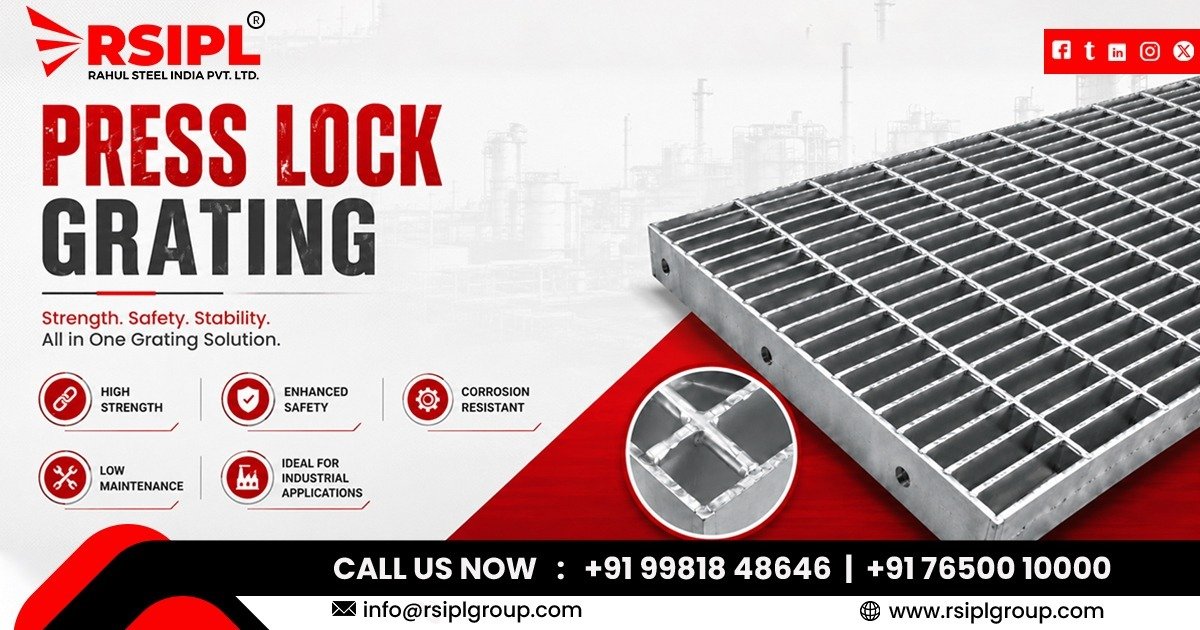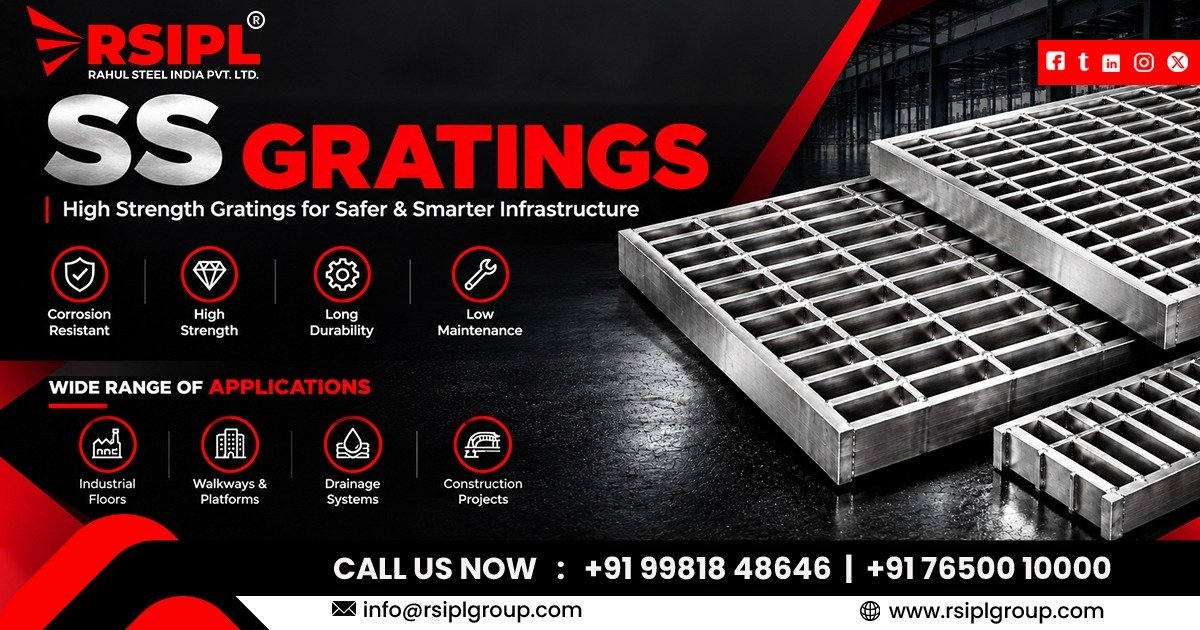
Industrial flooring, drainage covers, platforms, and access areas need gratings that can handle the surrounding operating conditions without creating unnecessary maintenance concerns. Stainless Steel Gratings Supplier In Andhra Pradesh requirements therefore depend on material selection, dimensions, loading conditions, fabrication quality, and installation planning.
Start With the Load and Location, Not Just the Grating Size
Before ordering, buyers should define:
- Loading condition: Foot traffic, equipment movement, trolley loads, or other operational loads.
- Installation area: Floor opening, trench, platform, walkway, drain, or access area.
- Exposure: Indoor, outdoor, wet, humid, or chemically exposed environments.
- Opening dimensions: The clear opening determines the required grating dimensions and support arrangement.
- Maintenance access: Removable sections may be preferable where frequent inspection is required.
- Surface requirement: Areas exposed to moisture may require attention to slip resistance and drainage.
A grating selected only by nominal dimensions can create installation or operational problems later.
Material Selection Should Match the Operating Environment
Buyers should discuss:
| Checkpoint | Why it matters |
| Stainless steel grade | Determines suitability for the service environment |
| Thickness and section | Influences structural requirements |
| Surface finish | Relevant to appearance, cleaning, and handling |
| Moisture exposure | Helps determine material suitability |
| Chemical contact | Requires specific compatibility assessment |
| Fabrication method | Affects dimensional accuracy and fit-up |
| Edge treatment | Helps achieve a suitable installation finish |
For demanding environments, the supplier should review the operating conditions before confirming the material.
Grating Configuration Has to Fit the Actual Opening
There is no single configuration suitable for every industrial area. The design should correspond with the opening, support arrangement, traffic, and access requirements.
A buyer may need to confirm:
- Overall length and width
- Load-bearing direction
- Bearing bar arrangement
- Cross-member configuration
- Panel weight and handling requirements
- Support frame arrangement
- Fixing method
- Removable or permanently installed sections
- Required cut-outs around pipes, equipment, or structures
For replacement work, measuring the existing opening accurately is particularly important. Even a small dimensional mismatch can complicate installation.
How Industrial Gratings Fit Into Plant Infrastructure
Stainless steel grating panels can be incorporated into areas where access, drainage, ventilation, or elevated walking surfaces are required.
Typical industrial planning considerations include:
- Opening preparation – Confirm the finished opening and support edges.
- Support verification – Check that the supporting structure is suitable for the intended loading.
- Panel positioning – Place each grating section according to the planned orientation.
- Fixing – Use an appropriate fixing arrangement for the installation condition.
- Level checking – Ensure panels sit properly without unwanted movement or uneven edges.
- Final inspection – Check access, fitment, stability, and surrounding clearances.
The final installation method should follow the project design and supplier’s technical recommendations.
Installation Planning Can Prevent Rework
Site conditions should be reviewed before fabrication or dispatch. This is especially relevant when gratings are being supplied for an existing plant.
Check these points in advance:
- Exact opening measurements
- Support beam or frame positions
- Required installation clearance
- Nearby pipework and equipment
- Access route for carrying panels
- Panel lifting and handling requirements
- Fixing locations
- Drainage direction
- Finished floor level
For large projects, a marked layout or panel identification system can also make installation more organized.
Maintenance Starts With Clean Surfaces and Regular Inspection
Gratings are exposed to foot traffic, moisture, dirt, process residue, and sometimes industrial contaminants. Routine inspection helps identify issues before they interfere with safe access or drainage.
Useful maintenance practices include:
- Remove accumulated dirt and process residue.
- Check panels for visible deformation or damage.
- Inspect fixing points for looseness.
- Examine support frames and surrounding structures.
- Keep drainage openings clear.
- Check areas exposed to aggressive chemicals more frequently.
- Replace damaged sections where necessary.
- Follow the manufacturer’s recommendations for cleaning methods.
Avoid using cleaning chemicals that are incompatible with the selected stainless steel material or finish.
What Buyers Should Confirm Before Placing the Order
When evaluating a Stainless Steel Gratings Supplier In Andhra Pradesh, procurement teams should look beyond product availability and confirm whether the supplier can match the actual project requirement.
A practical purchasing checklist includes:
- Required stainless steel grade
- Panel dimensions and quantity
- Expected loading condition
- Installation location
- Surface and finish requirements
- Support-frame dimensions
- Fixing requirements
- Cut-outs or special fabrication
- Inspection and quality documentation
- Packing and identification requirements
- Installation assistance, if required
- Spare or replacement panel requirements
For repeat industrial projects, maintaining approved dimensions and material details can also simplify future procurement.
Services
- Requirement assessment based on grating location, dimensions, and loading conditions
- Product selection and fabrication planning for project-specific requirements
- Installation and fitment guidance for industrial grating applications
- Technical and after-sales support for replacement or additional requirements
Location
Industrial projects across Andhra Pradesh may require stainless steel gratings for manufacturing facilities, processing units, infrastructure projects, commercial plants, and maintenance applications. Relevant markets include Visakhapatnam, Vijayawada, Guntur, Tirupati, Nellore, Kurnool, Rajahmundry, Kakinada, Anantapur, Kadapa, Eluru, Ongole, Srikakulam, Vizianagaram, Machilipatnam, Chittoor, Hindupur, Sri City, Amaravati, Mangalagiri, Tadepalligudem, Nandyal, and Bhimavaram.
Grating Requirement Planning With Rahul Steel India Pvt. Ltd.
Rahul Steel India Pvt. Ltd. can support buyers in discussing stainless steel grating requirements, dimensions, fabrication considerations, and project-specific needs. The company’s website, rsiplgroup.com, can be referred to for its product and business information.
For Andhra Pradesh requirements, the company provides manufacturing support from Ahmedabad, Gujarat, India, allowing buyers to discuss specifications and fabrication requirements before finalizing an order. For replacement work or new installations, sharing accurate drawings, measurements, loading details, and site information can help establish the appropriate product configuration.
Frequently Asked Questions
Q: What should I provide when requesting stainless steel grating?
A: Share the required dimensions, installation location, expected loading, stainless steel requirement, quantity, and fixing details. Drawings or site measurements can help with accurate planning.
Q: Can stainless steel gratings be fabricated for specific openings?
A: Yes, project requirements can be discussed for dimensions, cut-outs, panel arrangements, and other fabrication considerations, subject to the design and manufacturing requirements.
Q: How should stainless steel gratings be maintained?
A: Keep surfaces and drainage openings clean, inspect panels and fixing points regularly, and check for visible damage or deformation. Cleaning procedures should suit the selected stainless steel grade and finish.
Q: What should industrial buyers verify before ordering from a supplier?
A: Confirm material grade, dimensions, loading requirements, fabrication details, fixing arrangement, inspection documentation, packing, delivery requirements, and available technical support.
Conclusion
For industrial projects in Andhra Pradesh, stainless steel gratings should be selected around actual loading, opening dimensions, environmental exposure, material compatibility, and installation conditions. Working with a Stainless Steel Gratings Supplier In Andhra Pradesh that can discuss fabrication requirements and provide manufacturing support from Ahmedabad, Gujarat, India can simplify project planning.
Call Us: +91 99818 48646, +91 76500 10000
Email: sales@rsiplgroup.com, info@rsiplgroup.com