GI grating selection affects floor safety, drainage, access, and maintenance in industrial facilities. Buyers searching for a Top Gi Grating Manufacturer In Ahmedabad should assess load requirements, panel dimensions, and installation conditions before placing an order with Rahul Steel India Pvt. Ltd.
What Should You Specify Before Ordering GI Grating?
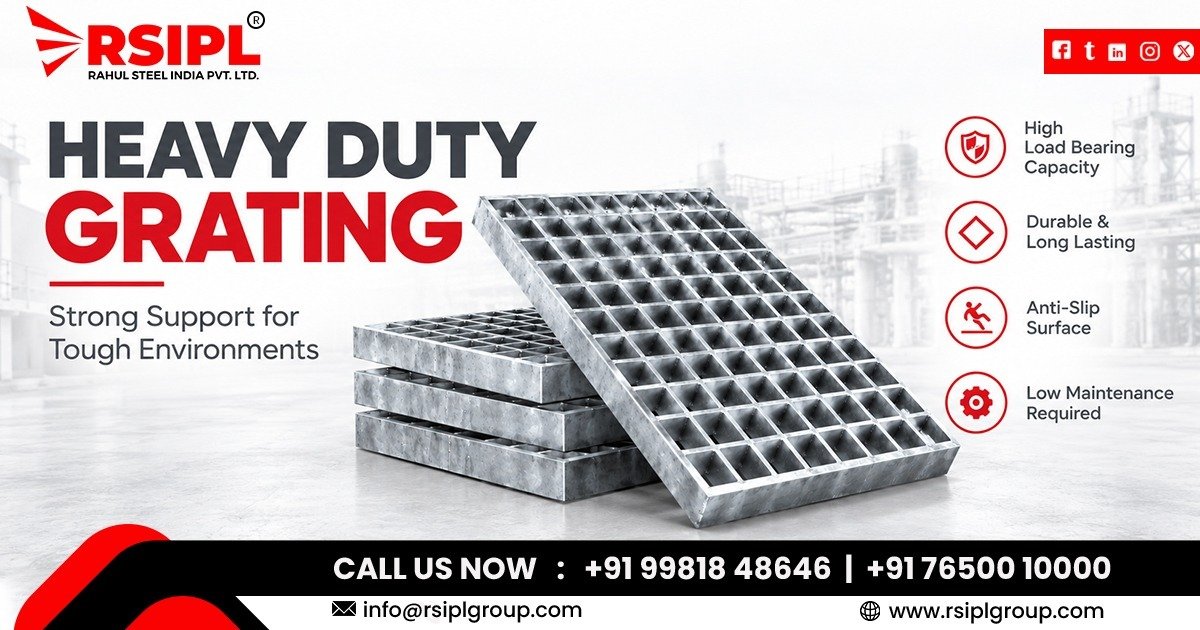
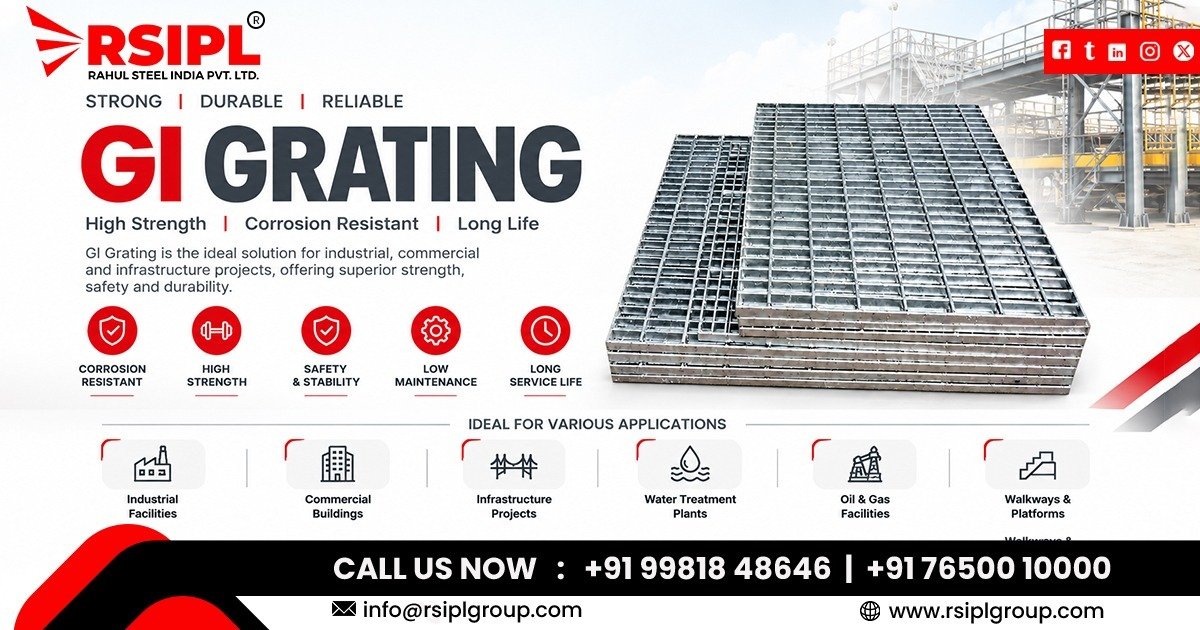
Galvanized iron (GI) grating is a metal grid structure used for walkways, platforms, drainage covers, and other areas requiring a combination of support and open space. Its suitability depends on how the grating will be used at the site.
Before requesting a quotation, define the following requirements:
– Application: Identify whether the panels are intended for walkways, maintenance platforms, trenches, or industrial flooring.
– Load conditions: Specify pedestrian traffic, equipment loads, and any expected vehicle movement. The design should account for the actual loading conditions.
– Panel dimensions: Confirm the length, width, thickness, and required opening sizes against the installation drawings.
– Environmental exposure: Explain whether the grating will be exposed to moisture, chemicals, outdoor weather, or frequent washing.
Clear specifications help suppliers assess the requirement and reduce the possibility of ordering panels that do not fit the intended installation.
How Galvanized Grating Performs in Industrial Environments
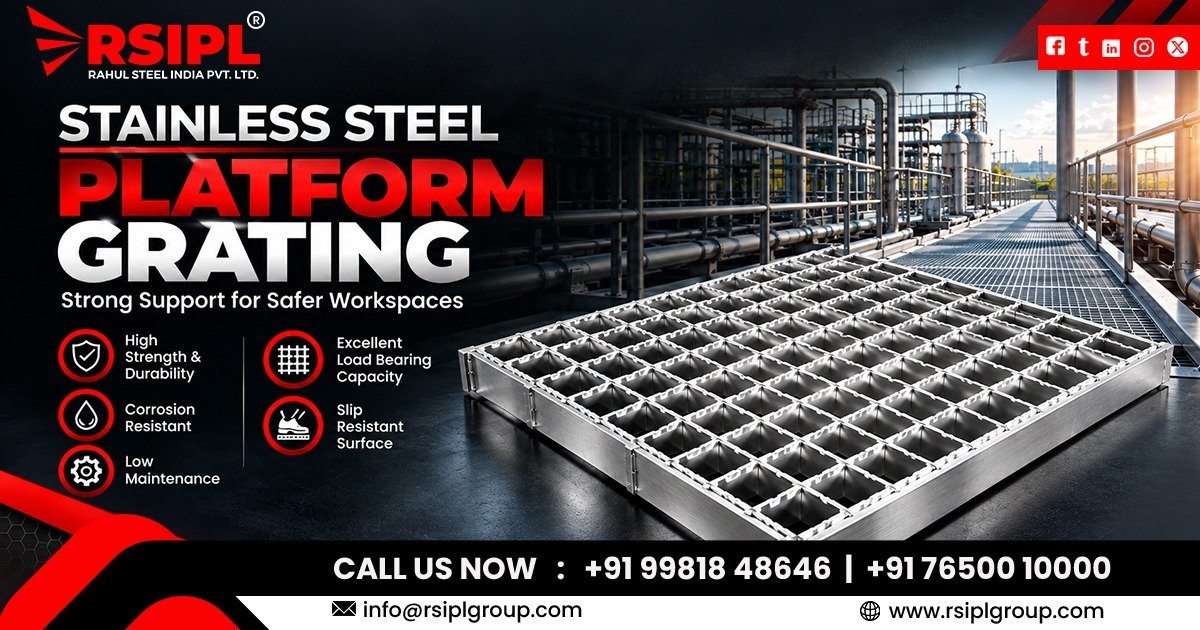
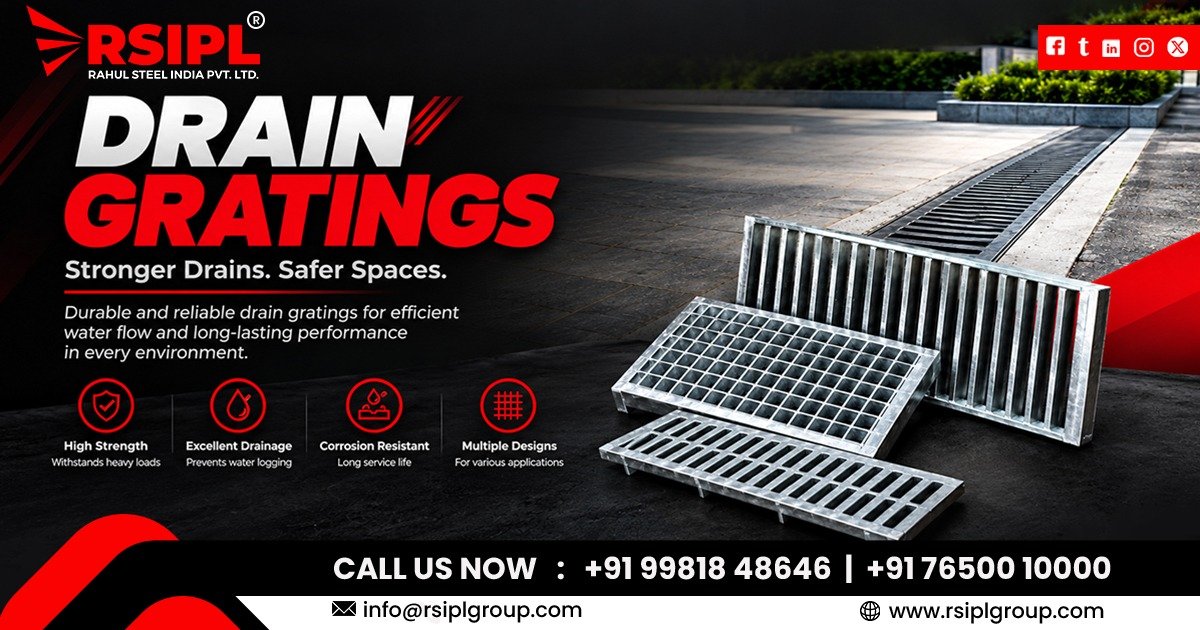
GI grating combines a steel grid structure with a zinc coating intended to protect the underlying steel against corrosion. The open design allows water and debris to pass through, depending on the opening size and surrounding installation.
For example, a factory maintenance walkway may require a different configuration from a drainage trench beside a production line. A platform used by maintenance staff must support the expected loads, while a trench cover must fit securely within its frame and suit the surrounding traffic conditions.
Comparing GI Grating Types for the Intended Application
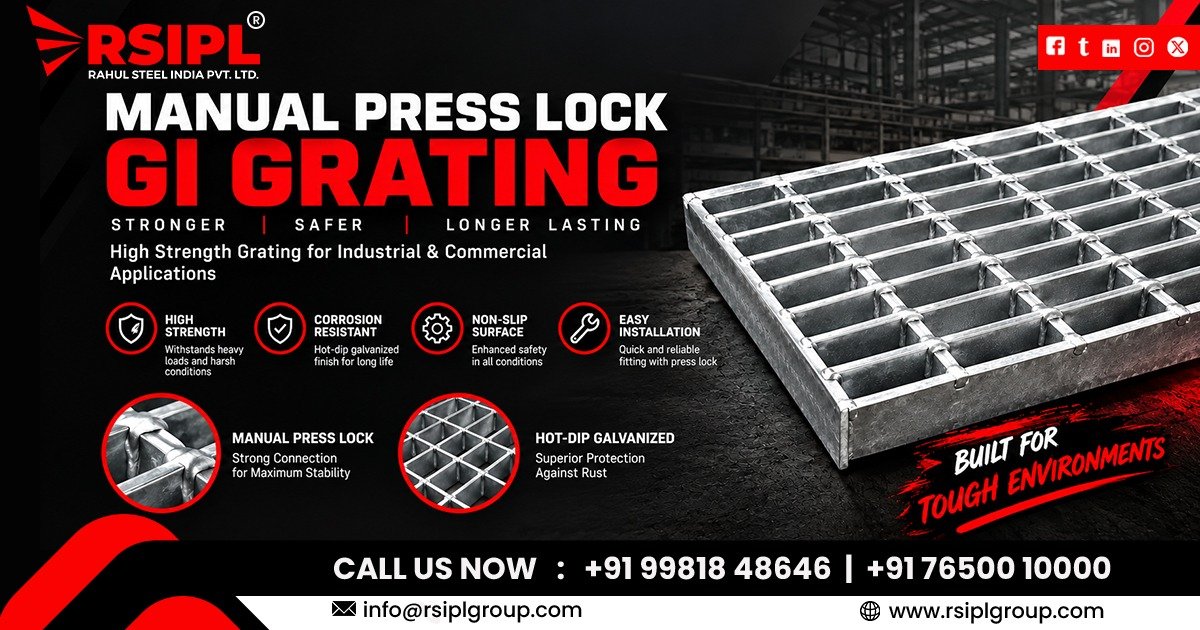
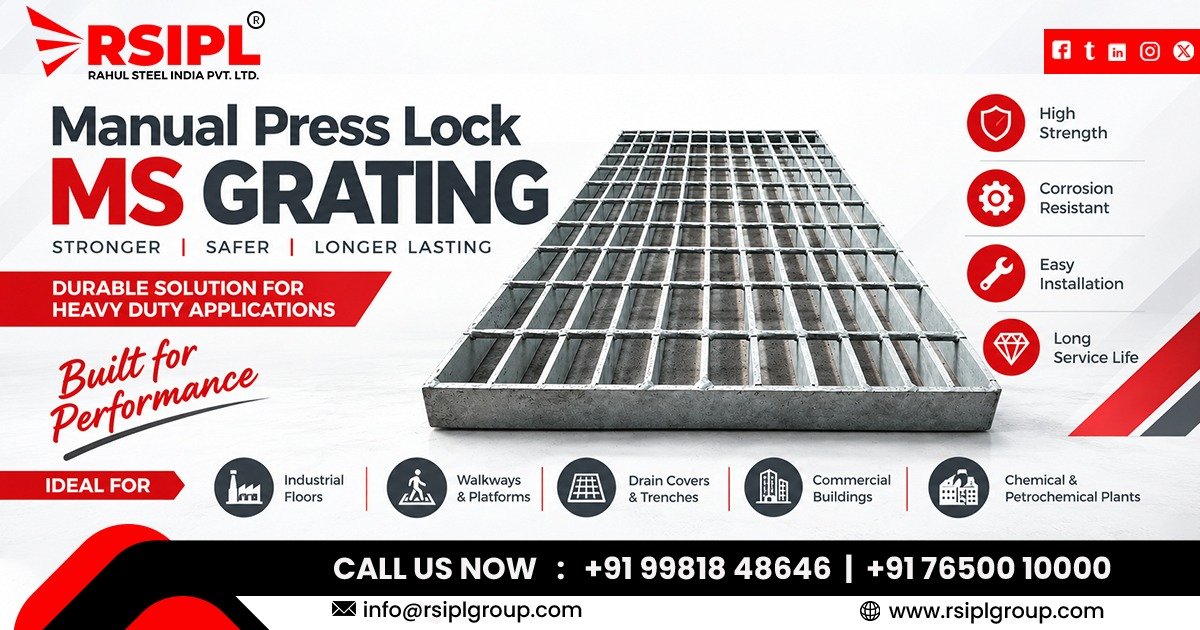
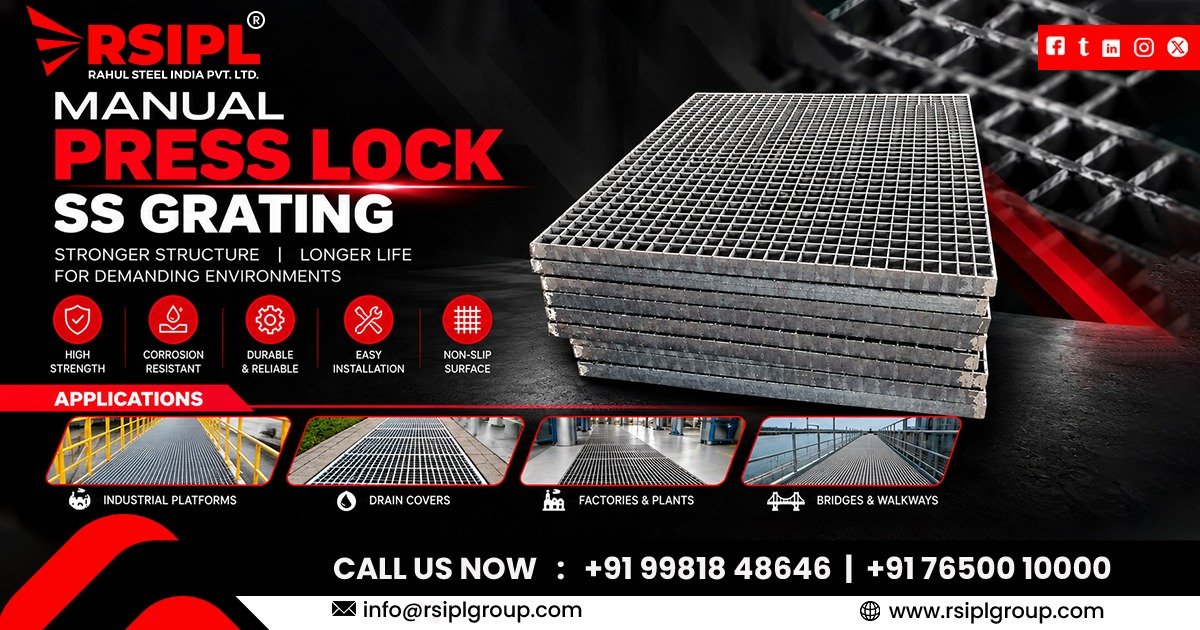
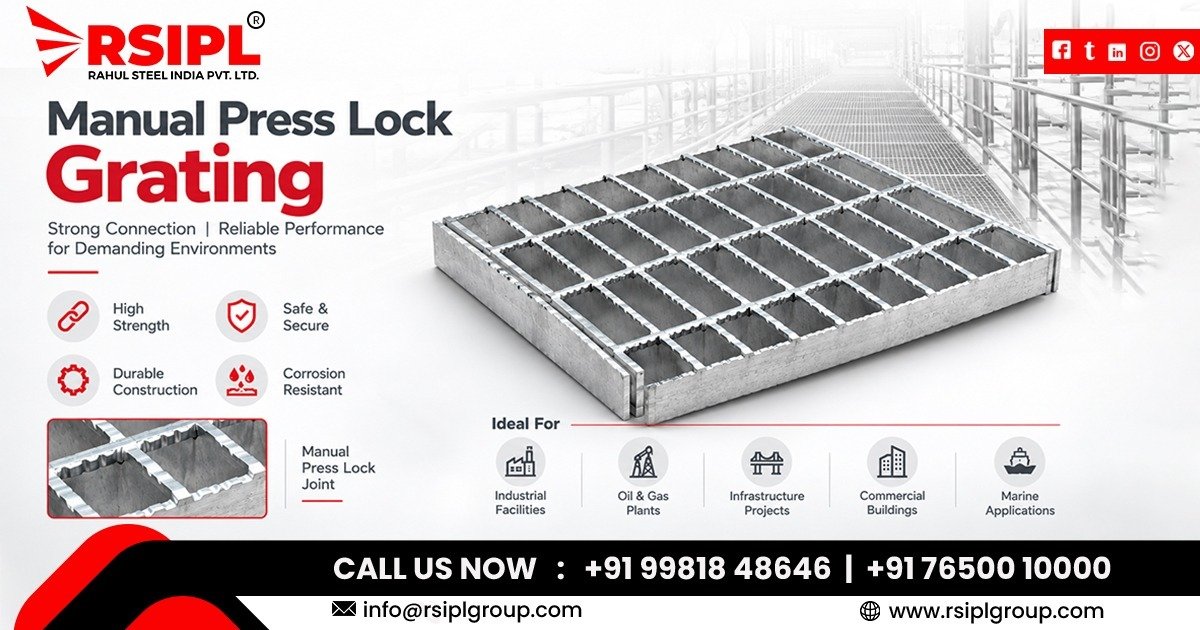
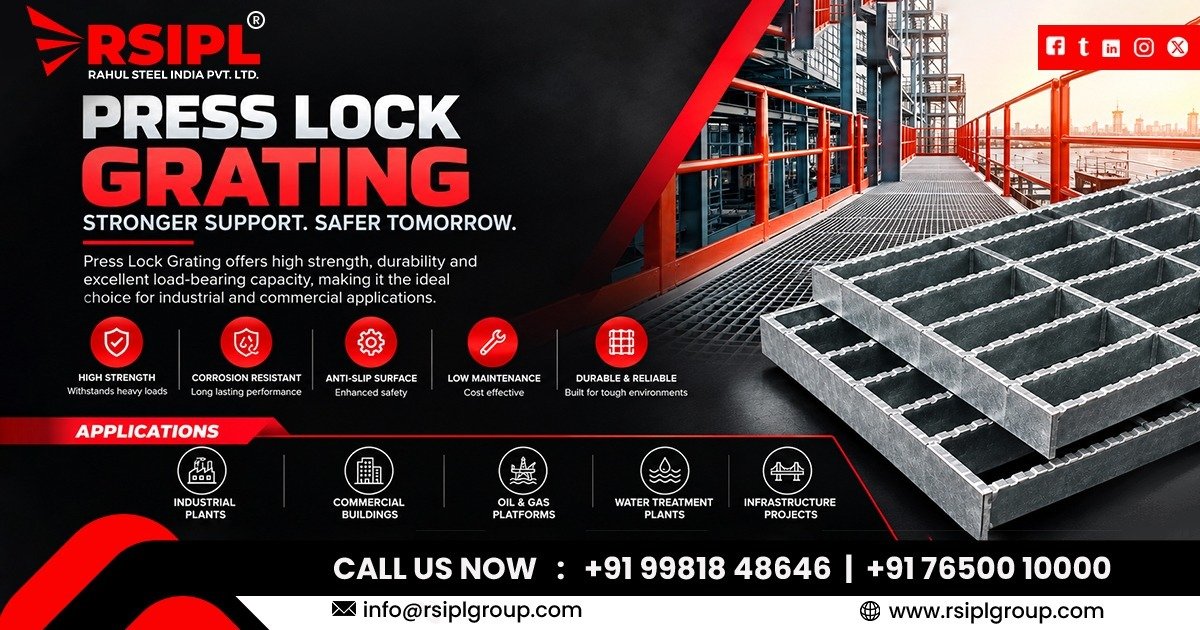
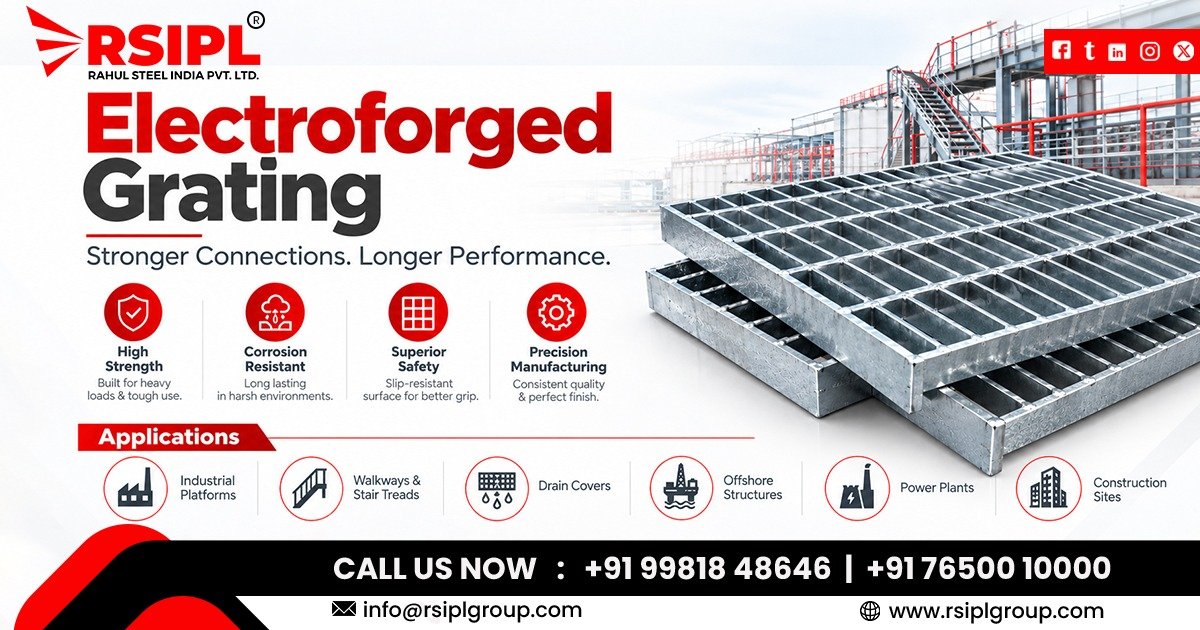
The grating design should match the site conditions rather than being selected by appearance alone. Rahul Steel India lists welded, press-locked, and serrated GI grating options on its product page.
| Grating type | What buyers should consider |
| Welded grating | Joint construction, load requirements, and panel rigidity |
| Press-locked grating | Grid configuration, dimensional accuracy, and fit within the supporting frame |
| Serrated grating | Surface grip requirements in wet or potentially slippery areas |
A serrated surface may be worth evaluating for outdoor walkways or maintenance platforms where slip resistance is a concern. However, surface design alone does not guarantee safety; drainage, footwear, housekeeping, and the operating environment also matter.
Ask the supplier to confirm the available configuration, material details, and suitability for the intended load before finalizing the purchase.
How to Check Grating Quality Before Dispatch
A grating panel can appear suitable but still create installation problems if its dimensions, bearing-bar arrangement, or finish do not match the project drawings.
Buyers should review these points before accepting an order:
– Dimensions: Compare panel measurements with the approved layout and support-frame openings.
– Load suitability: Confirm the proposed grating design against the required load and support span.
– Galvanized finish: Check for visible coating damage, bare areas, and excessive deposits that could affect fit or finish.
– Panel construction: Inspect the grid arrangement, joints, edges, and overall consistency.
– Documentation: Request applicable material details, inspection records, and agreed technical information.
For large orders, a documented inspection process can help ensure that panels supplied in different batches match the approved requirement. The acceptance criteria should be agreed upon before production or dispatch.
Installation Planning: Prevent Fitment and Safety Problems
A practical installation sequence includes:
1. Verify the site: Check the supporting frame, opening dimensions, levels, and access conditions against the approved drawings.
2. Confirm panel orientation: Identify bearing-bar direction and ensure the panels are arranged according to the design requirements.
3. Check support and fixing: Use an appropriate securing arrangement to prevent unwanted movement or displacement.
4. Inspect openings and edges: Confirm that gaps, cut-outs, and adjoining panels do not create avoidable trip or access hazards.
5. Complete the handover inspection: Have a qualified person verify fitment, support, fixing, and safe access before the area is put into service.
Do not assume that a panel is safe simply because it fits the opening. Structural suitability and secure installation must also be verified.
Maintenance Checks That Help Avoid Unexpected Replacement
GI grating maintenance should reflect the site’s exposure, traffic, and operating conditions. Regular visual checks can identify problems before they disrupt access or drainage.
Look for loose or missing fasteners, bent bars, damaged galvanizing, corrosion, accumulated debris, and changes in panel alignment. Areas exposed to chemical spills or standing moisture may require closer inspection.
| Observed issue | Recommended check |
| Water is not draining properly | Check for blocked openings and accumulated debris |
| Panel movement or rattling | Restrict access if unsafe and arrange a competent inspection of supports and fixings |
| Visible rust or coating damage | Assess the affected area and determine whether repair or replacement is needed |
| Bent or distorted bars | Check for overloading, impact, or inadequate support before returning the area to service |
Do not continue using a visibly damaged panel in a load-bearing walkway or platform without an appropriate safety assessment. Maintenance and replacement decisions should follow the site’s inspection procedures.
Services
– GI grating requirement assessment and configuration guidance.
– Panel dimension coordination and project-specific product selection.
– Support for material and finish selection based on site conditions.
– Technical coordination for installation requirements and product inspection.
Location
Industrial facilities across Gujarat require grating for maintenance access, platforms, drainage systems, and production-area flooring. Rahul Steel India Pvt. Ltd. provides manufacturing support from Ahmedabad, Gujarat, India, for buyers assessing project requirements in Ahmedabad, Gandhinagar, Sanand, Changodar, Bavla, Dholka, Kalol, Mehsana, Kadi, Vadodara, Halol, Bharuch, Ankleshwar, Dahej, Surat, Hazira, Vapi, Valsad, Rajkot, Jamnagar, Morbi, Bhavnagar, Anand, Nadiad, and Gandhidham.
Product Selection Support From Rahul Steel India Pvt. Ltd.
For buyers evaluating a Top Gi Grating Manufacturer In Ahmedabad, supplier discussions should cover the actual application, load requirements, panel dimensions, finish, and installation arrangement rather than price alone.
Rahul Steel India Pvt. Ltd. provides GI grating options for industrial flooring, walkways, platforms, and drainage applications. Its product range includes different grating configurations, with customization options described on the company’s website.
Visit rsiplgroup.com to review the product information and discuss your requirement. The company’s manufacturing support from Ahmedabad, Gujarat, India, can be relevant for buyers planning industrial projects and coordinating grating specifications with site drawings.
Before requesting a quotation, prepare the panel schedule, estimated quantity, application details, and any available drawings. This gives the supplier a clearer basis for discussing product suitability and the next steps.
FAQs
Q: How do I determine the load capacity required for GI grating?
A: Consider the load type, expected weight, support span, and bearing-bar arrangement. Ask for a suitable load assessment based on the project drawings rather than selecting a panel by thickness alone.
Q: Is GI grating suitable for areas exposed to water?
A: It can be suitable for many wet-area applications because galvanizing provides corrosion protection. The coating, drainage conditions, chemical exposure, and maintenance needs should still be assessed.
Q: Can GI grating panels be manufactured to project-specific dimensions?
A: Project-specific dimensions may be possible depending on the supplier’s manufacturing capabilities. Share the required measurements, layout drawings, cut-outs, and fixing details before confirming the order.
Q: What information should be included in a GI grating quotation request?
A: Include the application, panel dimensions, load requirements, support span, preferred surface type, finish, quantity, delivery location, and relevant drawings. These details help clarify the technical and commercial scope.
Conclusion
Successful grating procurement depends on matching the panel design to site loads, environmental exposure, and installation conditions. Compare technical suitability, finish quality, and supplier coordination before approving an order. Rahul Steel India Pvt. Ltd. offers an Ahmedabad-based point of contact for discussing GI grating requirements for industrial projects.
Share your grating dimensions, application, and project drawings with Rahul Steel India Pvt. Ltd. to discuss a suitable configuration for your site.
Call Us: +91 99818 48646, +91 76500 10000
Email: sales@rsiplgroup.com, info@rsiplgroup.com