Industrial facilities require strong and properly designed floor grating to support heavy loads, maintain safe movement, and provide reliable access around machinery. Rahul Steel India Pvt. Ltd. supports buyers seeking suitable heavy-duty grating solutions for industrial projects in Bihar.
Understanding Heavy Duty Grating for Industrial Flooring
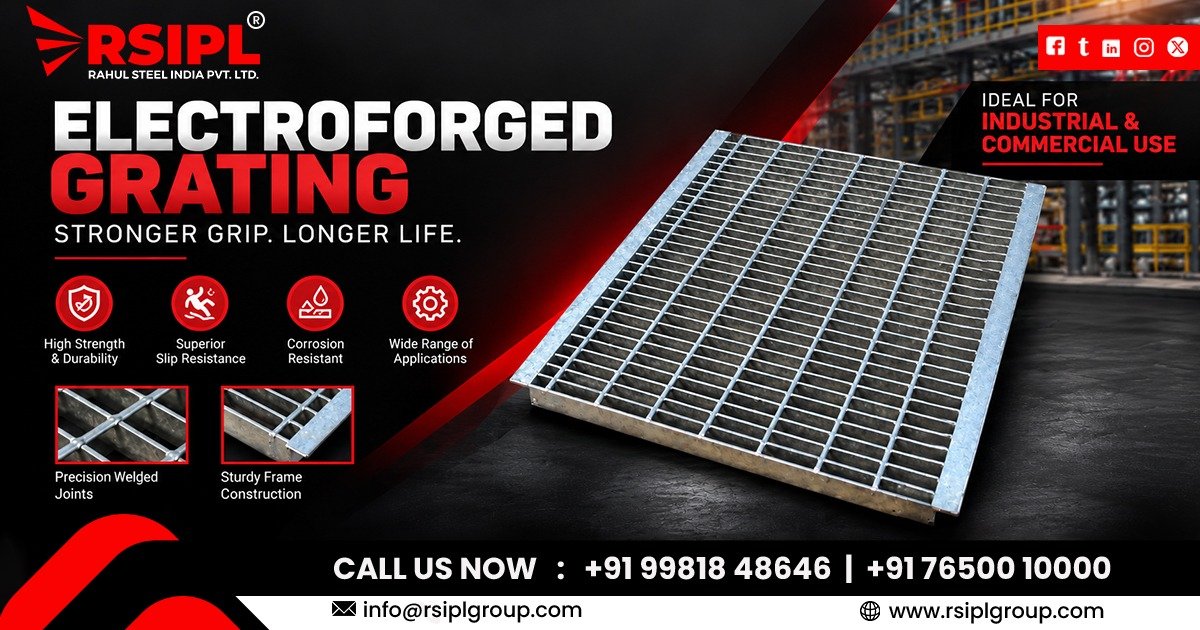
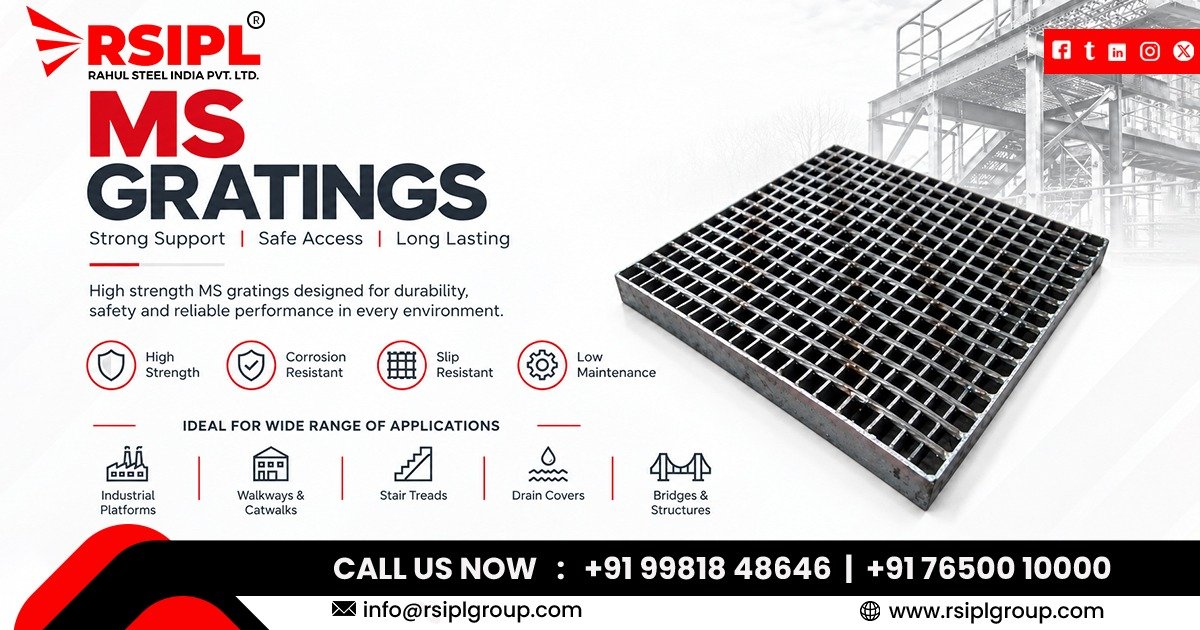
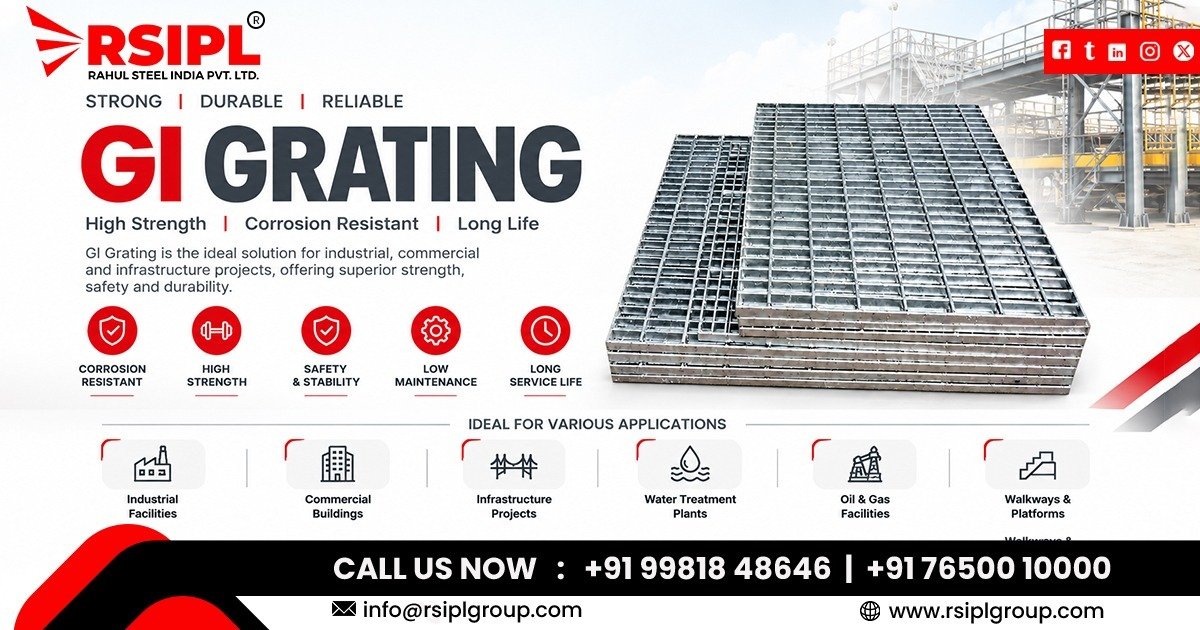
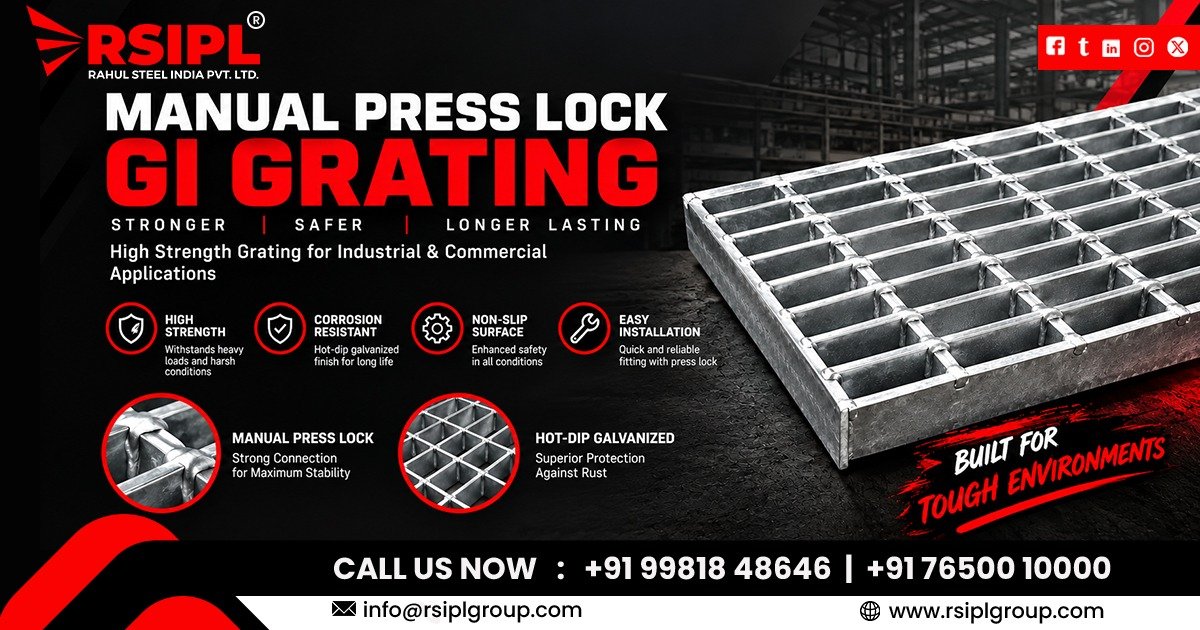
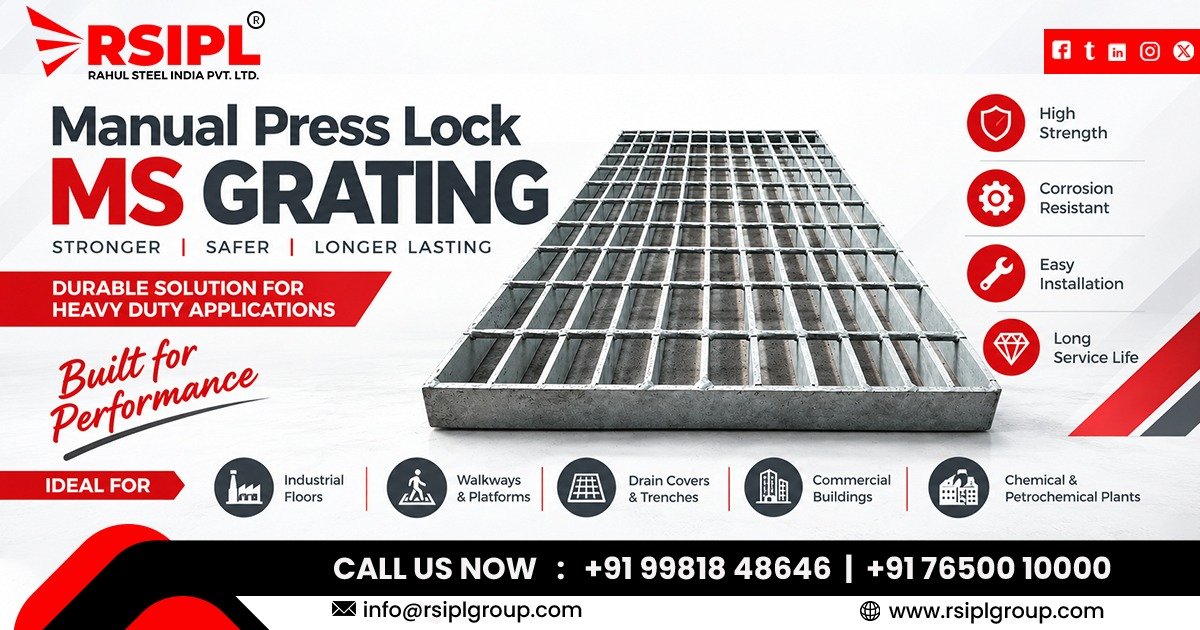
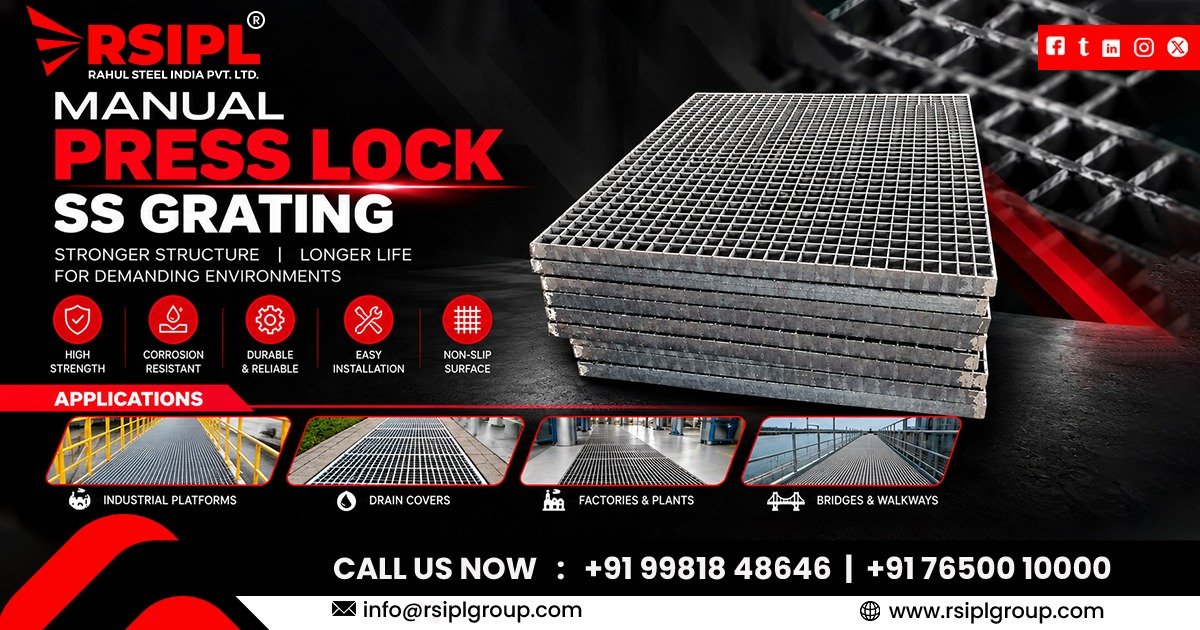
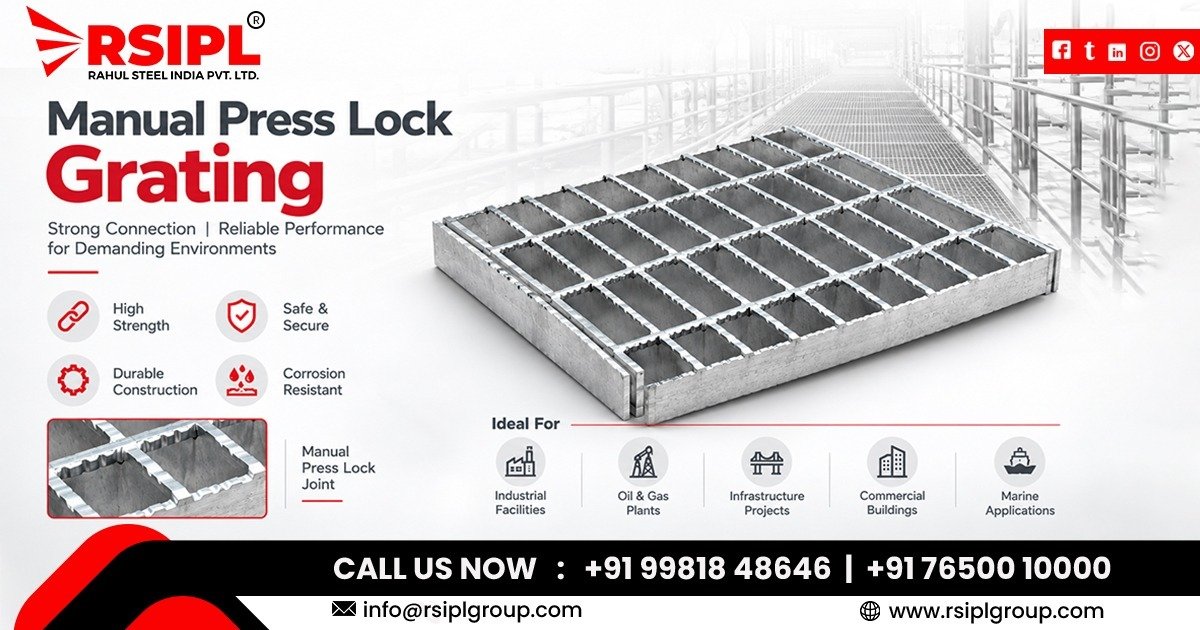
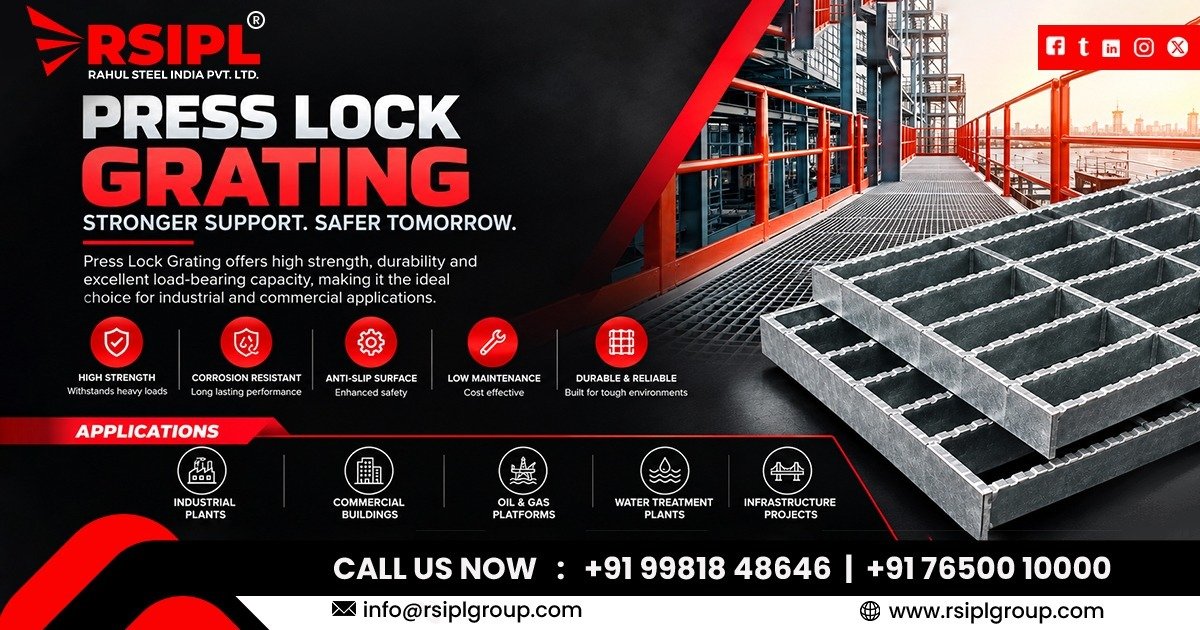
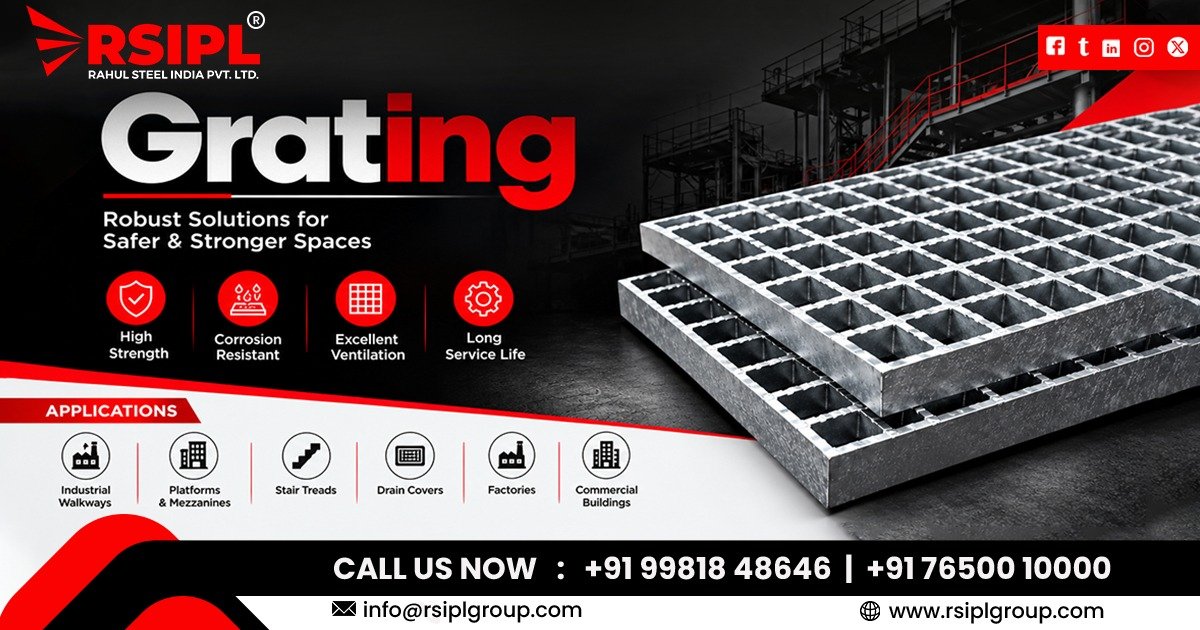
Heavy-duty grating is a load-bearing metal structure manufactured with interconnected metal bars or bearing bars and cross members. It provides a strong walking or working surface while allowing water, dust, and other materials to pass through its openings.
Industrial facilities often require grating in areas where ordinary flooring may not provide sufficient drainage, accessibility, or structural suitability.
Common installation areas include:
- Industrial platforms and elevated walkways
- Factory floors and equipment access areas
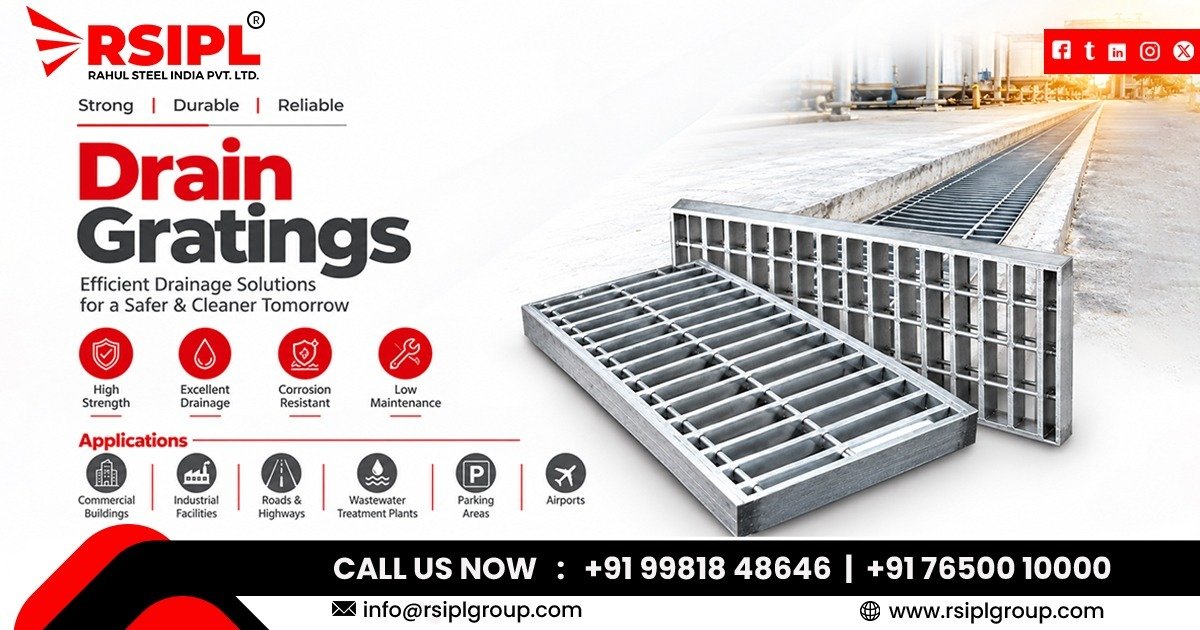
- Drainage channels and inspection trenches
- Power plants and utility facilities
- Warehouses and material handling zones
- Industrial maintenance platforms
Selecting the right grating helps address load distribution, surface accessibility, and operational safety requirements.
How to Select Grating for Heavy Industrial Loads
Choosing industrial grating requires more than checking its external dimensions. Buyers should evaluate the expected load, installation arrangement, and working environment before finalizing an order.
Important selection factors include:
- Load-bearing capacity: Consider whether the grating will support pedestrian traffic, maintenance equipment, vehicles, or concentrated machinery loads.
- Bearing bar dimensions: Thickness, depth, and spacing influence the structural performance of the grating.
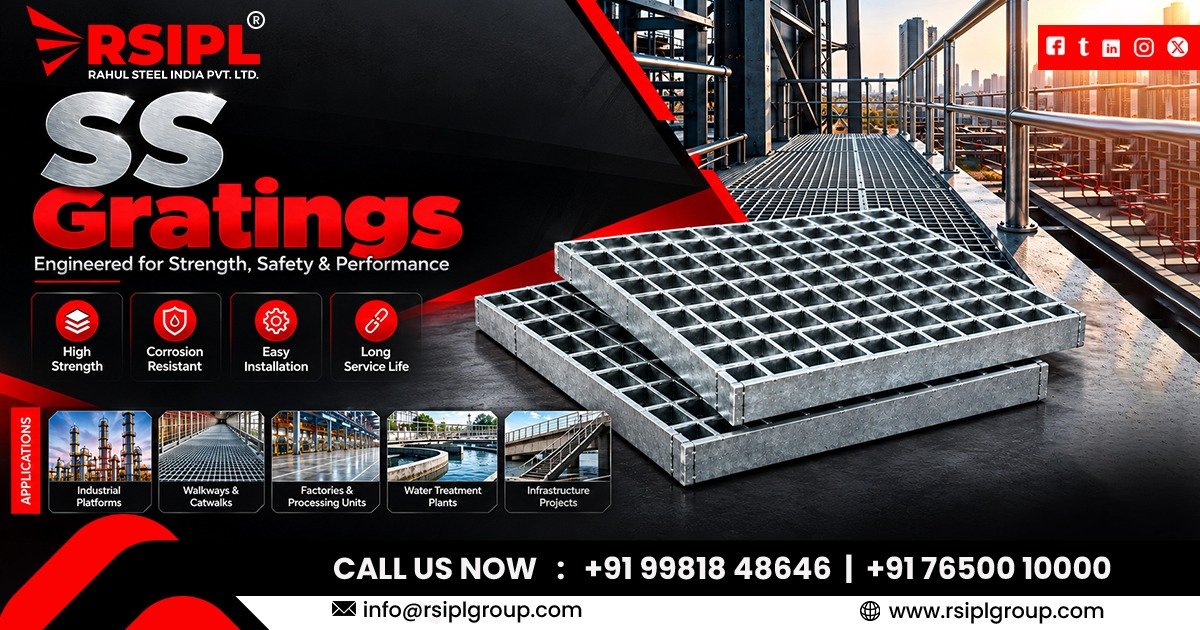
- Material selection: Mild steel, galvanized steel, and stainless steel may be considered depending on environmental exposure and corrosion requirements.
- Opening size: Select suitable spacing based on drainage requirements, object retention, and workplace safety.
- Panel dimensions: Check the required length, width, and support arrangement to minimize unnecessary cutting.
- Surface finish: Serrated or plain surfaces can be evaluated according to the operating environment and slip-resistance requirements.
- Installation arrangement: Confirm support beams, fixing methods, and panel positioning before ordering.
For projects involving heavy equipment or vehicle movement, request load calculations based on actual support spans and loading conditions rather than relying only on the grating’s appearance.
From Panel Manufacturing to Industrial Installation
Step 1: Requirement Assessment
The project team identifies the required panel dimensions, load conditions, material preference, and installation location.
Step 2: Grating Fabrication
Bearing bars and cross members are assembled using an appropriate manufacturing process to create the required grating structure.
Step 3: Finishing and Inspection
Panels are checked for dimensions, alignment, joint quality, surface condition, and other specified requirements. Protective finishing may be considered depending on the selected material.
Step 4: Site Installation
The prepared panels are positioned over supporting structures and secured using suitable clamps or fixing arrangements. The installation is then checked for stability, alignment, and proper seating.
Correct support spacing and fixing are important because even a suitable panel can perform poorly if installed incorrectly.
Quality Checks Before Purchasing Industrial Grating
A purchasing decision should consider the complete product specification rather than price alone.
Before placing an order, buyers should verify:
| Inspection Parameter | What to Check |
| Raw material | Confirm the specified metal grade and material details |
| Bearing bars | Check thickness, depth, and spacing |
| Cross members | Inspect alignment and joint consistency |
| Panel dimensions | Match the approved drawings and measurements |
| Surface condition | Check for visible defects, sharp edges, and irregularities |
| Load suitability | Verify calculations for the actual support span and loading |
| Surface treatment | Confirm galvanizing or other finishing requirements |
| Documentation | Request relevant material and inspection records |
For large industrial orders, sample approval and drawing verification can help reduce dimensional and installation-related problems.
Project-Specific Grating Requirements and Site Planning
Different industrial projects require different panel arrangements. A drainage trench may need removable panels for cleaning, while an elevated maintenance platform may require a different bearing capacity and fixing arrangement.
Before finalizing the order, consider:
- Required panel size and layout.
- Supporting beam positions and spacing.
- Expected static and moving loads.
- Exposure to moisture, chemicals, or outdoor conditions.
- Requirement for serrated surfaces.
- Access requirements for inspection and maintenance.
- Corrosion protection and expected service environment.
For existing facilities, accurate site measurements are particularly important because structural openings and support arrangements may not follow standard dimensions.
Industrial Grating Maintenance and Inspection Practices
Regular inspection helps identify problems before they affect workplace operations.
Recommended maintenance practices include:
- Remove accumulated dust, mud, and industrial waste from grating openings.
- Inspect bearing bars and cross members for visible deformation.
- Check fixing clamps, bolts, and connections for looseness.
- Examine surfaces for corrosion, particularly in exposed environments.
- Replace damaged panels instead of continuing to use structurally compromised sections.
- Recheck grating after significant equipment movement or structural modifications.
Maintenance frequency should depend on the working environment, exposure conditions, and actual operating loads.
Services
- Industrial grating requirement assessment and product consultation.
- Assistance with material, dimensions, and load-related product selection.
- Manufacturing coordination and project specification support.
- Technical assistance for procurement and installation planning.
Location – Bihar
Industrial grating is relevant to manufacturing facilities, infrastructure projects, warehouses, power plants, and industrial establishments across Bihar. Businesses requiring suitable metal flooring and platform solutions can explore requirements in Patna, Gaya, Muzaffarpur, Bhagalpur, Darbhanga, Purnia, Begusarai, Bihar Sharif, Ara, Chapra, Hajipur, Munger, Samastipur, Katihar, Motihari, Bettiah, Buxar, Jehanabad, Jamalpur, Kishanganj, Dehri-on-Sone, Aurangabad, Sasaram, and Fatuha.
Why Choose Rahul Steel India Pvt. Ltd.?
Selecting an industrial grating supplier involves understanding project specifications, material requirements, and installation conditions. Rahul Steel India Pvt. Ltd. can be approached for product-related discussions and procurement coordination according to project needs.
With manufacturing support from Ahmedabad, Gujarat, India, the company provides an additional point of coordination for buyers evaluating industrial steel product requirements.
Visit rsiplgroup.com to learn more about the company and discuss your grating requirements.
Frequently Asked Questions
Q1: What type of grating is suitable for heavy industrial flooring?
A: The suitable type depends on the expected load, bearing bar dimensions, support span, and working environment. Load calculations should be reviewed before selection.
Q2: Which material is suitable for outdoor industrial grating?
A: Galvanized steel and stainless steel are commonly evaluated for outdoor conditions. The choice depends on moisture exposure, corrosion risk, chemical contact, and project requirements.
Q3: How can I determine the load capacity of industrial grating?
A: Load capacity depends on bearing bar dimensions, spacing, material properties, and support span. Consult the supplier for appropriate load tables or engineering calculations.
Q4: What should I check before installing heavy-duty grating panels?
A: Verify support dimensions, panel orientation, fixing arrangements, surface alignment, and load suitability. Proper installation helps maintain structural stability during operation.
Conclusion
Industrial flooring requires grating that matches actual loading conditions, environmental exposure, and installation requirements. Businesses in Bihar should evaluate material, panel dimensions, support spacing, and quality before purchasing. Rahul Steel India Pvt. Ltd. offers manufacturing support from Ahmedabad, Gujarat, India, for industrial product requirements.
Contact Rahul Steel India Pvt. Ltd. through rsiplgroup.com to discuss your industrial grating requirements and project specifications.
Call Us: +91 99818 48646, +91 76500 10000
Email: sales@rsiplgroup.com, info@rsiplgroup.com