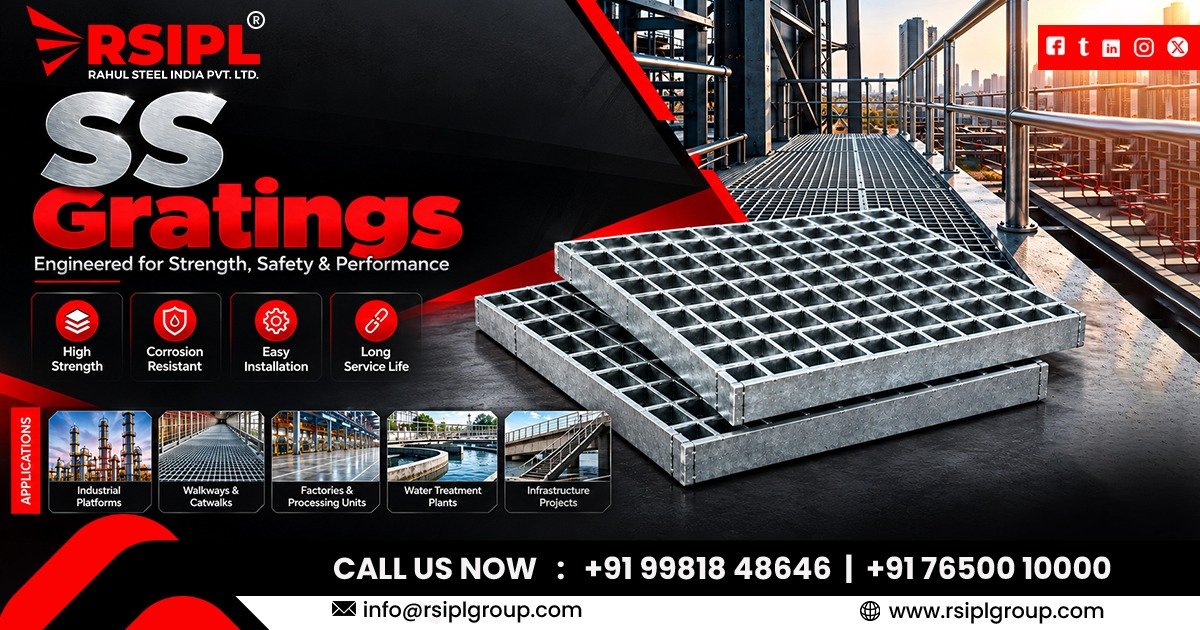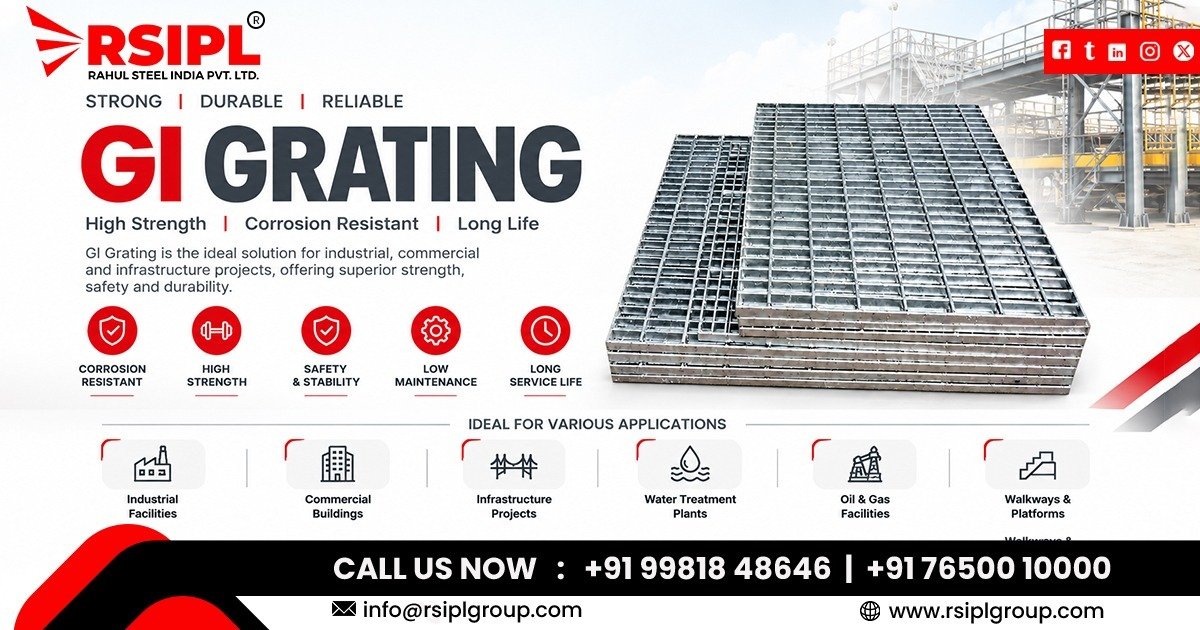
Industrial platforms, walkways and elevated work areas require flooring that supports personnel movement while allowing proper drainage and ventilation. Rahul Steel India Pvt. Ltd. supports industrial buyers in Uttar Pradesh with stainless steel platform grating requirements for different project environments.
How Stainless Steel Platform Grating Fits Into Industrial Flooring
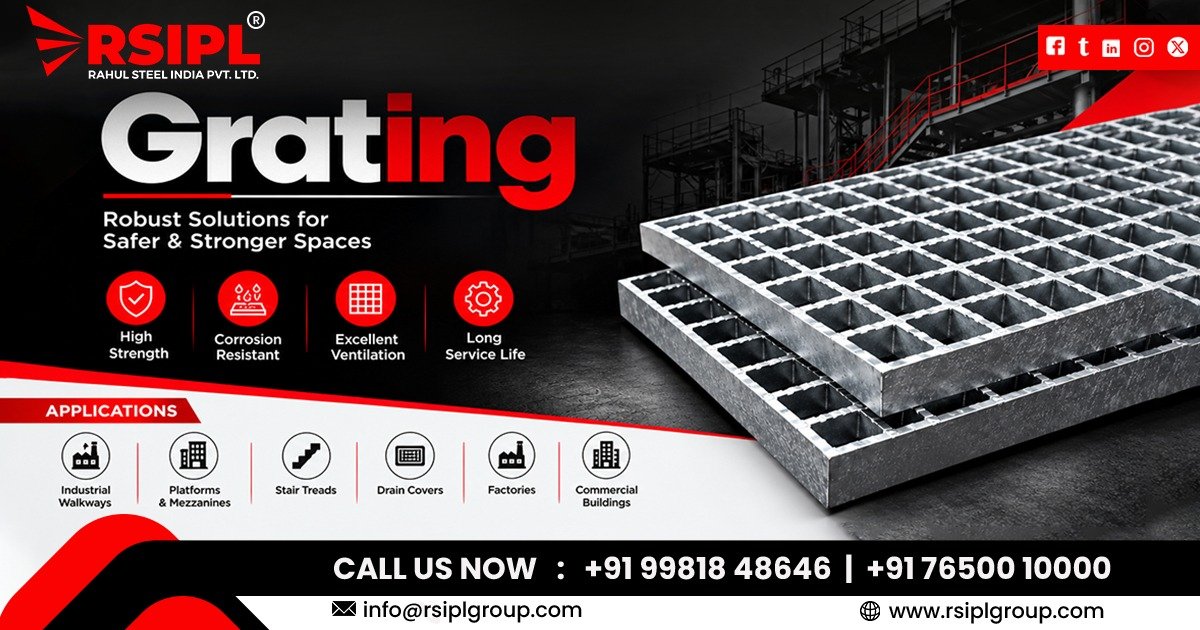
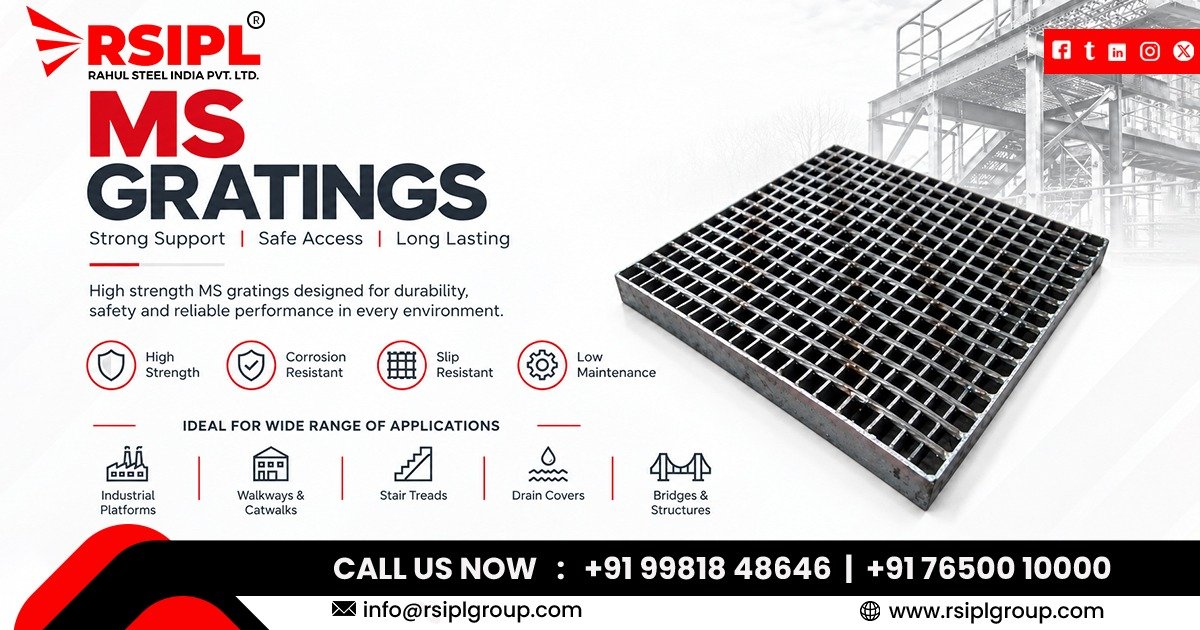
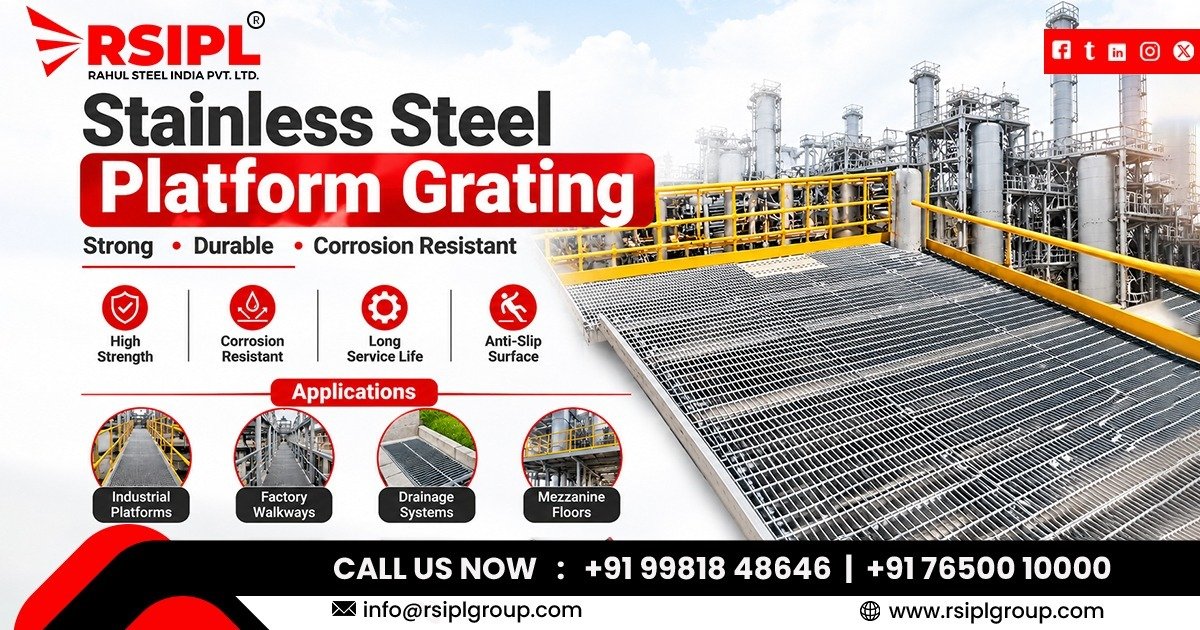
Stainless steel platform grating is a flooring arrangement made from interconnected metal load-bearing members with open spaces between them. It is used to create accessible surfaces in industrial locations where solid flooring may restrict drainage, airflow or light.
It can be considered for:
- Industrial walkways and access platforms.
- Maintenance areas around machinery.
- Elevated working platforms.
- Utility and service corridors.
- Industrial structures exposed to moisture.
- Areas requiring regular floor cleaning.
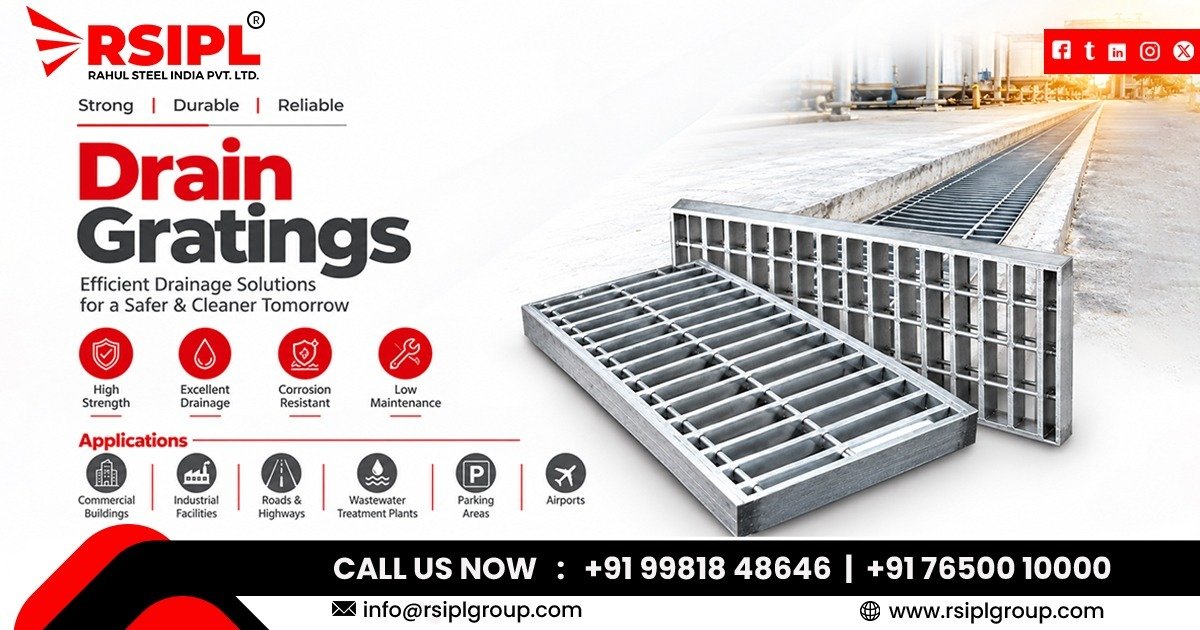
The open construction allows liquids and debris to pass through, depending on the grating design and installation conditions.
Understanding the Different Grating Configurations
The appropriate grating arrangement depends on the platform layout, expected loading and site conditions.
| Grating configuration | Where it may be suitable |
| Welded grating | Industrial access platforms and walkways |
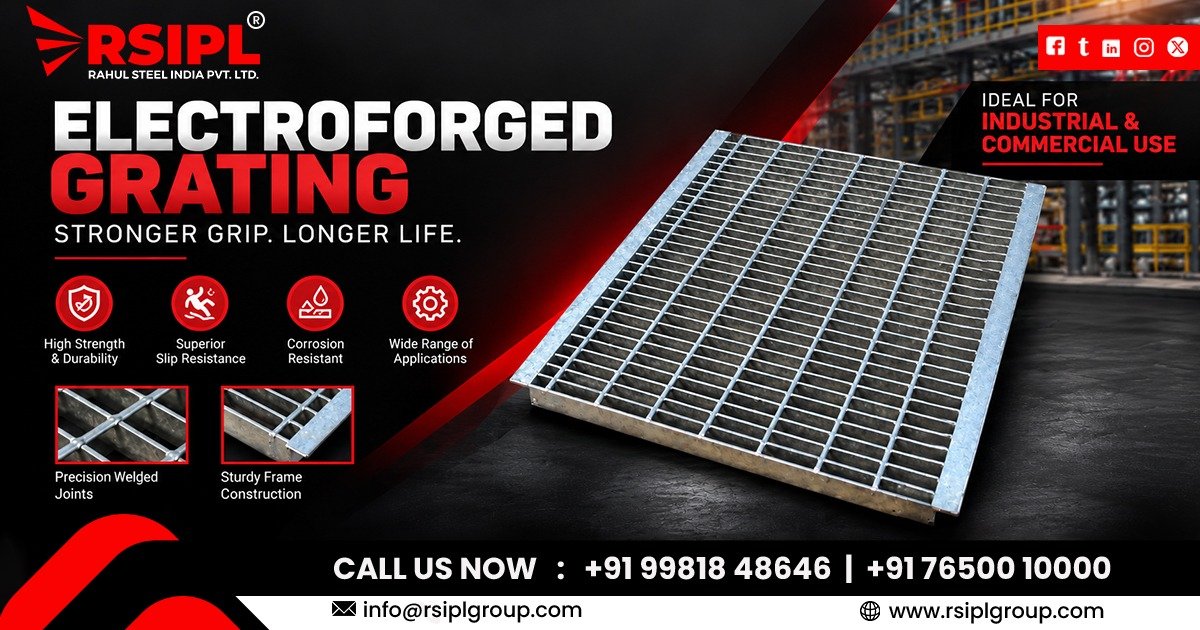
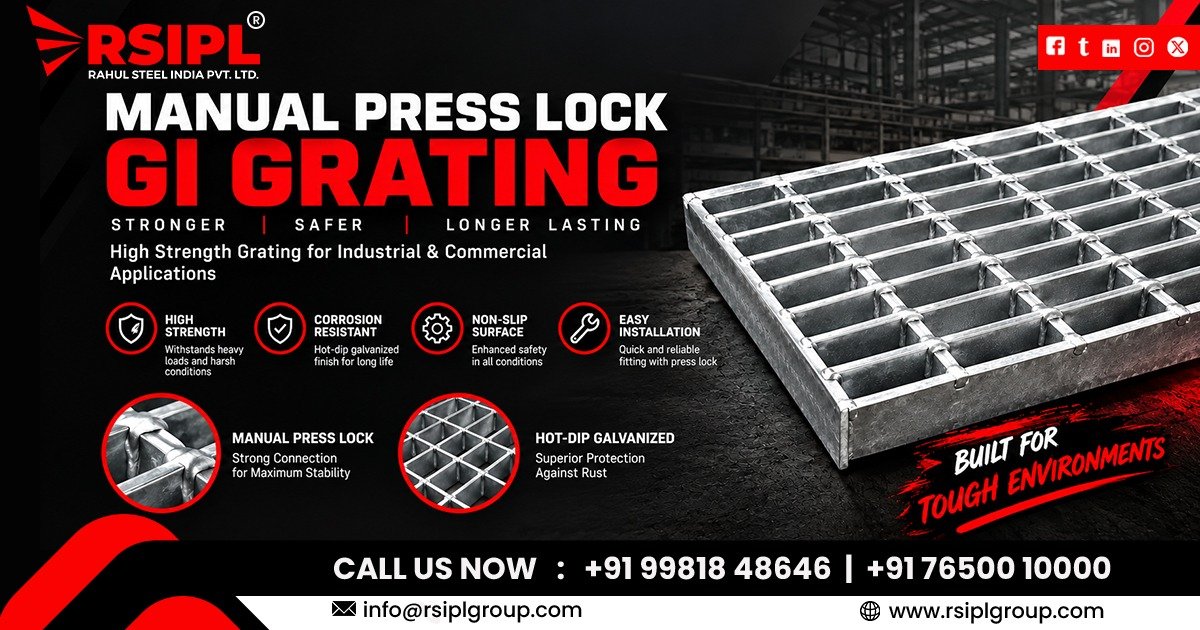
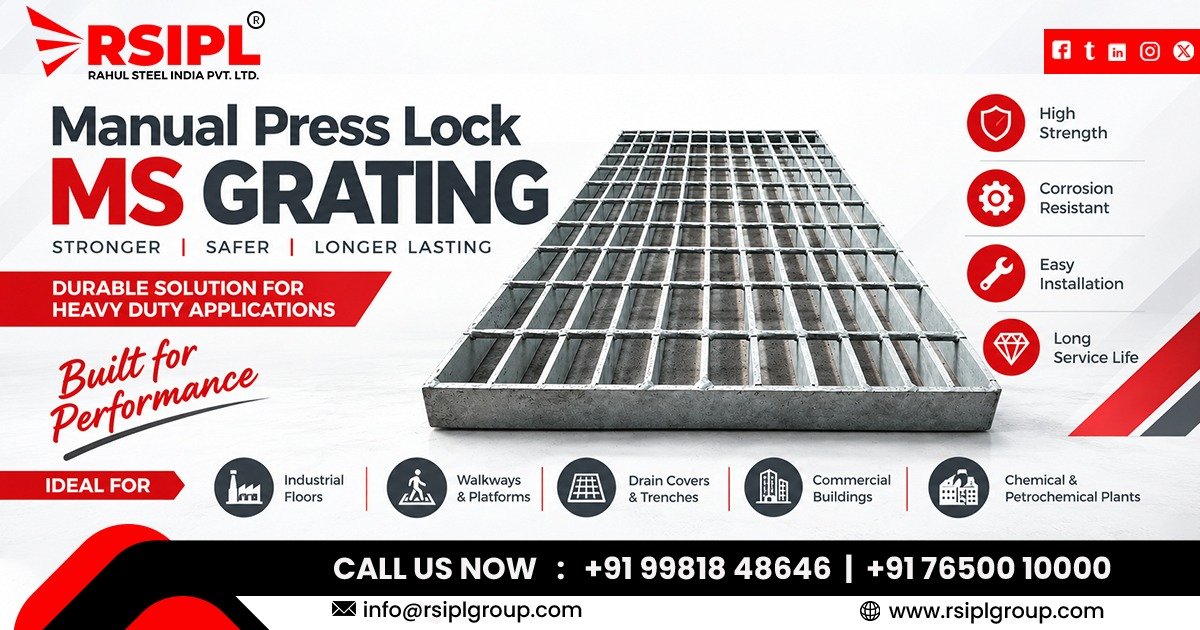
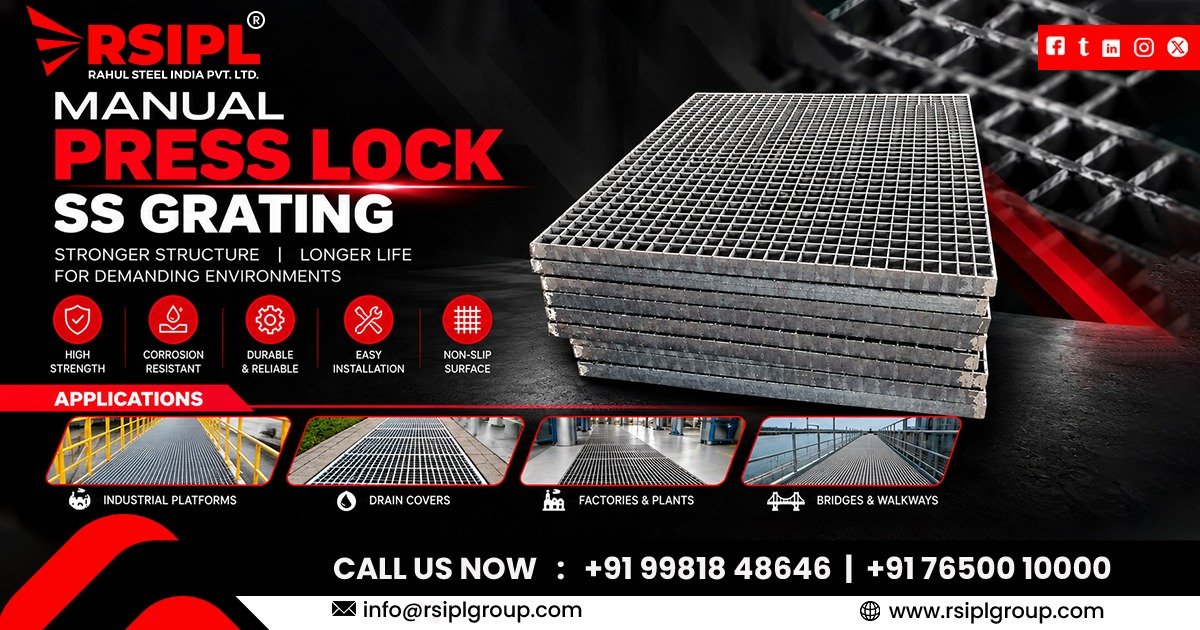
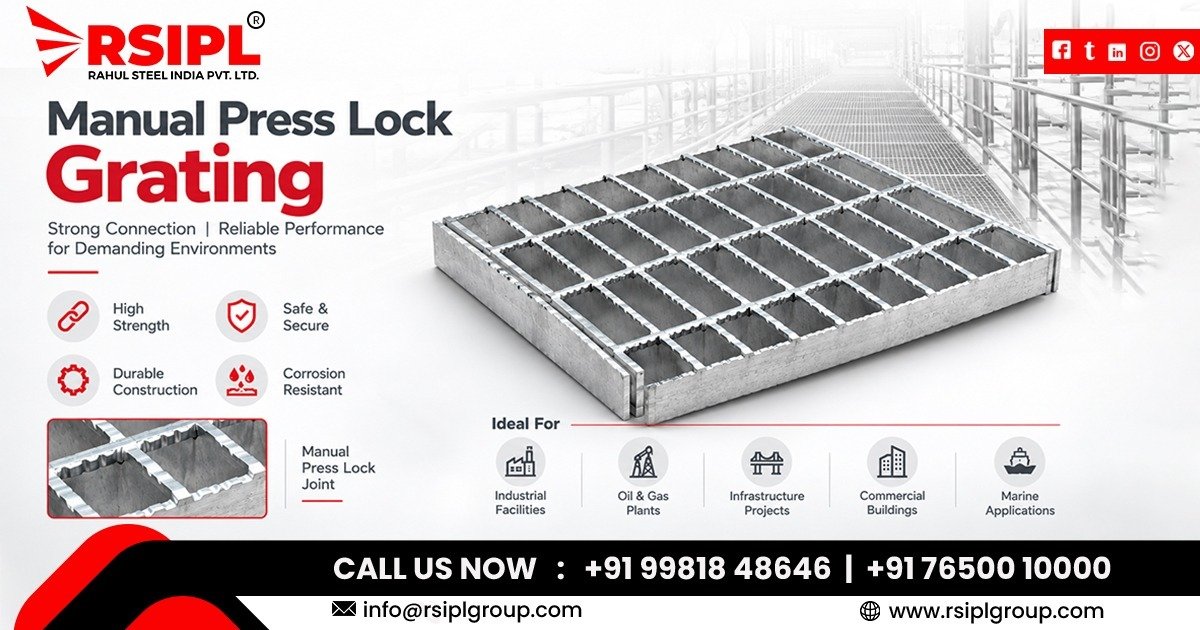
| Press-locked grating | Projects requiring mechanically assembled intersections |
| Heavy-duty grating | Platforms designed for higher loading requirements |
| Custom-sized grating panels | Structures with specific dimensions or layouts |
| Serrated surface grating | Areas where additional walking-surface grip is required |
What Makes Stainless Steel Relevant for Industrial Platforms?
Industrial flooring can face moisture, cleaning chemicals, atmospheric exposure and repeated maintenance activity. Material selection therefore affects the long-term suitability of the platform.
- Resistance to corrosion in the specified operating environment.
- A surface that can be cleaned as part of routine maintenance.
- Suitable mechanical strength for the intended loading.
- Reduced dependence on protective surface coatings.
- Compatibility with the surrounding industrial environment.
However, stainless steel is not equally resistant to every chemical or exposure condition. The grade should be selected after reviewing the actual environment.
How to Calculate Platform Requirements Before Ordering
The grating panel must be suitable for the load it will carry and the distance between its supporting structures. Selecting panels only by their overall dimensions can create problems during installation and operation.
Buyers should discuss the following details with the supplier:
- Load requirement: Identify whether the platform will carry pedestrians, maintenance personnel, equipment or material loads.
- Support span: Measure the distance between the supporting beams. The span directly affects the required bearing-bar dimensions.
- Panel dimensions: Confirm the required length, width and shape of each panel.
- Bearing bar arrangement: Review bar depth, thickness and spacing according to the structural design.
- Cross-bar arrangement: Check the intersection pattern and panel rigidity.
- Surface finish: Consider smooth or serrated surfaces based on moisture, oil exposure and walking conditions.
- Material grade: Select the stainless steel grade after assessing corrosion exposure and cleaning conditions.
For load-bearing applications, the structural engineer should verify the grating capacity against the intended loading and permissible deflection.
From Drawing Approval to Platform Installation
A properly planned installation helps prevent panel misalignment, uneven support and unnecessary modifications at the project site.
A typical project sequence involves these stages:
Step 1: Site measurement
Record platform dimensions, beam spacing, access points, openings and required panel sizes.
Step 2: Technical planning
Review the load requirements, grating configuration, stainless steel grade and supporting structure.
Step 3: Fabrication and panel preparation
Prepare the panels according to the approved dimensions and project requirements. Check the edges, intersections and overall finish.
Step 4: Positioning and fixing
Place the panels on the designed support structure. Use suitable fixing arrangements to prevent unwanted movement or displacement.
Step 5: Final inspection
Check panel seating, support contact, level differences, openings and walking-surface conditions before the platform is put into service.
Installation should follow the approved structural drawings and applicable site safety procedures.
Maintenance Checks That Help Preserve Grating Condition
| Inspection area | What to check |
| Surface condition | Deposits, stains, corrosion or chemical residue |
| Bearing bars | Bending, visible damage or deformation |
| Cross bars | Loose or damaged intersections |
| Panel supports | Movement, gaps or poor seating |
| Fixing arrangements | Loose or missing fasteners |
| Walking surface | Slippery deposits and accumulated debris |
Common operating concerns and corrective actions
| Common issue | Possible reason | Practical action |
| Panel movement | Inadequate or loose fixing | Inspect and correct the fixing arrangement |
| Surface staining | Chemical deposits or unsuitable cleaning | Clean using a compatible method and review exposure |
| Visible deformation | Excessive loading or unsuitable span | Restrict access and arrange structural inspection |
| Slippery surface | Oil, water or accumulated residue | Clean the surface and review the required finish |
| Localized corrosion | Incompatible chemical exposure | Identify the exposure and review material suitability |
Avoid using harsh cleaning chemicals without checking their compatibility with the stainless steel grade.
Quality Checks Before Finalizing a Grating Order
A purchase decision should cover both the supplied material and its suitability for the complete platform assembly.
Use this checklist when evaluating a supplier:
- Confirm the stainless steel grade and material identification.
- Review bearing-bar dimensions and cross-bar spacing.
- Match panel dimensions with approved drawings.
- Verify load calculations and support-span requirements.
- Inspect welding or press-lock intersections, as applicable.
- Check surface finishing and edge quality.
- Confirm cut-outs, openings and custom fabrication requirements.
- Request material test documentation where required.
- Clarify the fixing method and installation responsibilities.
- Discuss replacement panels, technical assistance and after-sales coordination.
For industrial projects, the supplier should understand the platform layout rather than simply quote a rate per square metre.
Services
- Stainless steel grating requirement assessment and product consultation.
- Grating configuration selection and dimensional planning.
- Custom panel fabrication coordination and project support.
- Installation coordination and technical assistance.
Location
Uttar Pradesh has industrial, manufacturing, infrastructure and commercial centres where metal platforms and access flooring are required for plant operations, maintenance and utility areas. Stainless steel grating requirements can arise across Noida, Greater Noida, Ghaziabad, Lucknow, Kanpur, Agra, Varanasi, Prayagraj, Meerut, Moradabad, Aligarh, Bareilly, Gorakhpur, Jhansi, Mathura, Firozabad, Saharanpur, Muzaffarnagar, Hapur, Bulandshahr, Unnao, Raebareli, Ayodhya, Sitapur and Shahjahanpur.
Planning Industrial Grating Requirements With Rahul Steel India Pvt. Ltd.
Rahul Steel India Pvt. Ltd. provides grating solutions for industrial and infrastructure requirements, including stainless steel grating, platform grating, serrated grating, electroforged grating and other configurations listed in its product range.
For projects in Uttar Pradesh, buyers can discuss panel dimensions, material requirements, loading conditions and fabrication needs with the company before finalizing an order.
The company provides manufacturing support from Ahmedabad, Gujarat, India, and also works with industrial fabrication and project requirements.
Visit the official website: https://rsiplgroup.com/ to explore its grating products and submit an enquiry.
Frequently Asked Questions
Q1: Which stainless steel grade is suitable for industrial platform grating?
A: SS 304 and SS 316 are commonly considered options. The final grade depends on moisture, chemical exposure, cleaning conditions and the operating environment.
Q2: How is the load capacity of platform grating determined?
A: Load capacity depends on bearing-bar dimensions, spacing, material properties and support span. A structural calculation should confirm suitability before installation.
Q3: What information should be shared when requesting a quotation?
A: Provide the platform layout, required dimensions, expected loading, stainless steel grade, quantity and site conditions to help the supplier assess the requirement.
Conclusion
Industrial platform flooring requires careful consideration of load capacity, material grade, panel configuration and installation conditions. Buyers in Uttar Pradesh should evaluate these factors before placing an order. Rahul Steel India Pvt. Ltd. offers grating solutions with manufacturing support from Ahmedabad, Gujarat, India, for industrial project requirements.
Contact Rahul Steel India Pvt. Ltd. to discuss your stainless steel platform grating requirements, project dimensions and technical specifications.
Call Us: +91 99818 48646, +91 76500 10000
Email: sales@rsiplgroup.com, info@rsiplgroup.com