Industrial flooring and elevated walkways require surfaces that can support operational loads while allowing proper drainage and ventilation. Galvanized Iron Gratings for Industrial Flooring and Walkway Projects In Maharashtra offer a practical option for facilities exposed to moisture, outdoor conditions, and regular industrial movement.
Understanding How GI Gratings Support Industrial Floor Design
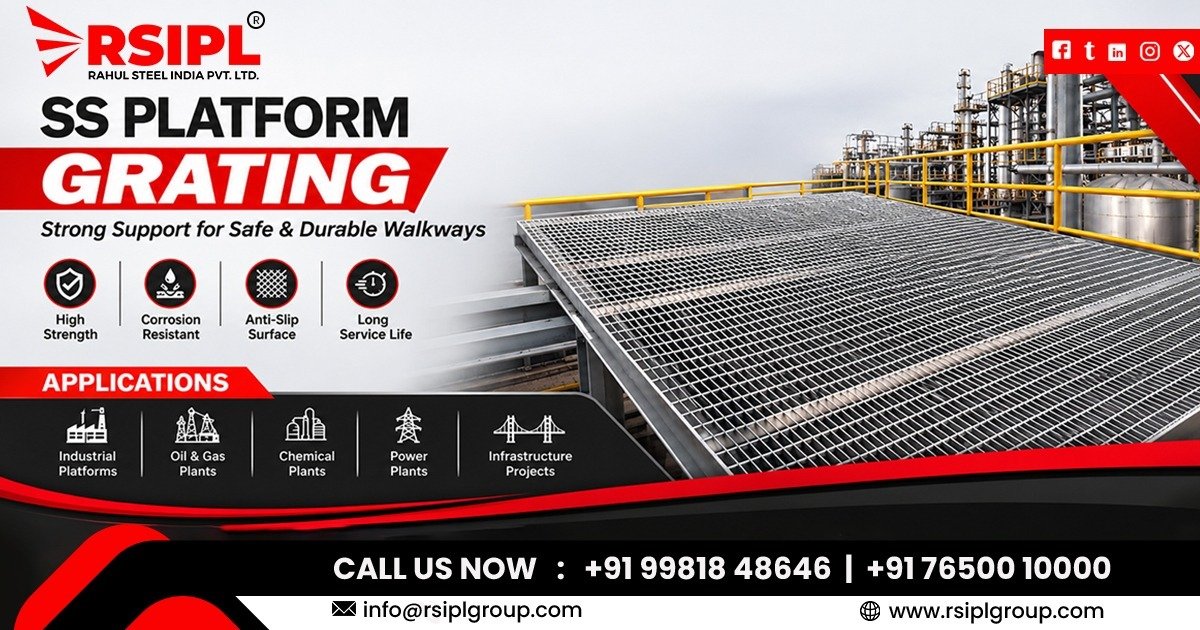
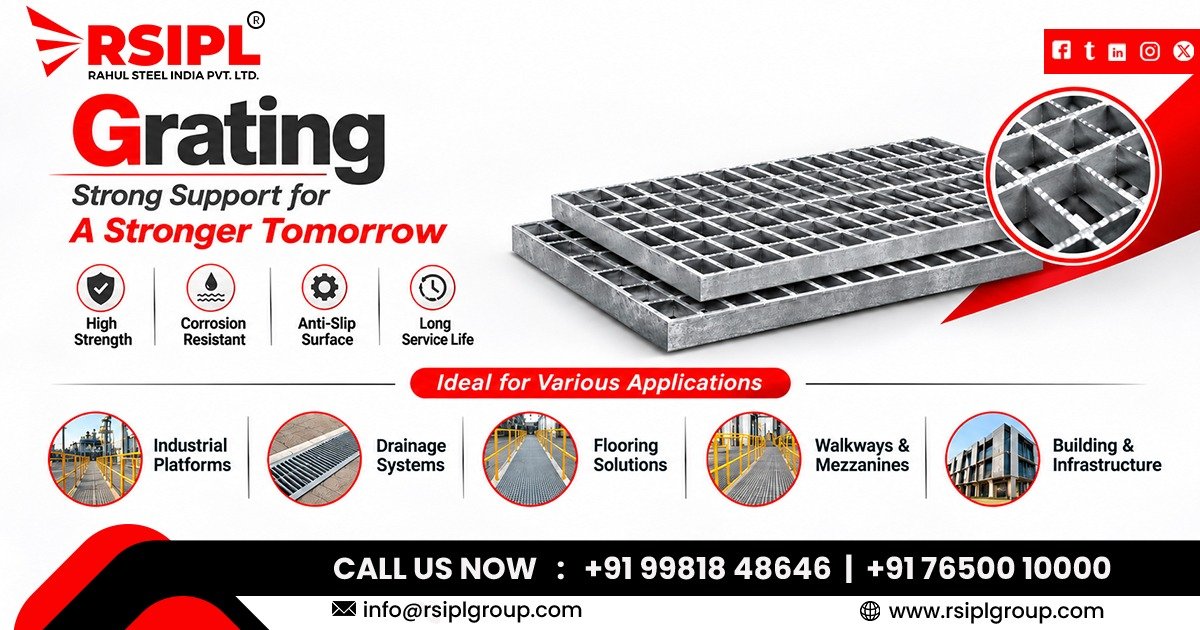
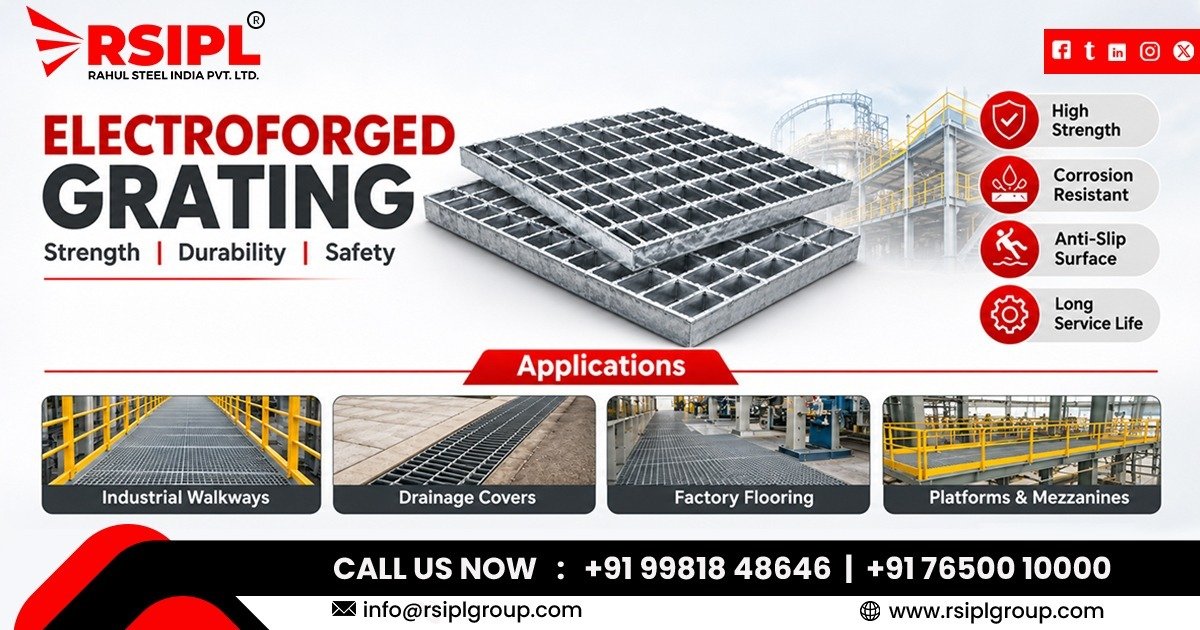
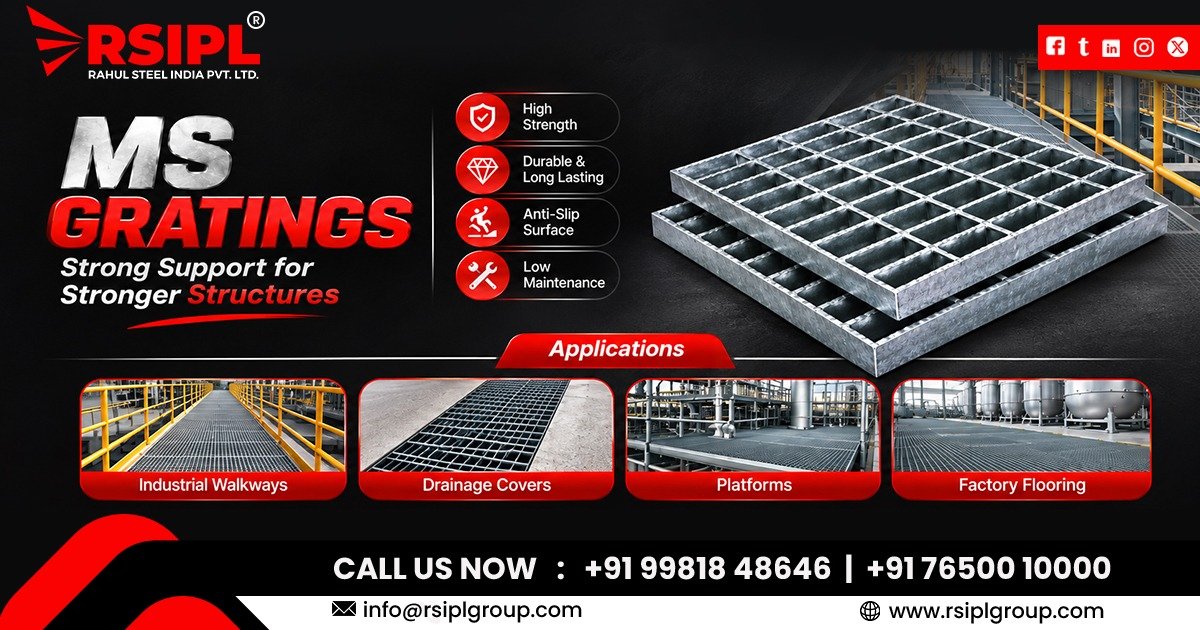
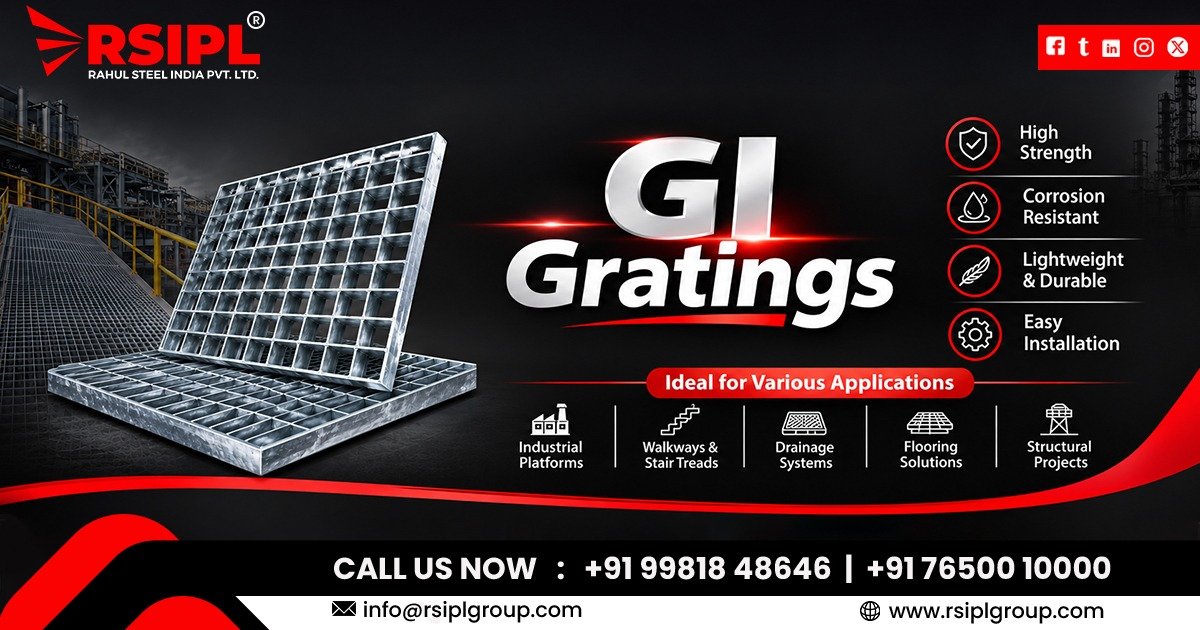
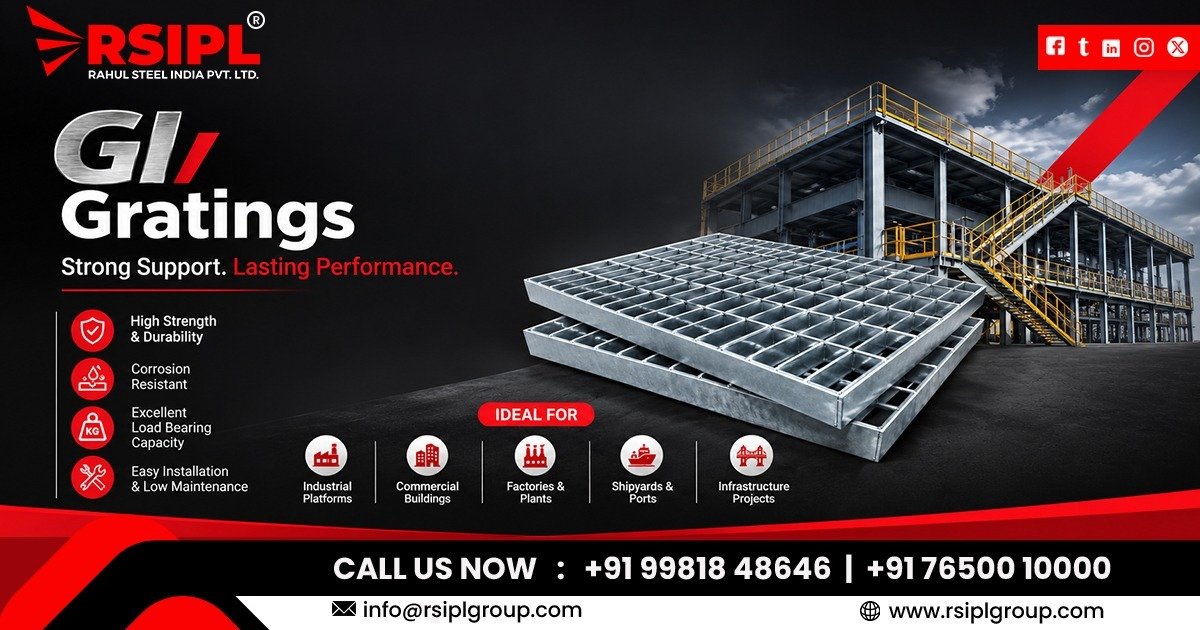
Galvanized Iron (GI) gratings are grid-like steel structures generally fabricated from steel bars and protected with a zinc coating to reduce corrosion. The open-grid construction creates a stable walking or working surface while allowing water, dust, and other materials to pass through the openings.
In industrial facilities, these gratings are commonly installed where conventional solid flooring may restrict drainage or require additional structural arrangements.
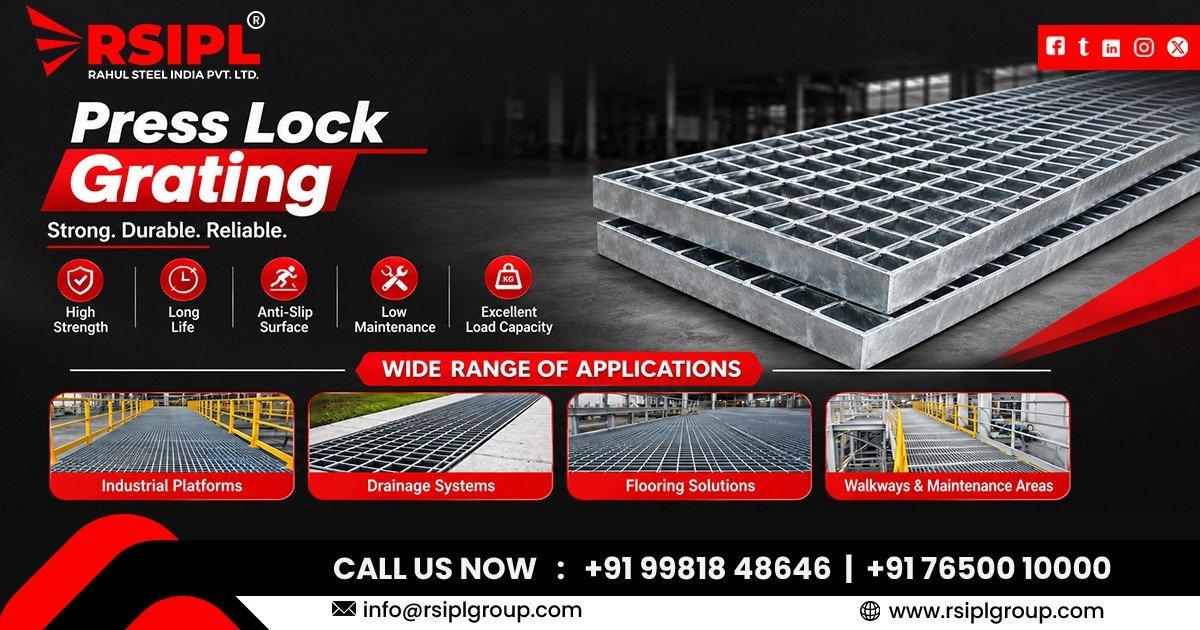
Their typical applications include:
- Industrial walkways: Provide designated access routes for workers around equipment and production areas.
- Maintenance platforms: Create working surfaces around machinery, pumps, and processing equipment.
- Stair treads: Support movement between different working levels.
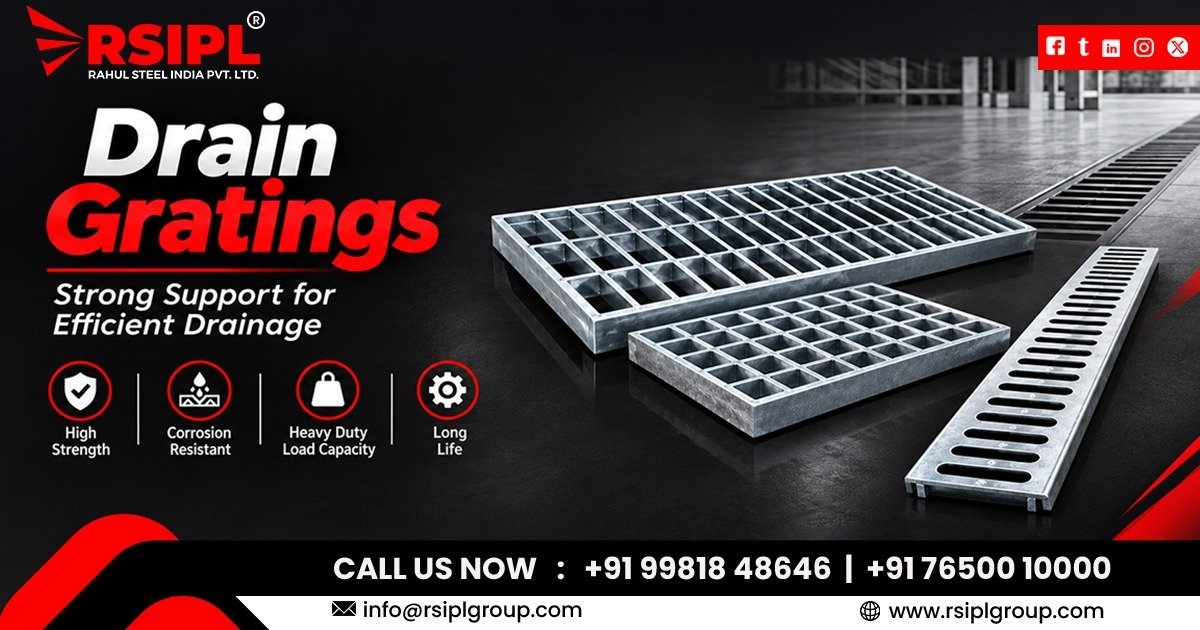
- Drainage covers: Allow water to pass into drainage channels while covering open trenches.
- Elevated flooring: Provide access to overhead pipelines, utility systems, and industrial structures.
The choice of grating depends on the intended use, supporting structure, environmental exposure, and expected loading conditions.
How the Grid Construction Influences Load Distribution
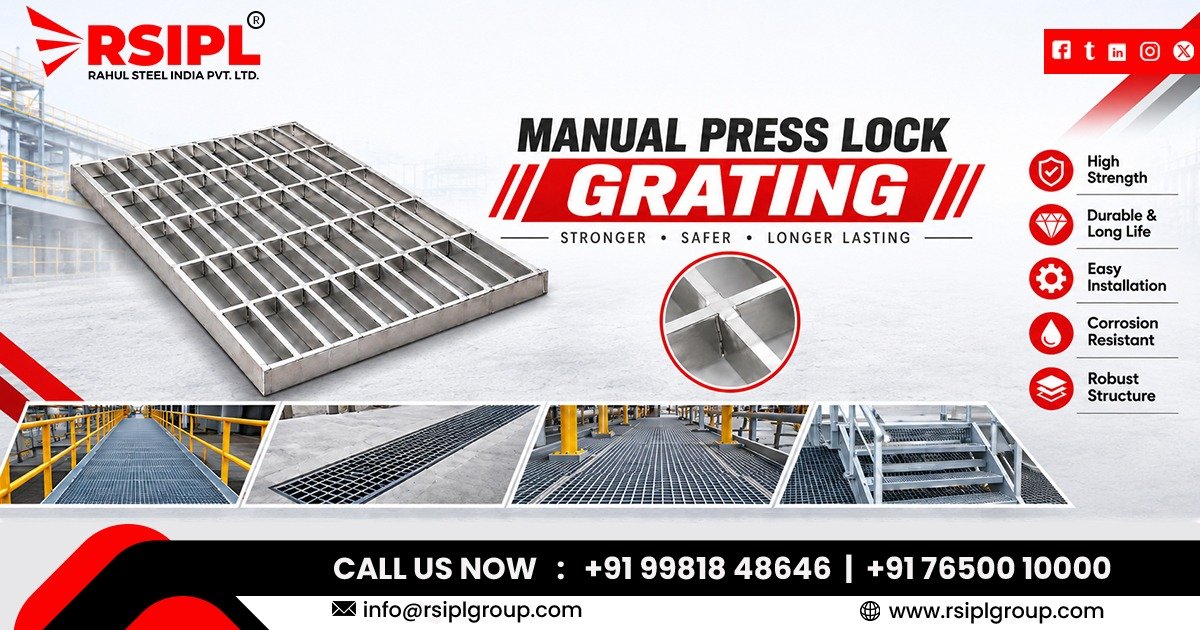
A grating panel generally consists of two main structural elements: bearing bars and cross bars.
- Bearing bars: These are the primary load-carrying members. Their dimensions, spacing, and span influence the panel’s load-bearing performance.
- Cross bars: These connect the bearing bars and maintain the grid arrangement.
- Surface finish: A plain or serrated surface can be selected according to the walking environment and slip-resistance requirements.
- Zinc coating: Galvanization provides a protective layer that helps limit corrosion when the steel is exposed to moisture and weather.
For example, consider a hypothetical manufacturing facility planning a raised walkway above a drainage channel. The engineering team must consider the distance between supports, expected pedestrian movement, maintenance equipment loads, and drainage requirements before finalizing the grating design.
An important point is that a thicker-looking panel does not automatically mean a suitable panel. Bearing bar dimensions, unsupported span, and the actual load condition must be evaluated together.
Where Galvanized Grating Becomes Useful in Maharashtra Industries
Maharashtra has industrial and infrastructure activities across manufacturing, engineering, chemicals, power, logistics, and processing sectors. Different facilities require flooring arrangements suited to their operating environments.
Galvanized Iron Gratings for Industrial Flooring and Walkway Projects In Maharashtra can be considered for applications such as:
- Manufacturing plants: Access platforms around production machinery and equipment.
- Chemical processing facilities: Walkways and service platforms, subject to chemical compatibility.
- Power plants: Maintenance access around industrial utilities and equipment.
- Warehouses: Elevated working platforms and designated access areas.
- Engineering workshops: Floor sections and platforms used during fabrication and maintenance activities.
- Water treatment facilities: Drainage covers and access platforms in suitable operating environments.
GI gratings are particularly useful where an open-grid surface and corrosion protection are required. However, facilities handling aggressive chemicals, concentrated salts, or highly corrosive substances should evaluate the environment carefully before selecting galvanized steel.
Technical Details That Should Be Finalized Before Ordering
A grating requirement should be converted into clear technical information before requesting a quotation. This helps avoid mismatches between the supplied panels and the installation structure.
Buyers should confirm the following:
- Bearing bar dimensions: Confirm bar width and depth according to the required loading and span.
- Panel dimensions: Provide the required length, width, and overall installation layout.
- Bar spacing: Select suitable bearing bar and cross bar spacing according to load requirements and opening limitations.
- Grating construction: Evaluate welded, press-locked, or other suitable construction methods based on the application.
- Surface design: Consider plain or serrated surfaces depending on foot traffic, moisture, and contamination.
- Galvanizing requirements: Confirm the zinc coating specification, coating thickness or mass, and applicable inspection requirements.
For industrial projects, the structural designer should also verify the permissible loading, deflection, support arrangement, and fixing details. Applicable project specifications and engineering standards should guide the final selection.
Installation Planning and Maintenance Checks for Long-Term Use
Even a correctly selected grating panel can create problems if the supporting structure or installation arrangement is unsuitable. Installation planning should therefore begin before the panels are manufactured or ordered.
Important considerations include:
- Support alignment: Check that supporting beams are positioned according to the approved structural layout.
- Panel fixing: Confirm suitable clips, fasteners, or other fixing arrangements to prevent unwanted movement.
- Joint positioning: Plan panel joints carefully to avoid uneven walking surfaces and unsupported edges.
- Drainage clearance: Ensure the open-grid arrangement does not obstruct the intended drainage path.
- Inspection access: Keep connections and surrounding structures accessible for routine maintenance.
Regular inspections should look for loose fasteners, damaged grid members, coating damage, corrosion, and deformation. If galvanized surfaces are damaged during handling or installation, the affected areas should be assessed and repaired using an appropriate protective method.
A practical planning mistake is ordering panels based only on floor area. Actual panel dimensions, support locations, edge conditions, and installation clearances are equally important.
Buyer Selection Checkpoints Before Finalizing a GI Grating Order
When evaluating Galvanized Iron Gratings for Industrial Flooring and Walkway Projects In Maharashtra, procurement teams should prepare the following information:
| Selection checkpoint | Why it matters |
| Application area | Identifies whether the panel is intended for flooring, walkways, platforms, or drainage |
| Expected loading | Helps determine suitable bearing bar dimensions and panel construction |
| Support span | Influences structural performance and panel deflection |
| Environmental exposure | Helps establish whether galvanized steel is appropriate |
| Surface requirements | Determines whether plain or serrated grating is more suitable |
| Drawings and dimensions | Reduces measurement errors and installation mismatches |
Buyers should also request relevant technical drawings, material details, galvanizing information, and inspection documentation according to project requirements.
Rahul Steel India’s Role in Industrial Grating Requirements
Rahul Steel India Pvt. Ltd. provides GI grating solutions for industrial, commercial, and infrastructure applications. Its website lists galvanized iron gratings for walkways, platforms, stair treads, drainage covers, and industrial flooring.
The company’s GI grating product information also identifies welded, press-locked, and serrated options, with project requirements influencing the selection of dimensions, thickness, and load capacity.
With manufacturing support from Ahmedabad, Gujarat, India, Rahul Steel India Pvt. Ltd. serves industrial buyers looking for grating solutions for different project applications.
Buyers planning Galvanized Iron Gratings for Industrial Flooring and Walkway Projects In Maharashtra can visit the Rahul Steel India website to explore its product range and discuss their requirements.
Before contacting the company, it is useful to keep the following details ready:
- Required grating type and application.
- Approximate panel dimensions and quantity.
- Expected loading and support span.
- Surface finish and galvanizing requirements.
- Project drawings or installation details, if available.
This information helps establish a clearer understanding of the product requirement and supports technical discussions during the purchasing process.
Industrial Locations Across Maharashtra Requiring Grating Solutions
Maharashtra has several industrial and commercial centres where factories, processing units, warehouses, engineering facilities, and infrastructure projects require suitable flooring and access arrangements.
Industrial flooring and walkway requirements may arise across Pune, Mumbai, Thane, Navi Mumbai, Nashik, Chhatrapati Sambhajinagar, Nagpur, Kolhapur, Solapur, Sangli, Satara, Ahmednagar, Jalgaon, Dhule, Amravati, Akola, Latur, Nanded, Ratnagiri, Raigad, Palghar, Pimpri-Chinchwad, Chakan, and Talegaon.
For projects across these locations, buyers can evaluate galvanized grating according to the installation environment, structural requirements, and expected operational loads. Manufacturing support from Ahmedabad, Gujarat, India, also provides an additional sourcing option for Maharashtra-based procurement teams.
Frequently Asked Questions
1. Where are GI gratings commonly used in industrial facilities?
GI gratings are commonly used for industrial walkways, maintenance platforms, stair treads, drainage covers, elevated flooring, and access structures where an open-grid surface is required.
2. Should buyers select plain or serrated GI gratings?
Plain gratings may suit general applications, while serrated surfaces can provide additional grip in wet or oily working environments. The final selection should consider site conditions and safety requirements.
3. Which technical details are important when purchasing GI gratings?
Buyers should confirm bearing bar dimensions, cross bar spacing, panel size, support span, expected loading, surface finish, and galvanizing requirements before placing an order.
4. Can GI gratings be considered for outdoor industrial walkways in Maharashtra?
Yes, galvanized gratings can be considered for outdoor applications because the zinc coating helps protect steel against corrosion. However, exposure to chemicals, coastal conditions, and other aggressive environments should be evaluated before selection.
Conclusion: Plan Grating Requirements Around Actual Site Conditions
Selecting industrial grating requires more than comparing panel dimensions or prices. Load conditions, support spacing, corrosion exposure, surface design, and installation details all influence suitability. Rahul Steel India Pvt. Ltd. offers GI grating solutions with manufacturing support from Ahmedabad, Gujarat, India. Contact the company to discuss your industrial flooring and walkway requirements.
Call Us: +91 99818 48646, +91 76500 10000
Email: sales@rsiplgroup.com, info@rsiplgroup.com