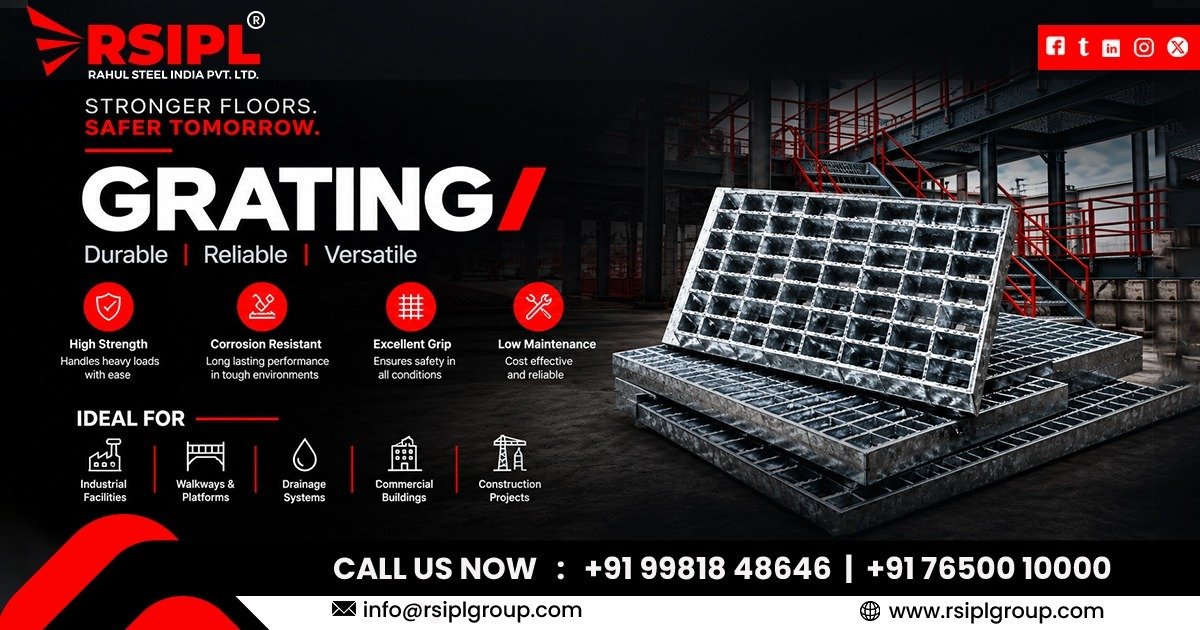
Heavy Duty Grating Supplier In Assam requirements often involve load-bearing walkways, platforms and drainage areas. Rahul Steel India Pvt. Ltd. supplies grating options for industrial projects, with manufacturing support from Ahmedabad, Gujarat, India.
Where Heavy-Duty Grating Fits in an Industrial Layout
Heavy-duty grating is generally selected for surfaces that must support regular personnel movement, equipment access or operational loads while allowing drainage, ventilation and light through an open grid.
Common project areas include:
- Maintenance platforms around machinery
- Industrial walkways and access passages
- Stair treads and service platforms
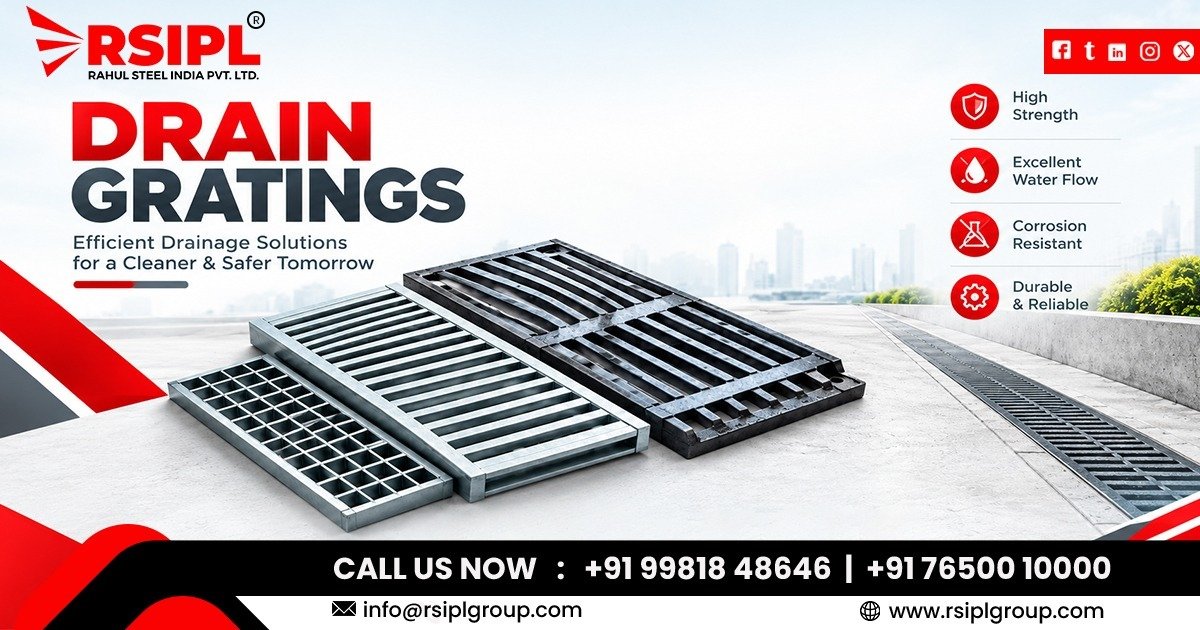
- Drain and trench covers
- Plant mezzanines and utility areas
- Power, process, manufacturing and infrastructure facilities
The exact grating construction should be matched to the actual load, span and support arrangement rather than selected only by nominal thickness.
Start With Load, Span and Support Details
A useful purchase enquiry should include more than the required square-metre quantity. The supplier needs enough project information to determine whether the proposed grating suits the structure.
Before ordering, confirm:
- Expected load: pedestrian, trolley, equipment or other imposed load
- Clear span between supporting members
- Panel length and width
- Bearing/support arrangement
- Required deflection or stiffness criteria, where specified by the project
- Indoor, outdoor, wet or chemically exposed environment
- Plain or serrated walking surface
- Required finish and corrosion protection
For heavy-duty applications, the support spacing can materially affect the grating selection. A panel designed for a shorter span should not automatically be assumed suitable after the span is increased.
Material and Surface Selection Should Follow the Environment
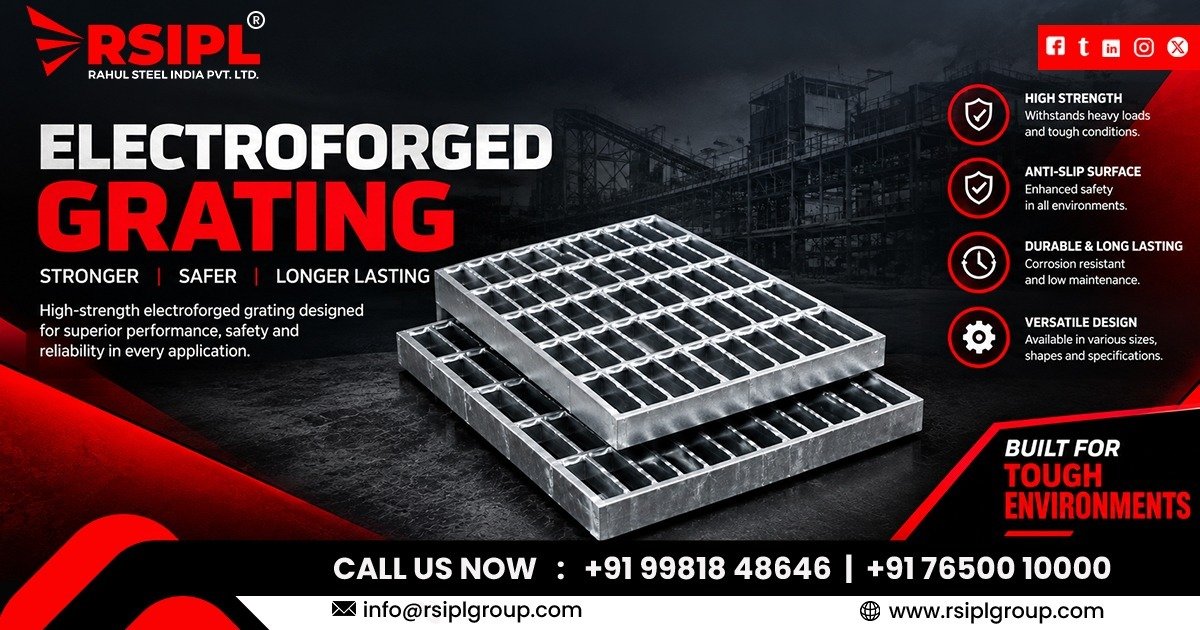
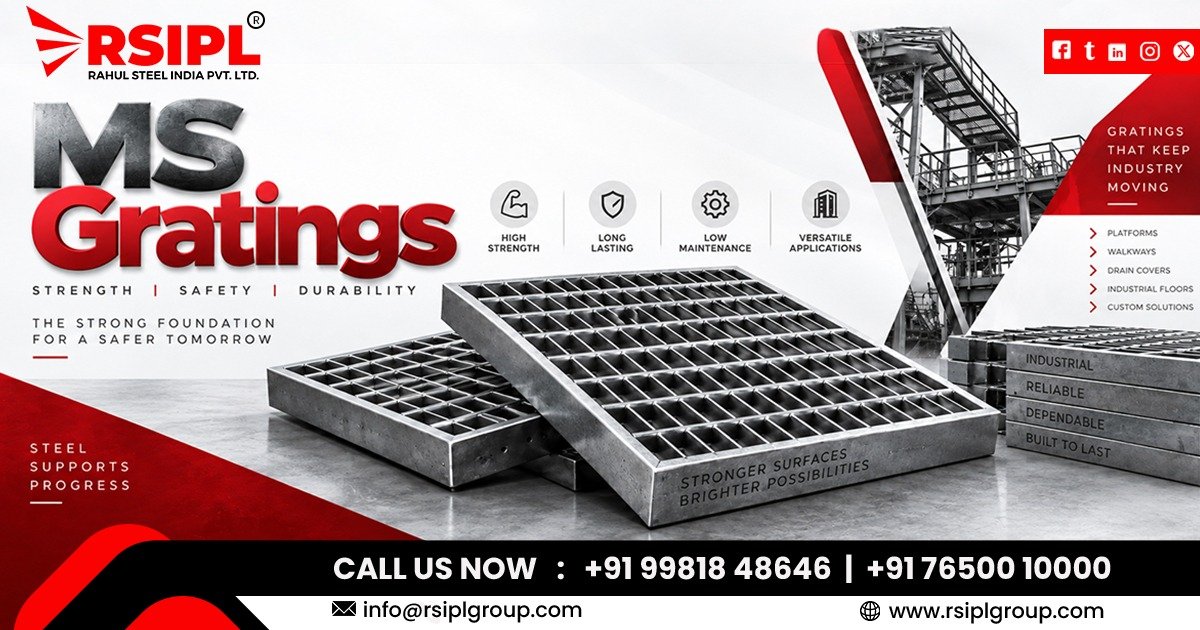
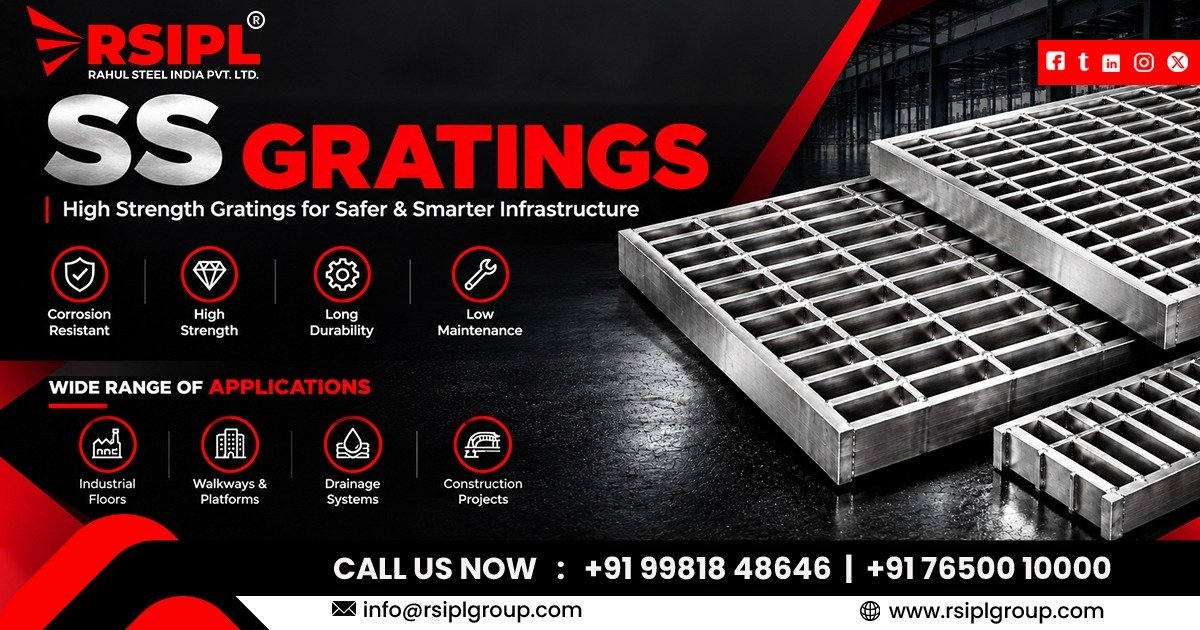
Rahul Steel India lists MS, GI and SS grating options, along with welded, press-locked, serrated, drain and electroforged configurations. The appropriate choice depends on the environment and project requirement.
A practical selection approach is:
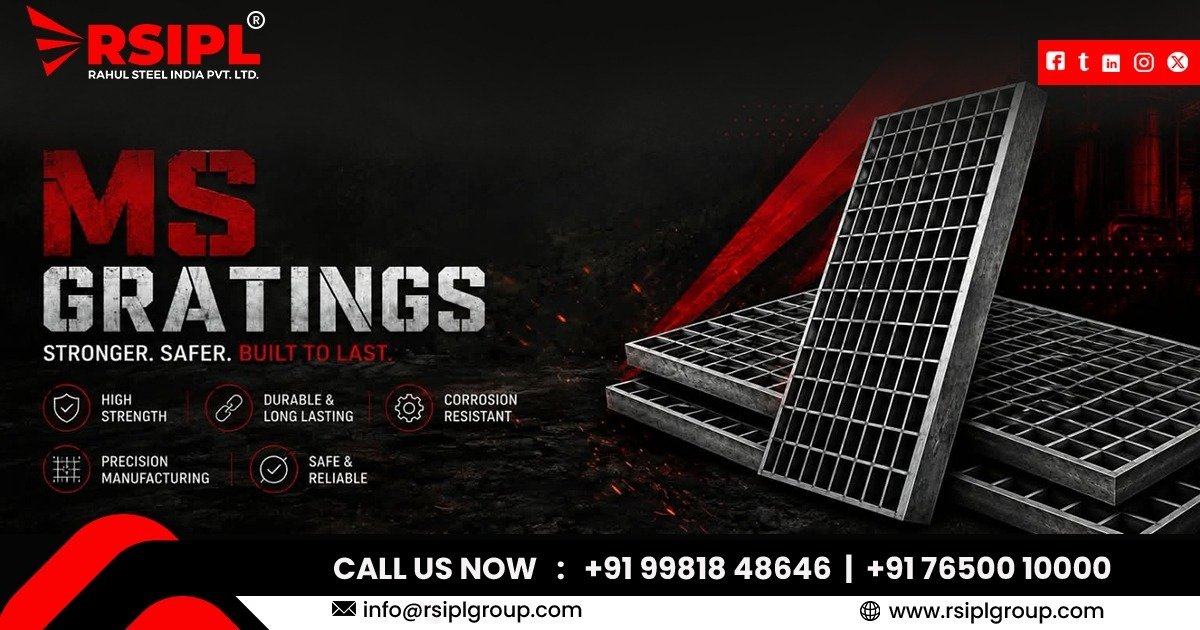
- MS grating: Consider where structural strength and project economics are important and the environment permits the selected protection system.
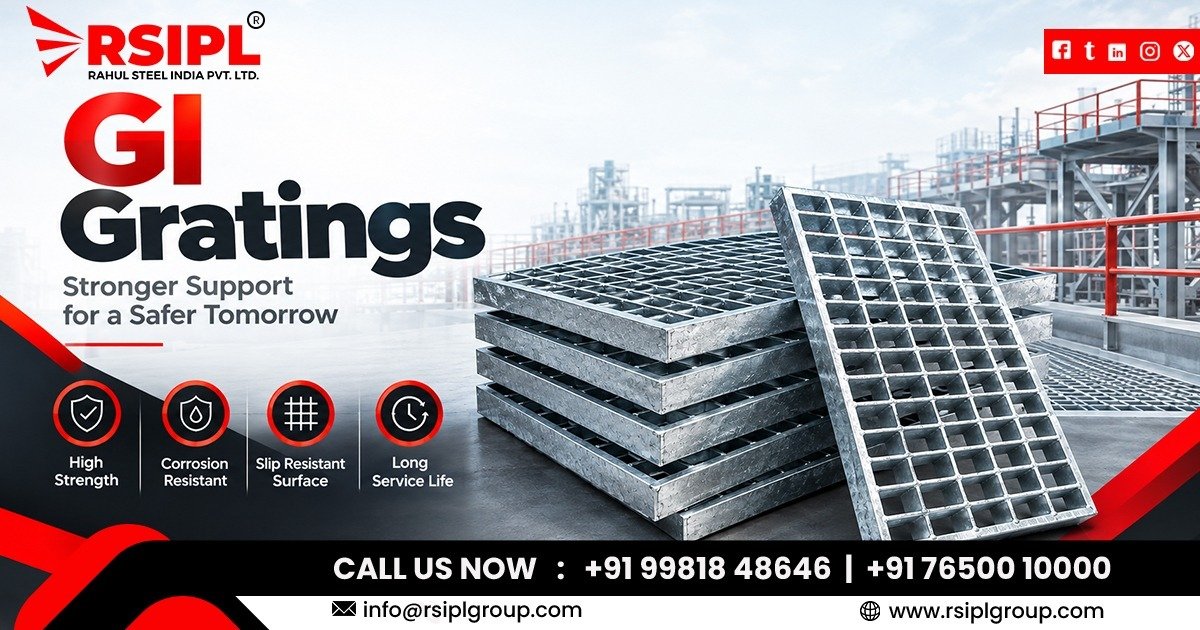
- GI grating: Useful where corrosion exposure and outdoor or wet conditions need additional protection.
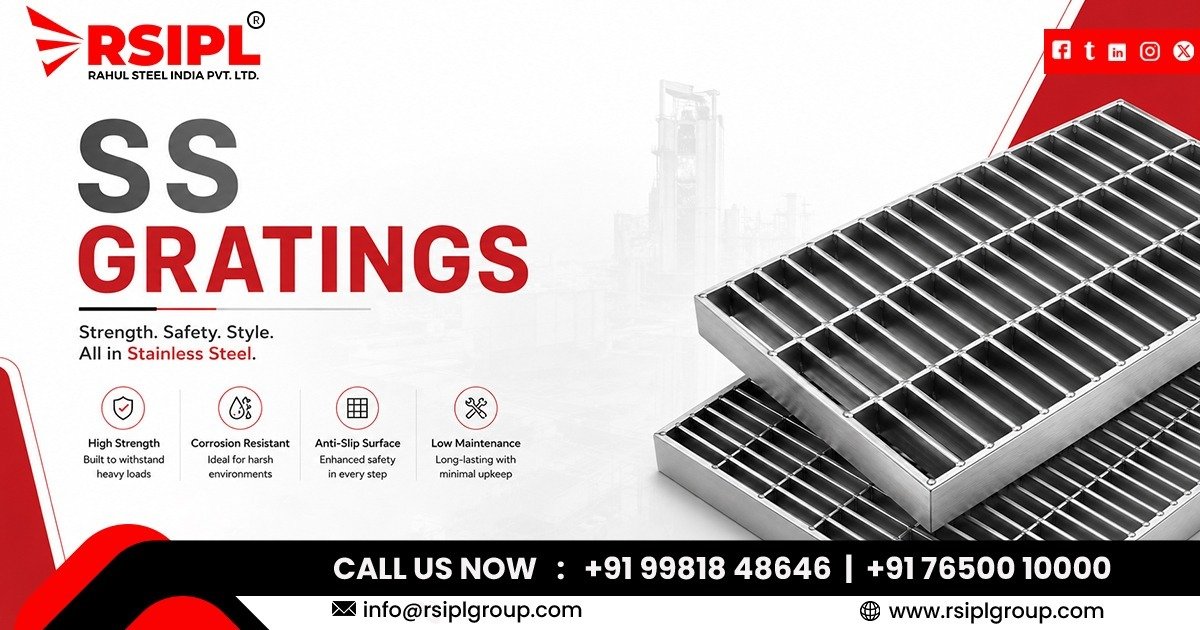
- SS grating: Suitable for environments where corrosion resistance, hygiene or moisture exposure is a key consideration.
- Serrated grating: Consider for areas where additional slip resistance is required, particularly where wet or oily conditions may occur.
The surface finish should also be discussed before fabrication because it can affect handling, cleaning and resistance to environmental exposure.
Check Fabrication Details Before Dispatch
A grating order should be checked against the approved drawing or project dimensions before dispatch. This helps prevent site-level cutting, mismatched panels or installation delays.
A buyer can verify:
- Overall panel dimensions and quantity.
- Bearing-bar direction and support orientation.
- Cross-bar arrangement and panel construction.
- Edge treatment and required cut-outs.
- Surface type and finish.
- Connection or fixing requirements.
- Identification of panels against the installation drawing.
Rahul Steel India’s grating range includes custom-fabricated solutions, so project-specific dimensions and load requirements can be discussed during enquiry where applicable.
Plan the Site Before the Grating Arrives
Installation planning should start with the supporting steelwork, not after the panels reach the site.
Check these points in advance:
- Confirm support members are level and positioned according to drawings.
- Keep sufficient access for lifting and placing panels.
- Verify openings, drains, pipes and equipment interfaces.
- Confirm the fixing method and hardware required for the project.
- Maintain safe working clearance around platforms and walkways.
- Inspect panels for transport damage before installation.
- Complete a trial fit where several custom-sized panels meet.
The grating should sit properly on its intended supports. If site dimensions differ from the approved drawing, the discrepancy should be resolved before permanent fixing.
Routine Checks Help Prevent Avoidable Grating Problems
Grating usually requires straightforward inspection, but neglecting small issues can create larger maintenance concerns.
During routine plant inspections, check for:
- Loose or missing fasteners
- Bent or damaged panels
- Corrosion, coating damage or exposed steel
- Excessive movement under normal use
- Blocked drain openings
- Damaged serrated surfaces
- Changes in the supporting structure
Cleaning requirements depend on the environment. Remove accumulated dirt, process residue or debris that can obstruct drainage or hide developing damage. For corrosive or process-heavy areas, follow the plant maintenance plan and the supplier’s recommendations.
Troubleshooting Starts With the Symptom
| Common Issue | Possible Cause | Practical Check |
| Panel movement | Loose fixing or support issue | Inspect fasteners and bearing supports |
| Local bending | Load or span differs from design assumption | Compare actual conditions with approved design |
| Surface corrosion | Environmental exposure or damaged protection | Inspect finish and affected areas |
| Water accumulation | Drainage opening blocked | Clean the grating and inspect the drain path |
| Slip concern | Wet, oily or unsuitable surface condition | Review surface type and housekeeping |
| Poor fit at opening | Site dimension differs from drawing | Recheck opening and panel dimensions |
Do not modify load-bearing grating on site without confirming the revised arrangement with the responsible engineer or supplier.
A Supplier Enquiry Should Contain These Details
When contacting a Heavy Duty Grating Supplier In Assam, provide a concise requirement sheet. This makes technical discussion faster and reduces the chance of receiving a product based only on an approximate description.
Include:
- Project location and application
- Grating material preference, if already defined
- Panel dimensions and estimated quantity
- Support span and support direction
- Expected loading condition
- Plain or serrated surface requirement
- Finish or corrosion-protection requirement
- Drain, pipe or equipment cut-outs
- Drawing availability
- Required delivery schedule
- Installation or technical assistance needed
Services
- Requirement assessment and grating selection support
- Drawing and project requirement coordination
- Manufacturing and custom fabrication support
- Installation, technical and after-sales assistance
Location
Industrial grating requirements can arise across Assam where manufacturing, infrastructure, energy, warehousing and process facilities require safe load-bearing surfaces. Relevant locations include Guwahati, Amingaon, Sonapur, Rangia, Dibrugarh, Tinsukia, Digboi, Duliajan, Jorhat, Sivasagar, Moran, Golaghat, Numaligarh, Tezpur, Nagaon, Bongaigaon, Silchar, Karimganj, Hailakandi, Dhubri, Goalpara, Barpeta, Kokrajhar, North Lakhimpur and Bokakhat.
Industrial Support From Rahul Steel India Pvt. Ltd.
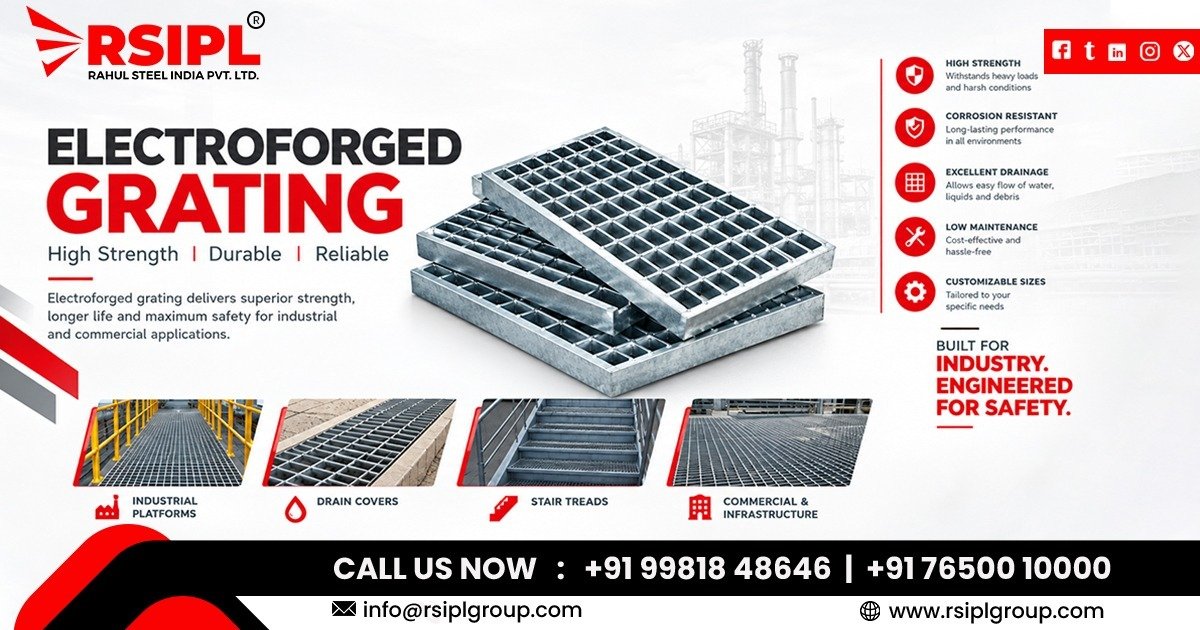
Rahul Steel India Pvt. Ltd. manufactures and supplies several grating configurations, including MS, GI, SS, platform, serrated, drain and electroforged gratings. Its published product information also covers custom-fabricated and project-specific grating requirements.
For Assam projects, buyers can discuss dimensions, loading, material, surface type and installation requirements with the company before finalizing an order. The company provides manufacturing support from Ahmedabad, Gujarat, India, and its official website is rsiplgroup.com.
FAQs
Q: How should I specify a heavy-duty grating requirement?
A: Share the application, expected load, clear span, panel dimensions, support arrangement, material preference, surface type and environmental conditions. Drawings are useful where available.
Q: Is serrated grating suitable for wet industrial areas?
A: Serrated surfaces can provide additional grip in wet or oily conditions. The final selection should consider the actual environment, cleaning practice and project requirements.
Q: Can grating panels be made to project dimensions?
A: Custom-fabricated grating can be considered when standard panels do not match the required dimensions or layout. Confirm the required sizes, cut-outs and loading before fabrication.
Q: What should be checked before installing grating?
A: Verify support levels, panel dimensions, bearing direction, openings, fixing arrangements and any site changes against the approved drawing before permanent installation.
Conclusion
Selecting a heavy-duty grating for Assam projects requires attention to load, span, material, surface condition, support structure and site dimensions. A clear technical requirement helps avoid mismatched panels and installation issues. Rahul Steel India Pvt. Ltd. can support project discussions with manufacturing support from Ahmedabad, Gujarat, India.
Contact Rahul Steel India Pvt. Ltd. to discuss your grating dimensions, loading requirements, material selection, project planning or technical support.
Call Us: +91 99818 48646, +91 76500 10000
Email: sales@rsiplgroup.com, info@rsiplgroup.com